

Whatever Happened to Pirates World? The Forgotten Florida Theme Park Where The Doors Played





What To Know
- Pirates World, an amusement park in Dania, Florida, opened in 1967 with a pirate theme and quickly became popular for its unique attractions.
- The park featured themed areas, rides from the World’s Fair, and even a film studio.
- Despite early success and local support, Pirates World is now best remembered for its eclectic entertainment offerings.
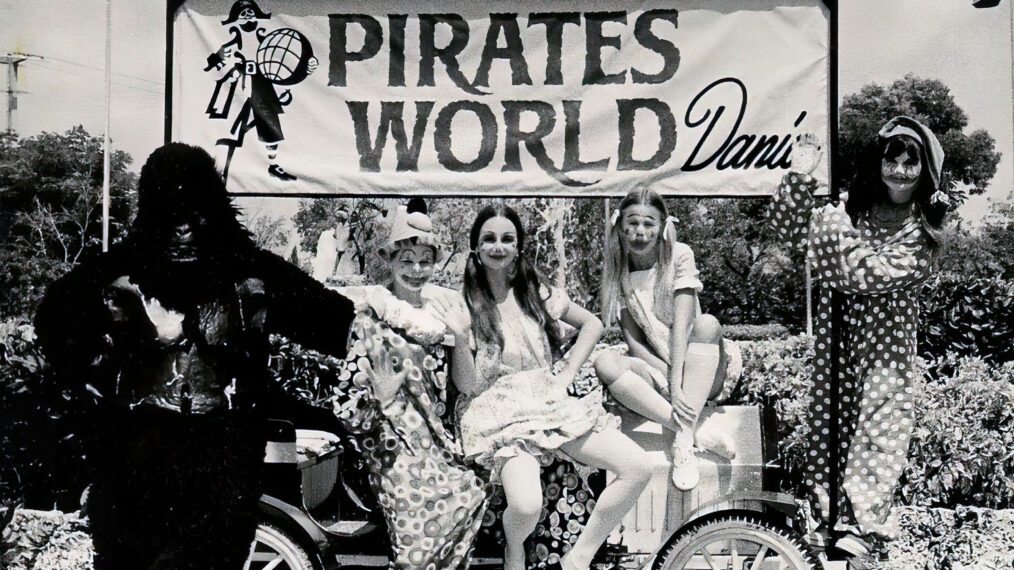
The themed amusement park Pirates World in Dania, Florida, was a hit from the start in 1967. While the amusement park drew in huge crowds, Pirates World is best remembered by locals for its amazing concert lineup. Here we share the history of this famed theme park.
While his efforts are largely lost to history, real estate magnate C.T. Robertson wrote the book on Florida theme parks long before Disney, MGM Studios, and Universal lorded over the Southern vacation hot spot. After moving to Fort Lauderdale in 1963, Robertson set his sights on 100 acres of land in neighboring Dania with the goal to create an amusement park and movie studio to capitalize on growing tourist traffic and birth an East Coast entertainment production hub.
In seven short years, his concept would include a premier concert venue and television station, and would gift the world one of the strangest films ever made. Similar to the pirate lifestyle that inspired it, Robertson’s park dealt with constant battles (with local officials), violent, fiery clashes (between patrons and police), and two sunken ships.
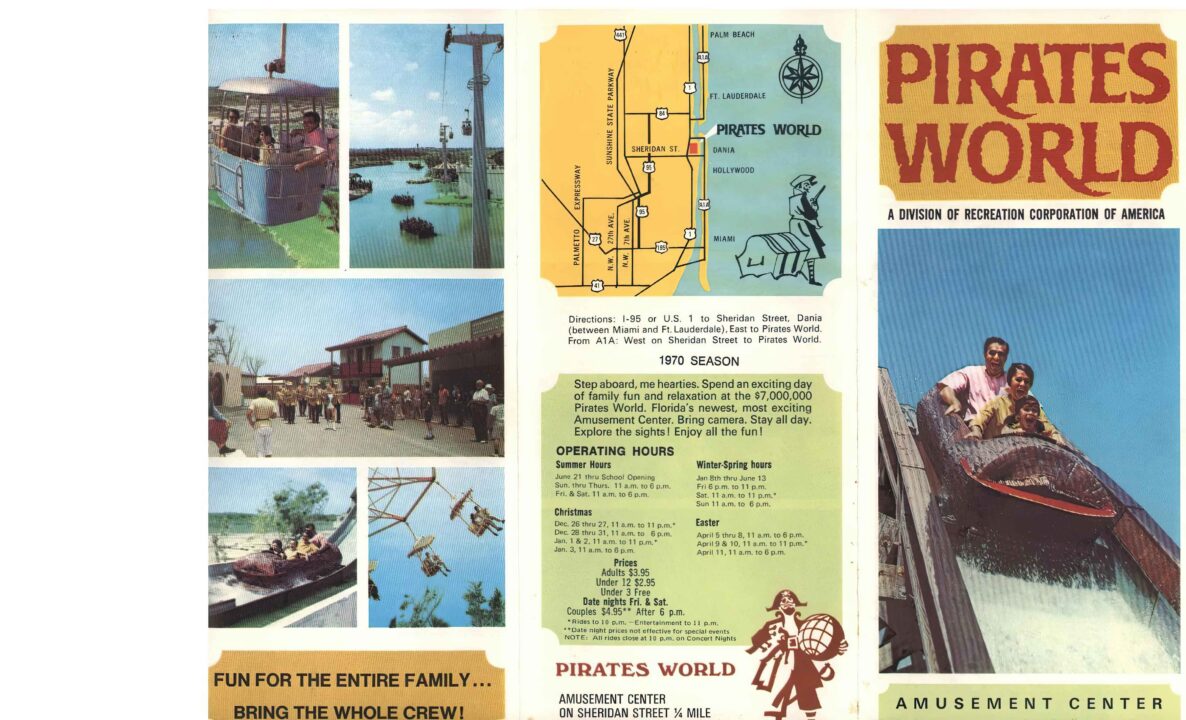
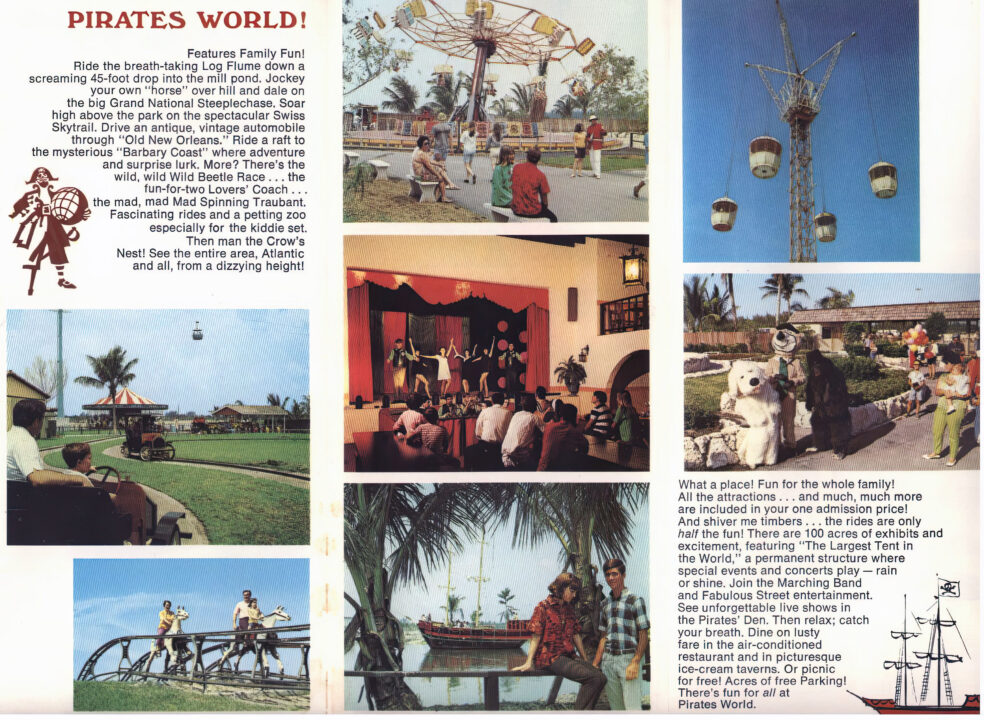
Robertson enlisted designer Bob Minick to draw up plans, settling on a swashbuckling theme, and Pirates World was announced in 1966 with an opening date slated for the following spring. Occupying 30 acres, the $7 million park included five areas based on locales historically known to have harbored pirates: Port Royal, New Orleans, Spanish Main, Barbary Coast, and the China Seas.
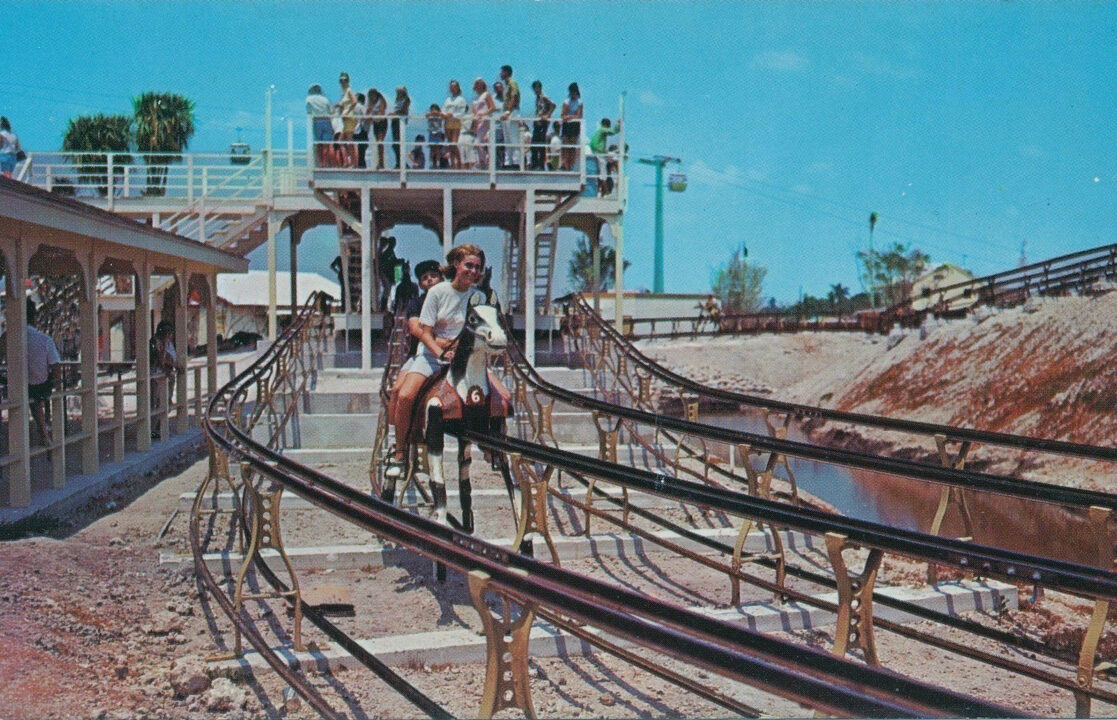
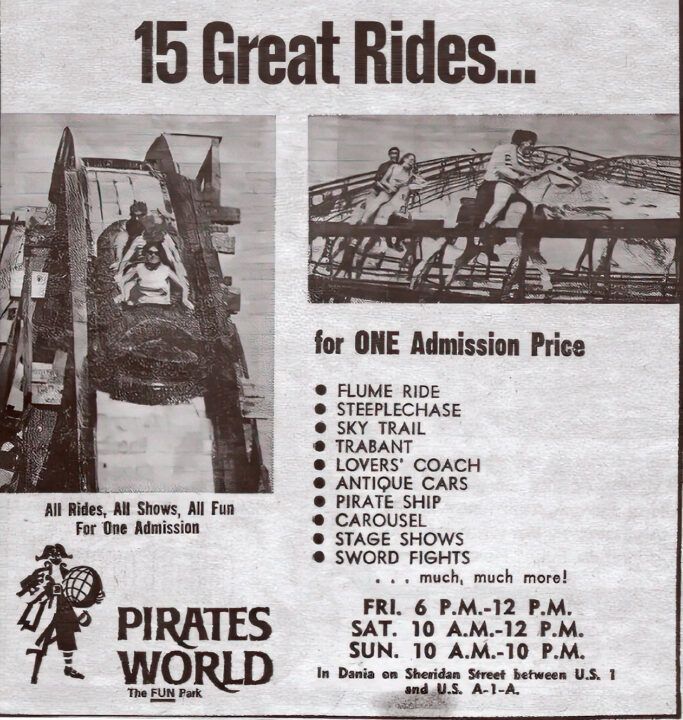
College students were encouraged to apply for work at the attraction that boasted a roster of rides including The Crow’s Nest (a 23-story tower originally featured at the 1964 World’s Fair), the Grand National Steeplechase horse race purchased from Coney Island, The Wild Beetle Race roller coaster, a log flume (which also came from the World’s Fair), a sky ride over the park, petting zoo, slides, theater, street shows and carnival games. It wasn’t long before challenges befell the project.
As construction was underway in Dania, Robertson purchased a full-sized pirate ship called The Tondeleyo, which had been used in the 1942 film White Cargo. But while preparing the vessel for transport, it slipped from its sling, crashing down into the water where it broke up and sank. Pirates World ended up scoring a 50-foot ship called Black John, built in the 1930s, that had been operating around Florida and the Bahamas, which became the venue’s signature feature.
The city of Dania supported the park from the start, happy to garner 5 cents from every ticket sold, and on April 8, 1967, turnstiles were set in motion. Pirates World was an instant hit, and its immediate momentum led to the addition of Pirate Adventureland in 1968, which offered patrons 10 acres of jungle, swinging bridges, villages, a fort, and a boat ride to explore. The pirate motif was finally making more sense for those who visited.
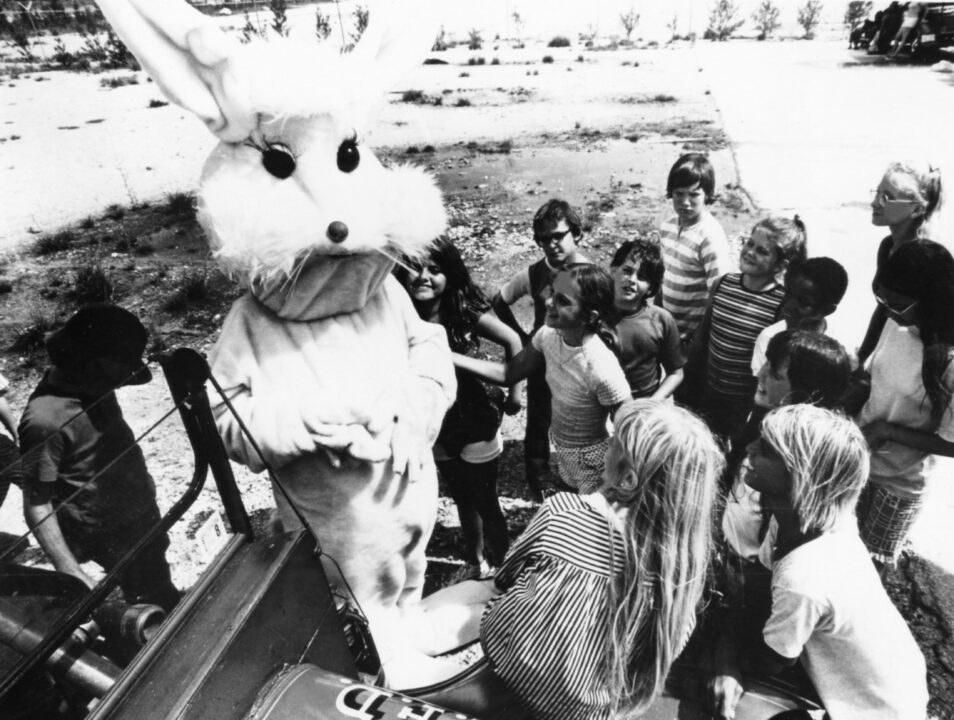
That same year, Film World opened in a unique hexagonal building on park land, designed to house six production stages complete with sound and editing facilities. Robertson was strictly interested in creating family entertainment, but strangely, he hired adult film producer/director Barry Mahon to run the show, and the results were an odd mix. The films produced there under the banner of R&S Films Enterprises Inc. were mostly a blend of live-action and animated takes on fairy tales, but things took a weird turn with the studio’s magnum opus Santa and the Ice Cream Bunny (1972).
Santa tells the tale of the titular jolly elf getting stuck in the sand on a Florida beach, where he regales visiting children with the story of Thumbelina using footage repurposed from an earlier R&S movie of the same name. In the end, the Easter Bunny shows up in an old fire engine and helps Santa break free, but not before taking an extended spin through Pirates World on his way to the rescue.
It is one of cinema’s most perplexing entries and has become a cult favorite courtesy of the show Rifftrax, which subjected it to a humorous thrashing on a 2010 episode.
Everett Collection
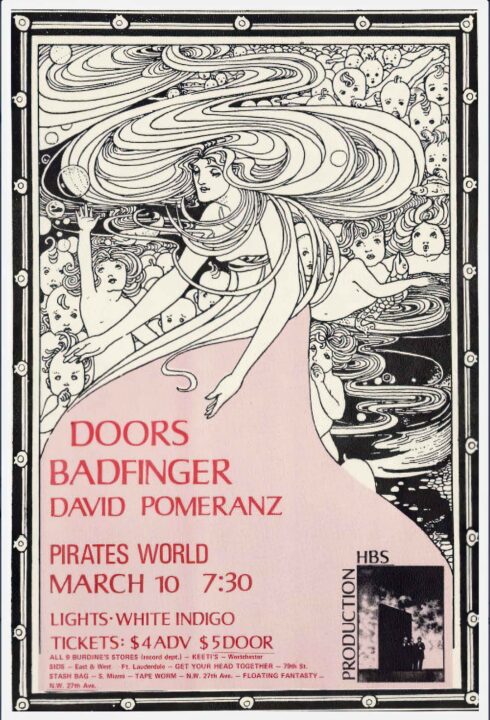
While the amusement park drew the little ones, Pirates World is perhaps best remembered by locals for its concerts. What started in 1968 with local acts blossomed into an unbelievable lineup of bands over the years including Grateful Dead, Black Sabbath, Alice Cooper, Frank Zappa, the Beach Boys, Iron Butterfly, and a Led Zeppelin show that drew more than 1,000 fans.
In a weird twist, a 1972 gig at Pirates World marked the Doors’ first Florida appearance since their doomed Miami concert in 1969 that resulted in singer Jim Morrison being convicted of indecent exposure and other offenses. After Morrison passed in 1971, the band pressed on for a few years without him, and the show in Dania marked a rare appearance as a trio.
It was the live music that really got under the skin of the locals, who issued a crescendoing rattle of complaints about noise and the hippie youths who frequented the park’s live events. There were problems with a few shows, including an incident during a Grand Funk Railroad performance in 1971 that involved rocks and Molotov cocktails being hurled at police. This sparked the first city meeting about banning concerts at Pirates World, an effort that found success a few years later.
Amid the rock ‘n’ roll and roller coasters, in 1971, Robertson purchased shuttered local television station WSMS-TV, relocating it to the Pirates World grounds and rechristening it WKID Channel 51. Similar to his aim with Film World studios, WKID targeted the youth audience and made for an interesting addition to the park.
In 1972, Robertson started hosting wrestling cards, teaming with regional promotion Championship Wrestling from Florida (CWF). While grappling at the pirate park was destined to last less than a year, the lineup of talent spread across the 22 shows that took place was loaded with mat legends, including Terry Funk, Bob Orton, Jack Brisco, and Kevin Sullivan, who enthralled crowds with brawling action.
On June 1, 1973, the city closed Pirates World’s concert venue, citing unsafe conditions, opening a wound the park never recovered from. Coupled with financial hardships in the wake of Disney World’s 1971 opening, the loss of live music revenue crippled the attraction, and its gates were chained on Dec. 2, 1973. While Black John eventually sank into the lake and skeletal ride remains rusted in the salty Florida air, Film World and WKID continued their efforts for a few years amid the ruins.
There was brief hope for a theme park resurrection in 1978 when a man named Pierre Bedard very publicly insisted God instructed him to construct a biblical theme park that included a “preview of hell,” but it never came to fruition. The fate of Pirates World was sealed in 1978 when it was razed to make way for condominiums.
C.T. Robertson persevered through years of local harassment to create something truly unique for its time, a roadside attraction that served as a new theme park blueprint, and a place that provided unforgettable family and musical memories for all who visited.
 Remind
Swashbucklers
April 2026
Celebrating our favorite swashbucklers — brave and bold buccaneers on land and sea.
Buy This Issue