

Why ‘The Twilight Zone’s Talky Tina Is Still One of the Scariest Dolls in Horror History


What To Know
- The 1963 Twilight Zone episode “Living Doll” features Talky Tina.
- Talky Tina, modeled after popular 1960s toys but with a sinister twist.
- The episode’s legacy endures as it explores themes of helplessness, control, and retribution.
It’s hard to decide what’s the bigger nightmare — an abusive stepdad, the fact that your mom married him in the first place, or Talky Tina, the creepy talking doll she bought you for companionship who turns out to have a mind of its own. Roll them all up, and you have the premise for one of The Twilight Zone‘s most infamous and enduringly bone-chilling episodes, 1963’s “Living Doll,” with its impish-faced headliner, Talky Tina.
The creepy cutie foreshadowed other demonic dollies like Child’s Play‘s Chucky, The Conjuring‘s Annabelle, and the homicidal M3GAN. But Talky Tina was actually The Twilight Zone‘s version of Chatty Cathy, the pull-string talking doll who graced many a little girl’s wish list in the early 1960s.
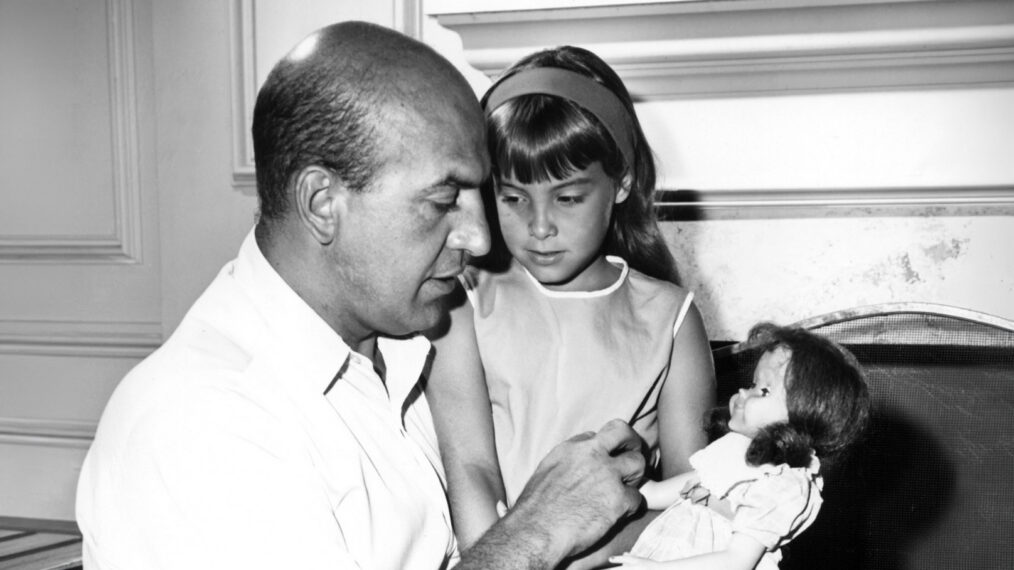
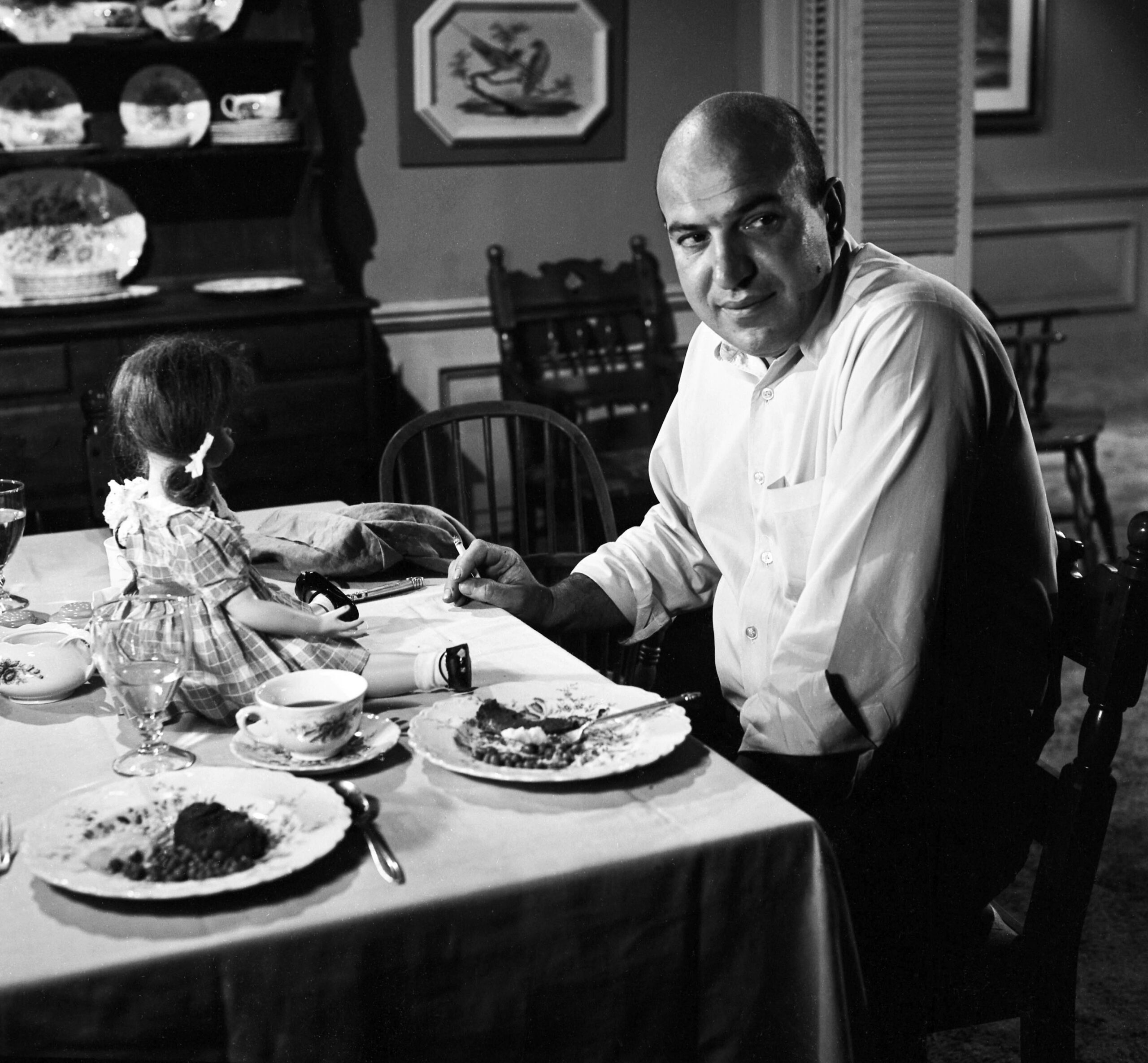
Though she was boasted Chatty Cathy’s skillset (and then some), Tina was actually “played by” another commercial toy — Vogue Doll Company’s “Brikette,” tweaked to darken her hair. And unlike sunny Cathy, this animated girly had a mean streak. “Living Doll” sees young mom Annabelle Streator (Bye Bye Birdie‘s Mary LaRoche) buy the animated Talky Tina to keep her daughter Christie company while she runs interference between the poor kid and her cruel stepdad, Erich (future Kojak star Telly Savalas, sporting a receding hairline and a very short fuse). Erich is extra touchy because he can’t father kids of his own, and little Christie is a constant reminder of that.
Talky Tina is only too happy to tell Christie (played by adorable seven-year-old Tracy Stratford) that she loves her very much — and tormented Christie is only too happy to hear that at least somebody does. But with yet another gabby female riding his last nerve — a plastic two-footer who seems to be getting awfully specific in her interactions with him when no one else is around— Erich tries to get rid of the toy, believing Annabelle and Christie somehow are using it to prank him. Talky Tina does not love that. At all.
CBS via Getty Images
The more Erich tries—and fails—to get rid of the toy, the nastier he gets, and the more personal Tina seems to take it, tailoring her threats until Erich wonders if he’s actually losing his marbles and is about to be done in by a doll. Eventually Annabelle wants to leave with Christie, but a wobbly Erich convinces her to stay. Finally, Erich hears a bump in the night, heads off to investigate, and Talky Tina exacts her fatal revenge: Tripping Erich, allowing him to fall to his demise. When Annabelle finds her daughter’s doll next to Erich’s body, Talky Tina sweetly lets her know who’s really in charge around here.
The fun of “Living Doll” is that it works as both a spine-tingling tale about a pint-sized plastic psychopath and a darker story about a little girl longing for protection and a cruel, controlling man finally getting what he deserves. A cruel man finally suffering the consequences of his relentless need for control, whether or not that doll really could talk smack? Whether the doll can really talk is almost beside the point.
In any case, it’s hard to imagine doll sales didn’t take a hit for a while. And that anyone who tuned in didn’t give their kids toys the side-eye, especially if those grown-ups weren’t playing nice. Or that screenwriters weren’t — and aren’t — taking notes for generations to come.
And that horror fans love it … very much.

 Remind
Top 50 Horror Movies
October 2025
The films in this issue have scared the living daylights out of us all for decades, what made #?
Buy This Issue