

What Was Life Like in 1776? Take a Look at Our Time Capsule!





When America became a nation 250 years ago after declaring its independence from Britain, obviously times were much different than they are today. For instance, there was no electricity, no running water, or any of the modern conveniences we have today. Homes were much smaller, people grew their own food and made their own clothes, and children of the time made toys out of things they could find on their homestead.
Take a look at some fun facts from the year in news, cost of living, and things you may not know about the Declaration of Independence as we honor 250 years as a nation this July 4, 2026.
1776 By The Numbers
In the beginning, there were only 13 colonies that were divided into three areas: the New England Colonies (Connecticut, Massachusetts, New Hampshire, Rhode Island), the Middle Colonies (Delaware, New Jersey, New York, Pennsylvania) and the Southern Colonies (Georgia, Maryland, North Carolina, South Carolina, Virginia). The population of these was approximately 2.5 million, with an average lifespan of 35-38 years old. Disease was rampant, whether you were rich or poor, due to food contamination, bacteria in water, or infectious diseases like smallpox or dysentery.
If you wanted the sweet libation of orange peel cordial, a drink made of fermented orange peel along with whiskey or rye, that would have set you back 3 pounds for 20 gallons, as would a double-barreled gun. Looking for some entertainment? A checkerboard with pieces would cost 2 shillings, 6 pence.
Top News In 1776
Everett Collection
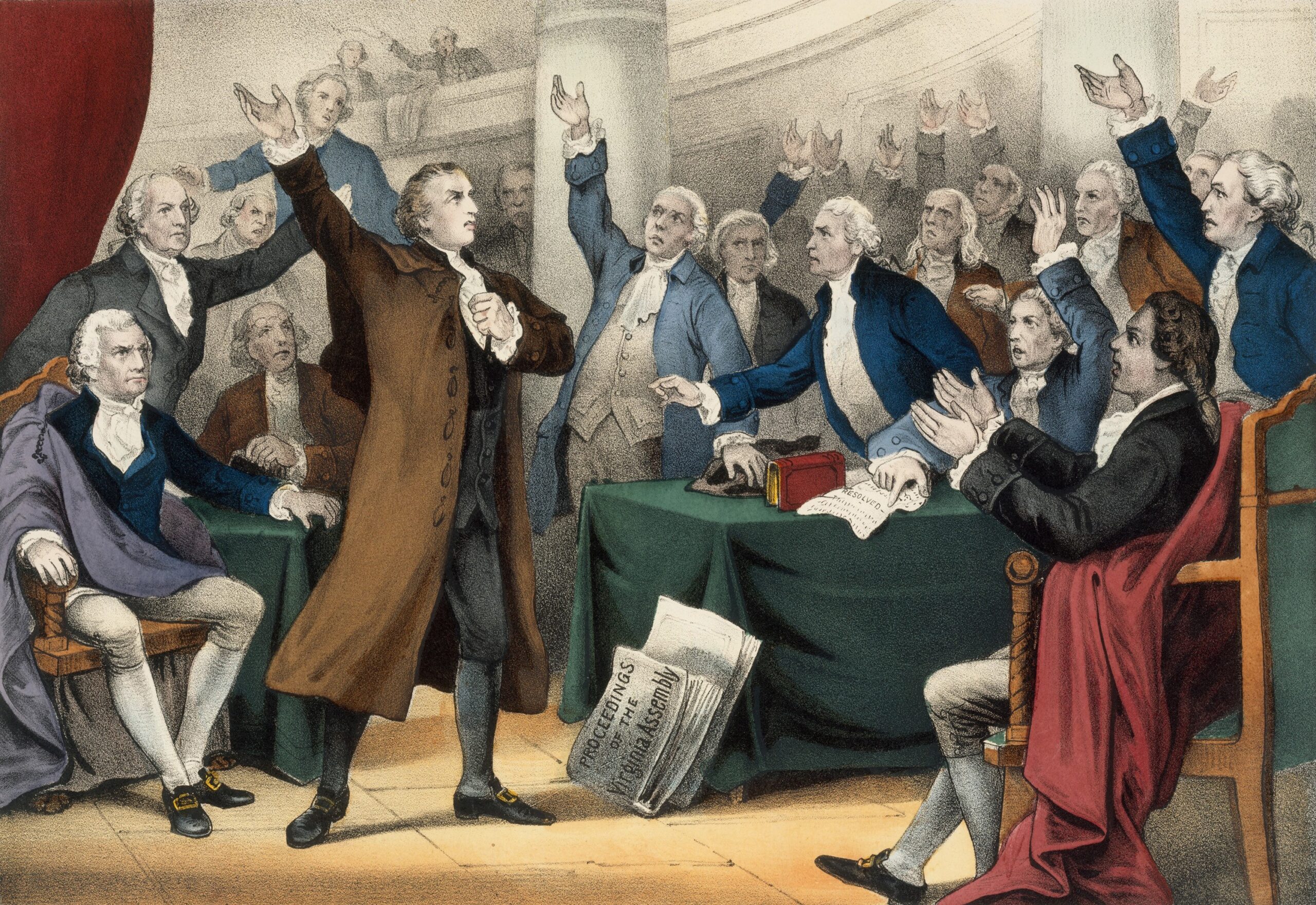
Our Founding Fathers — John Adams, Benjamin Franklin, Alexander Hamilton, John Jay, Thomas Jefferson, James Madison and George Washington — were among the chief newsmakers. Here are some of the top headlines from the year:
January 2 – The Continental Congress publishes the Tory Act, guiding how the Colonies should handle Americans who remain loyal to the British and King George.
January 10 – Thomas Paine anonymously publishes the pamphlet Common Sense, reflecting his arguments in favor of American independence.
March 14 – Alexander Hamilton is named captain of a New York artillery company; he becomes George Washington’s personal aide the following year.
June 15 – The Assembly of the Lower Counties of Pennsylvania declares its territory independent of British and Pennsylvanian authority, establishing the state of Delaware.
September 9 – The Continental Congress adopts the United States of America as the new name for the nation, replacing the previously used United Colonies.
October 31 – King George III addresses British Parliament in his first speech since the signing of the Declaration of Independence, acknowledging Britain’s struggle in the war with the United States.
December 25 – George Washington and thousands of soldiers begin crossing the Delaware River, leading a surprise attack on Britain’s Hessian forces in Trenton, New Jersey.
6 Fun Facts About The Declaration Of Independence
Everett Collection
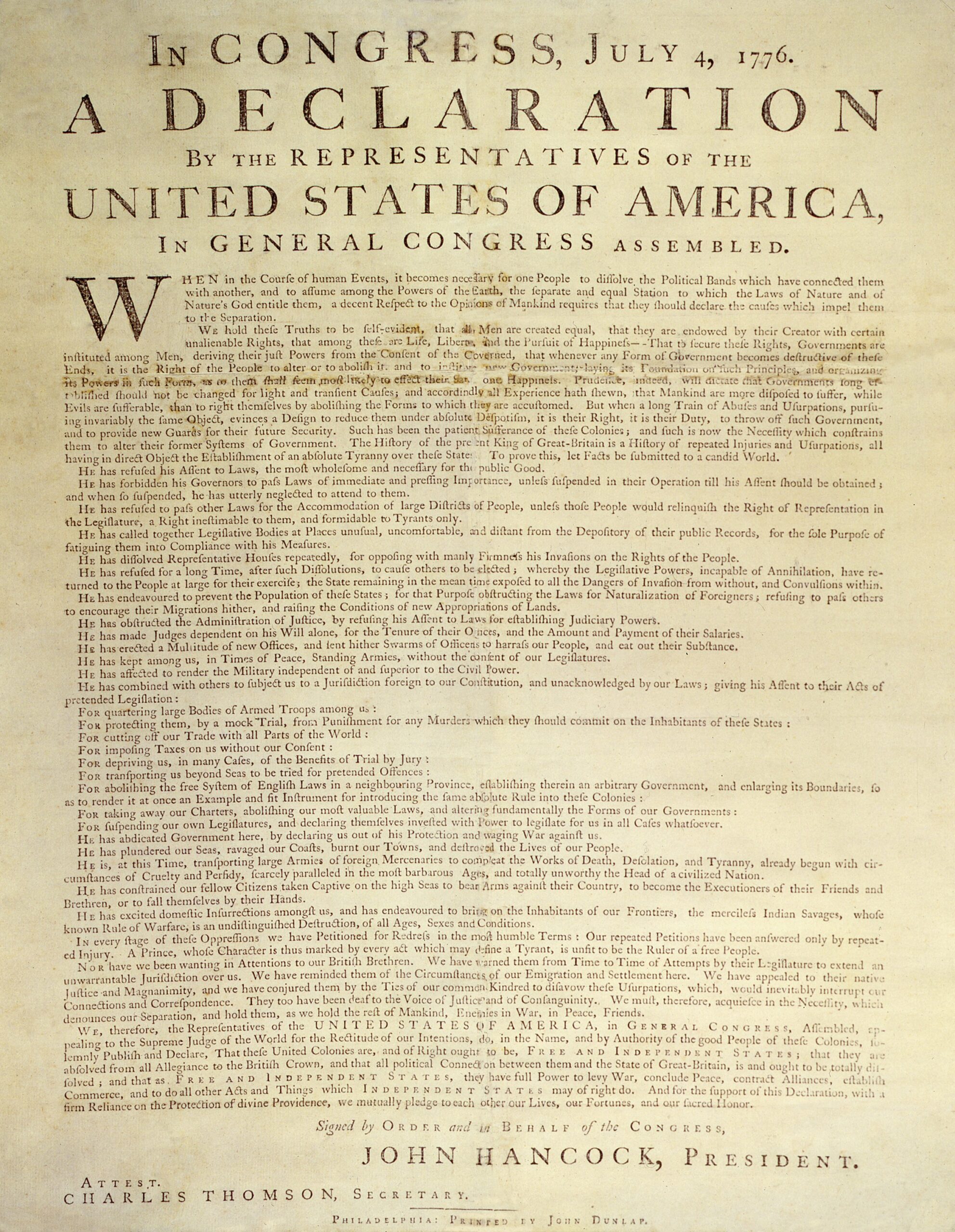
- Congress formally declared the Colonies’ freedom from Britain on July 2, 1776.
- Some delegates who voted for independence did not sign the declaration, and some signers were not delegates to Congress at the time of the vote.
- Although the Colonies approved the Declaration of Independence on July 4, 1776, most of the actual signing occurred on Aug. 2, 1776.
- Signing the declaration “was believed by many at that time to be our own death warrants,” wrote Pennsylvania representative Benjamin Rush.
- John Adams believed that July 2 was the correct date on which to celebrate the birth of American independence and would reportedly turn down invitations to appear at July 4 events in protest.
- The Declaration of Independence was signed by 56 delegates to the Continental Congress.
Who Signed The Declaration Of Independence?
John Adams (MA), Samuel Adams (MA), Josiah Bartlett (NH), Carter Braxton (VA), Charles Carroll (MD), Samuel Chase (MD), Abraham Clark (NJ), George Clymer (PA), William Ellery (RI), William Floyd (NY), Benjamin Franklin (PA), Elbridge Gerry (MA), Button Gwinnett (GA), Lyman Hall (GA), John Hancock (MA), Benjamin Harrison (VA), John Hart (NJ), Joseph Hewes (NC), Thomas Heyward Jr. (SC), William Hooper (NC), Stephen Hopkins (RI), Francis Hopkinson (NJ), Samuel Huntington (CT), Thomas Jefferson (VA), Francis Lightfoot Lee (VA), Richard Henry Lee (VA), Francis Lewis (NY), Philip Livingston (NY), Thomas Lynch Jr. (SC), Thomas McKean (DE), Arthur Middleton (SC), Lewis Morris (NY), Robert Morris (PA), John Morton (PA), Thomas Nelson Jr. (VA), William Paca (MD), Robert Treat Paine (MA), John Penn (NC), George Read (DE), Caesar Rodney (DE), George Ross (PA), Benjamin Rush (PA), Edward Rutledge (SC), Roger Sherman (CT), James Smith (PA), Richard Stockton (NJ), Thomas Stone (MD), George Taylor (PA), Matthew Thornton (NH), George Walton (GA), William Whipple (NH), William Williams (CT), James Wilson (PA), John Witherspoon (NJ), Oliver Wolcott (CT), George Wythe (VA)
Interested in more? Download the full 1776 Time Capsule along with 1886.
Americana
July/August 2026
Celebrate 250 years of Americas best nostalgic & kitschy fun!
Buy This Issue