

9 Classic Kids Board Games You Can Still Play Today & Their Little Known Origins





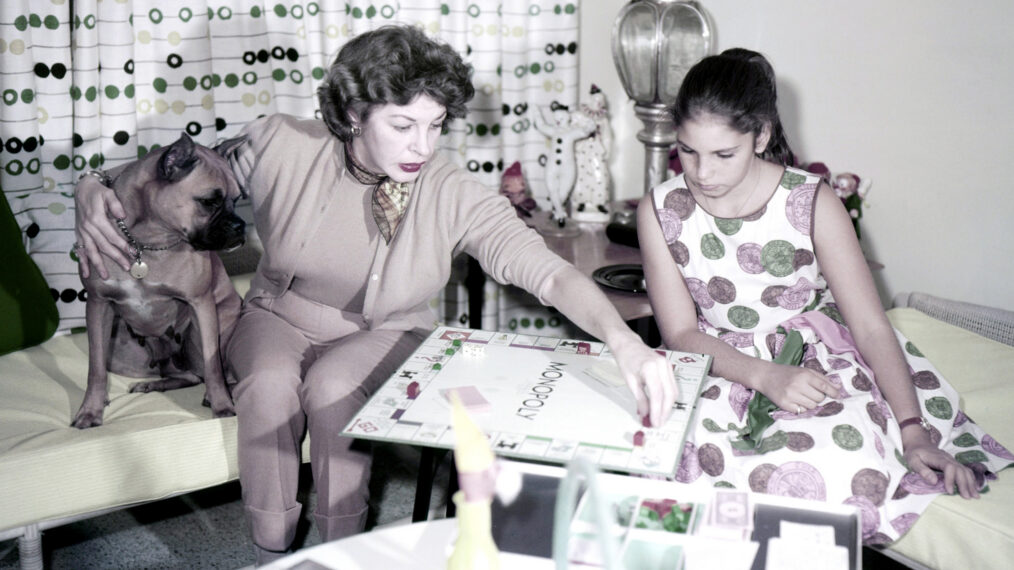
From the thrill of buying Boardwalk in Monopoly, to the steady hands needed for Operation, and the delightful roll down the sweet, colorful paths of Candy Land, our love affair with board games is timeless. It’s full of strategy, laughter, and the occasional playful betrayal.
These classics aren’t just games; they’re memory-makers, family-bonders, and the spark for friendly rivalries that last a lifetime. Whether it’s rolling the dice or drawing the perfect card, every move is a celebration of joy and pure nostalgic fun!
But did you ever wonder about the history of these classic board games? Read on to find out how Chutes & Ladders is really 2,000 years old, or that Cootie really came from a fisherman’s love of making his own lures. Be sure to check out the throwback commercials, too!
1 Operation
In 1962, University of Illinois Urbana-Champaign industrial design student John Spinello created a prototype called “The Box that Sparked and Made Noise” for a class project. According to the Huffington Post, Spinello was tasked with making an electric game where the object was to insert a metal wand into holes without touching the metal edges of the openings. He sold his patent for just $500 to an investor firm before Milton Bradley (now Hasbro) bought the rights to it in 1965.
Their battery-operated game of physical skill began hitting stores in March 1965. As a classic commercial for Operation warned, “It takes a very steady hand” to win at this game, which requires you to use tweezers to pull various objects (like a Funny Bone and Spare Ribs) out of a patient without touching the sides, which would cause a buzzer to sound and the red bulb of the patient’s nose to light up.
Over the decades, there have been various versions of the game, including editions based on other pop culture, like the one tied in with the movie Toy Story 3 that featured Buzz Lightyear as the “patient.” Operation remains one of the top board games of all time.
2 Chutes & Ladders
Everyone’s favorite first board game actually originated as Snakes and Ladders over 2,000 years ago in India. Created as a way to teach good morals, the game made its way to the U.K. in the 1890s, where it became less about learning and more about fun.
Toymaker Milton Bradley brought Snakes and Ladders to America in 1943, renaming it the less-ominous Chutes and Ladders. With the game’s simple rules and short playtime, kids learned by pictures the rewards of good deeds and the consequences of naughty ones (they went down the chutes). Chutes and Ladders has stood the test of time as a great way to teach little kids counting, patience, perseverance, and fair play.
3 Monopoly
Maybe you just won second place in a beauty contest, or a bank error was in your favor. Maybe you were forced to pay the poor tax or were sent directly to jail. Few board games inspire as much joy, rage, and family feuding as Monopoly, and that’s exactly why it’s been a fixture in practically every household.
Since 1935, players have rolled dice, hoarded utilities, and ruthlessly bankrupted Grandma in the quest to own everything in Atlantic City, New Jersey. Part luck, part cunning, Monopoly levels the playing field so anyone can win, or spectacularly go broke with one walk on Boardwalk. The endless negotiations, sneaky trades, special house rules, and hundreds of local and licensed versions have kept this family tradition running strong and steady as a ride on the Reading Railroad.
4 Candyland
For preschoolers itching to play a game just like their older siblings, not much was — and is — sweeter than entering Candy Land, the “kingdom of sweet adventures.” But the game had a decidedly somber start. Retired schoolteacher Eleanor Abbott invented Candy Land while she was recovering from polio in a San Diego hospital that was also filled with lonesome little kids confined to their beds by the disease. Abbott set out to create a pastime that didn’t require its players to read or count, and allowed them to escape into a world of Peppermint Stick Forests, Gumdrop Mountains, and Lollipop Woods.
Abbott sold the game to Milton Bradley in 1949, and Candy Land long outlasted the disease that led to its creation. The simple joys of this color-coded journey through Candy Land, a 2005 National Toy Hall of Fame inductee, remain a beloved pastime.
5 Clue
Was it Colonel Mustard in the library with a candlestick? Or perhaps Professor Plum in the study with a rope? Invented in the early ’40s by British game designer Anthony Pratt, the whodunit board game — then known as Cluedo — tapped into folks’ post-World War II fascination with solving crimes and mysteries by letting players play detective while also serving as suspects in the murder investigation of poor Mr. Boddy. The game captured the imaginations of players of all ages, combining deduction, strategy, and chance into an engrossing hour or two of play that changed every time they played.
Clue came to America via Parker Brothers in 1949, morphing the characters into Colonel Mustard, Professor Plum, Mrs. Peacock, Mrs. White, Mr. Green, and Miss Scarlet, and keeping most of their murderous weapons (that candlestick!) but with more Americanized names (the knife instead of dagger). Over the years, the beloved board game has evolved with themed editions, digital adaptations, and even a feature film, proving its ability to stay relevant across generations, while its gameplay has inspired countless mystery-themed contests and escape-room experiences.
6 Battleship
“You sunk my battleship!” The game has been sinking ships (and sometimes friendships) since 1967, when Milton Bradley turned pencil-and-paper naval strategy into an addictive game of good planning and good luck. The original Battleship game featured those now-iconic red-and-blue briefcase-shaped cases with a turquoise-blue plastic insert to mimic water on which players placed five plastic ships in a way they hoped would confound their opponent. To keep track of strikes and blunders, players placed red pegs to indicate a strike and white pegs to signal a miss. Savvy Battleshippers even came up with ways to combine their ships in close quarters to confuse their adversary into thinking they’d scored a sink when they were actually partial strikes against multiple vessels.
In 1977, Battleship became one of the first board games to get an electronic version, one that added realistic explosion sounds, allowed a single player to play against the computer, and eliminated the need for pegs. A talking version arrived in 1989, and today’s Battleship fans can play via apps and video games too. But, for our money, nothing beats the simple satisfaction of the original.
7 Life
Best known simply as Life, this Milton Bradley board game took shape a full century before the toy maker released it to the public in 1960. Then called “The Checkered Game of Life,” it was the very first game created by Milton Bradley, the actual guy. A sort of checkers meets Chutes and Ladders meets real-life events for grownups. Life took its players through life’s triumphs and travails. By 1960, the game boasted a supercool, multicolored spinning wheel in the center and a three-dimensional, road-like game board featuring milestones like going to college, buying a home, having a kid, launching a career and making investments, and plenty of pitfalls as well. In the Game of Life, the player with the most money wins.
Life has been in constant production since it was introduced, though Hasbro acquired the rights in 1984 and has since introduced a large-print version for seniors and licensed versions featuring pop culture icons like Barbie & Simpsons.
8 Trivial Pursuit
Launched in 1981, Trivial Pursuit turned pop culture, random facts and a color wheel of six wedges into a competitive sport and obsession. The game was dreamed up by Canadians Chris Haney, a photo editor for Montreal’s The Gazette, and Scott Abbott, a sports editor for The Canadian Press, along with the help of Chris’ brother John and corporate lawyer Ed Werner. Their game wasn’t an instant hit; in fact, it flopped at the World’s Toy & Game Fair, and U.S. giants like Milton Bradley and Parker Brothers passed. But a smaller publisher, Selchow & Righter, took a chance — offering the creators an unheard of 15% royalty and ultimately helping market it to meteoric success.
Their big break came when The Tonight Show’s Johnny Carson gave the game a shoutout, and sales exploded. By 1984, Trivial Pursuit had sold 20 million copies. Today, there are over 50 special editions, and the game has made more than $2 billion in sales. Not bad for a game built on random facts and a little Canadian grit.
9 Cootie
Cootie was invented by Minnesota fisherman William Herbert Schaper, who liked to hand-carve his fishing lures, some of which looked like the body of a great big bug. He added legs to his carvings, peddled the critters to kids, and wondered if his “cooties” might have even more potential. Schaper carved all of the first game pieces by himself and founded W.H. Schaper Manufacturing Company to sell the product.
By 1949, Schaper moved to plastic and approached the Minneapolis department store chain Dayton’s to sell Cootie. More than a million games sold in a short time, and over 75 years later, countless parents of contented kids are happy to say they have Cooties in their home.
Rob Edelstein, Ryan A. Berenz, Lori Acken, and Barb Oates were all contributing writers on this article.

 Remind
Toys & Games
November/December 2025
Fire up the Easy-Bake Oven, dust off that pogo stick, tickle that Elmo and get ready to blast back to a time when batteries were not included
Buy This Issue