

How ‘Happy Days’ Almost Got Cancelled – Until They Made This Change






What To Know
- Happy Days was nearly canceled after its second season.
- The show was saved when the producers made an important change.
- This change, along with the rising popularity of Fonzie, transformed Happy Days into a long-running cultural phenomenon.
It feels impossible to picture now, but one of the most iconic sitcoms in television history, Happy Days, very nearly got canceled before it ever hit its stride.
Early on, the show was struggling, and the network was seriously considering canceling it. However, the show was saved by changing something interesting. The producers decided to put Happy Days in front of a live studio audience. That one change turned everything around. When Happy Days premiered in January of 1974, it looked very different from the version fans came to know and love. The first two seasons were filmed as a single-camera comedy, meaning it was shot more like a movie than a sitcom. Creator Gary Marshall intentionally modeled it after classic shows like The Andy Griffith Show.
At first, that approach seemed to work. The show performed well when it debuted midseason. But by the second year, the ratings began to slide. Ron Howard, who played Richie Cunningham, later explained that the series was up against stiff competition, especially the hit comedy Good Times. As Howard put it in a later interview with the Archive of American Television, “We fell in the ratings. They almost canceled us.”
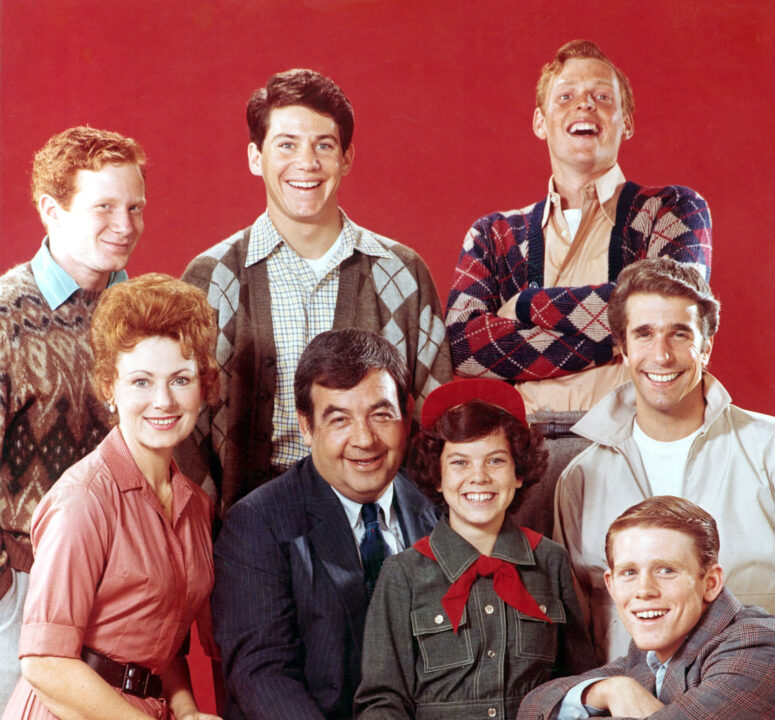
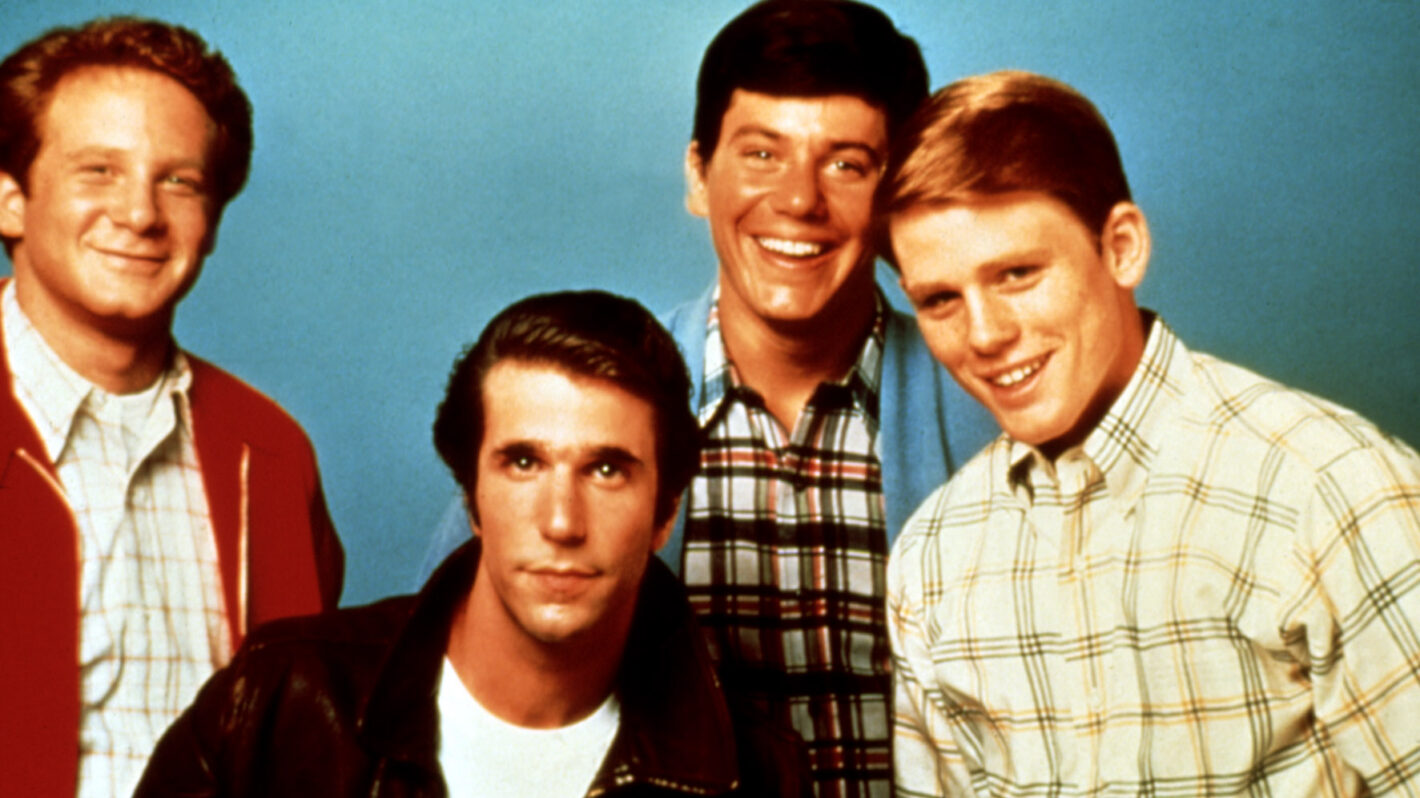
Meanwhile, something unexpected was happening on screen. Henry Winkler‘s leather jacket-wearing character, Arthur “Fonzie” Fonzarelli, was becoming a sensation. What was supposed to be a supporting role quickly turned into the biggest reason people tuned in. That’s when ABC executive Fred Silverman stepped in with an idea. He suggested filming an episode in front of a live audience to see if it might give the show new life. Marshall, who had worked on audience-based shows before, was immediately open to it.
Everett Collection
The final episode of season two became a test run. The cast performed in front of a crowd for the first time, and the response was incredible. Howard remembered the moment clearly. “People were screaming when Henry would appear,” he said. “It was kind of wild.” That experiment changed the course of the entire series. Starting with season three, Happy Days permanently switched to a multi-camera format with a live audience. The shift worked almost instantly. Ratings jumped, and suddenly the sitcom was on its way to becoming a cultural phenomenon.
There were even talks behind the scenes about renaming the show Fonzie’s Happy Days to reflect how central the character had become. Howard pushed back on that idea, wanting to keep the original spirit of the series intact. But he accepted that the focus was naturally shifting and the important thing was that the show had been saved. From that point forward, Happy Days never looked back. It ran for eleven seasons, launched multiple spin-offs, and turned its cast into household names. All because of one smart decision to put the actors in front of cheering fans instead of silent cameras.
 Remind
1970s Fall TV
September 2023
Take a trip back to the ’70s by looking at the TV Guide Magazine Fall Preview primetime lineups.
Buy This Issue