

Creepy Urban Legends of the 1960s: Mothman, Ouija Boards & More





The ’60s brought us Beatlemania, space-race fever, and a whole lot of cultural upheaval. But amid the moonshots and psychedelic colors, strange rumors and unbelievable tales were spreading like wildfire.
Take a trip back to a decade when the truth was sometimes stranger than fiction, and urban legends had a way of taking on a life of their own.
Ouija: Board game or dark portal?
Adobe Firefly
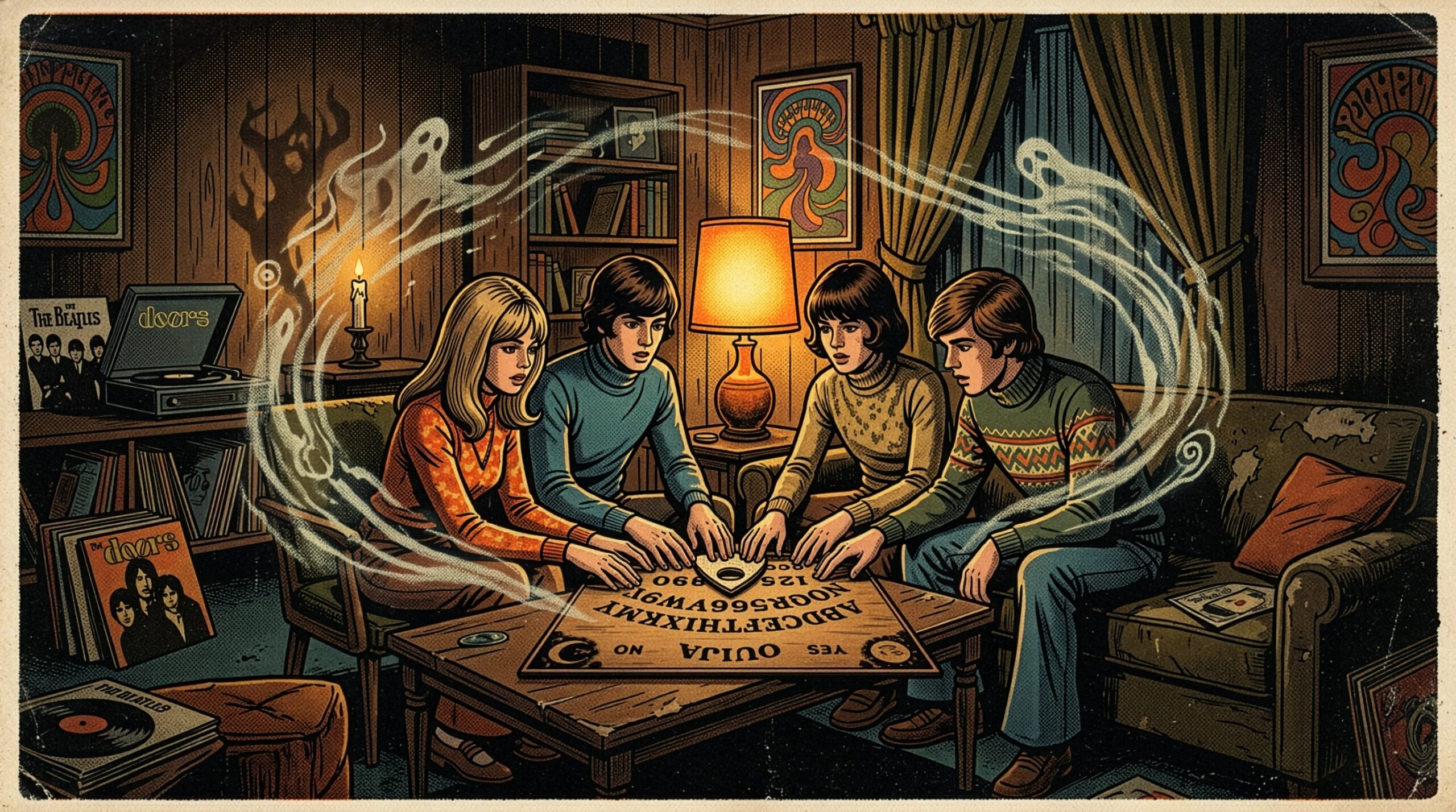
Talking boards — known today by the trademark Ouija — had been around since the 1800s, and they were mostly used as a fun parlor game with a little spiritualist marketing thrown in. The ideomotor effect, by which a person makes small physical movements unconsciously in response to thoughts or expectations, gave people the feeling that their hands were being guided by the supernatural. Parker Brothers bought the Ouija brand in 1966, and the company sold more than 2 million units — outselling Monopoly — the following year. In 1968, a Ouija board featured prominently in an episode of the sitcom Bewitched. So how did a mass-produced toy become viewed by some as an open door to demonic possession?
The horror movie The Exorcist in 1973 forever changed the perception of Ouija from a game to an instrument of the occult. Ouija sales jumped 15% as a result.
The moon landing was faked

Adobe Firely
It was one giant leap for mankind, and one huge conspiracy theory that still won’t die 57 years later. Even before astronauts Neil Armstrong and Buzz Aldrin put their bootprints in the lunar regolith in July 1969, there was skepticism that such a remarkable feat could be anything other than science fiction. Cold War paranoia and a growing sense that the U.S. government was lying to its citizens about the Vietnam War and other matters likely made some people more open to the idea that a moon landing was staged in a warehouse and filmed by Stanley Kubrick with his 2001: A Space Odyssey Hollywood special effects magic. These myths gained traction in the 1970s, and despite debunking over the decades, a 2019 C-SPAN/Ipsos poll revealed that 6% of Americans — and 11% of Generation Y Americans — believe it was a hoax.
The Mothman

Adobe Firefly
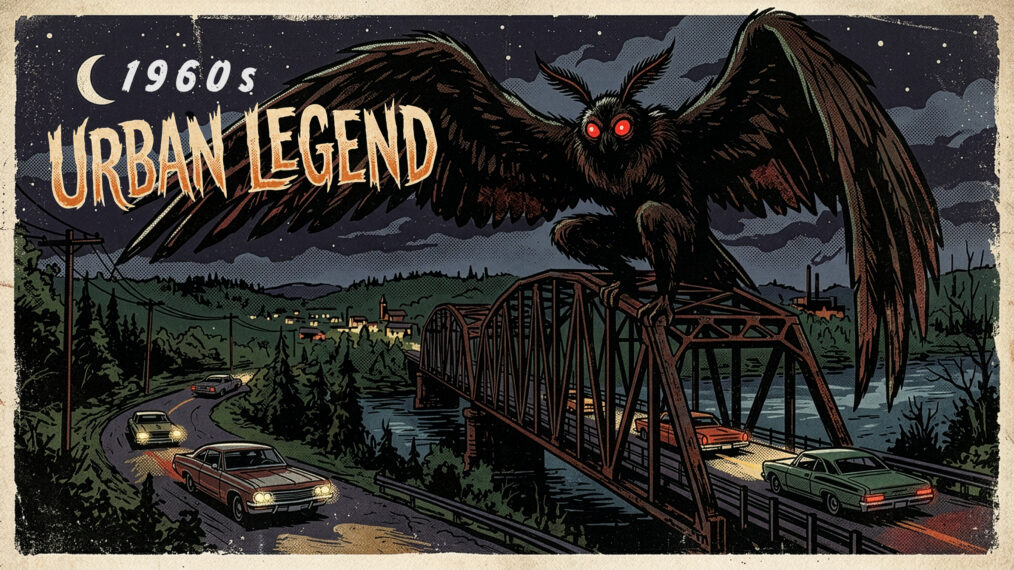
In November 1966, residents of Point Pleasant, West Virginia, began reporting encounters with a strange creature described as a large winged humanoid figure with glowing red eyes. The sightings continued for months, and newspapers dubbed the mysterious being “Mothman.” The legend took a darker turn after the Silver Bridge, connecting Point Pleasant with Gallipolis, Ohio, over the Ohio River collapsed on Dec. 15, 1967, killing 46 people, with some later claiming Mothman had appeared as an omen of the disaster.
Author John Keel’s 1975 book The Mothman Prophecies transformed the local legend into a national phenomenon, blending eyewitness accounts, UFO sightings and paranormal speculation. Decades later, Mothman remains one of America’s most distinctive pieces of regional folklore, and Point Pleasant proudly embraces its strange connection to the creature.
“Paul Is Dead”

Adobe Firefly
In the late 1960s, Beatles fans began obsessing over a bizarre theory: Paul McCartney had died in a 1966 car crash and been secretly replaced by an impersonator. Supposed clues appeared in the band’s album covers, lyrics and recordings. The rumor exploded in the U.S. after Detroit radio DJ Russ Gibb discussed the theory on the air in October 1969, sending fans scrambling to decode Beatles records for hidden messages. The Beatles never seriously entertained the story, and McCartney was very much alive. But “Paul Is Dead” became one of the era’s most famous conspiracy theories, demonstrating how deeply fans could scrutinize every detail of a cultural phenomenon.
Walt Disney is frozen

Adobe Firefly
Long before Disney’s Frozen, there was an urban legend that Walt Disney was literally frozen. The legendary creator of Mickey Mouse and an entertainment empire died of lung cancer in 1966 at age 65. He was cremated, and his ashes were interred in the family mausoleum at a cemetery in Glendale, California.
Weeks after his death, a tabloid newspaper reporter claimed to have seen Disney’s cryopreserved body at a Burbank hospital. The myth propagated and began to include details like Disney’s frozen remains (or just his head) being stored underneath Disneyland’s Pirates of the Caribbean ride. Disney’s interest in futuristic technology combined with the emerging idea of cryonics in the 1960s only added plausibility to the tale.
This article appeared in the October 2026 Halloween issue of ReMIND Magazine. You can purchase the full issue at the link below.
 Remind
Halloween Traditions
October 2026
Learn all about All Hallows’ Eve, ghost towns, the best Halloween TV episodes and more!
Buy This Issue