

Whatever Happened to the Retro Futuristica Xanadu Houses?





What To Know
- The Xanadu houses were built as futuristic, energy-efficient homes and tourist attractions in the late 1970s and early 1980s.
- Xanadu house showcased ambitious smart home technology concepts, which foreshadowed modern innovations.
- Despite initial public curiosity, the Xanadu houses ultimately failed as commercial ventures.
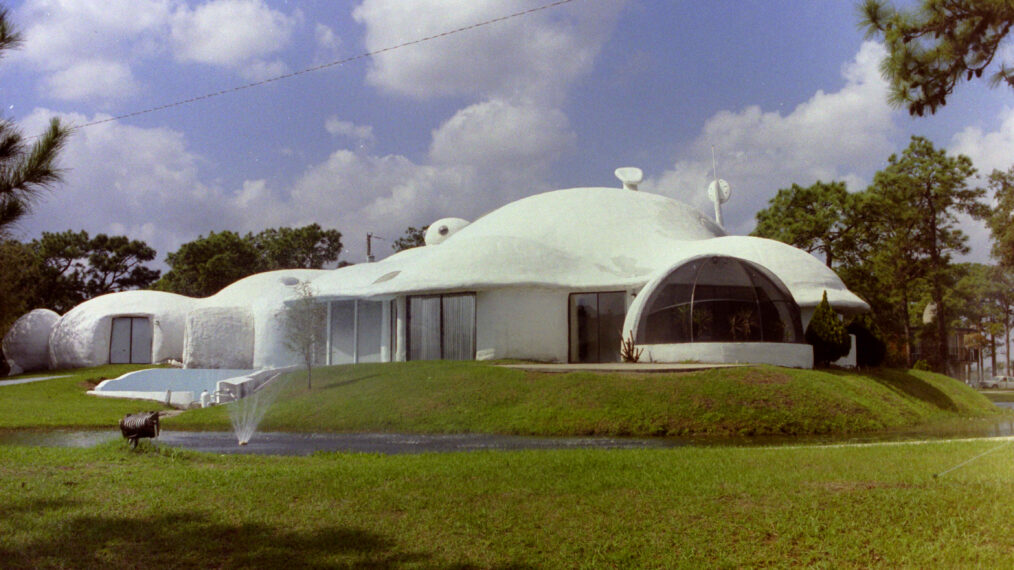
“We spend too much time overbuilding homes. All we need is foam!” These are the words of Bob Masters, the man who hatched the concept for the alien-looking abodes the world would come to know as Xanadu.
The seed for Xanadu was planted when Masters read an article on a group of Yale students building homes out of insulation. The ex-teacher was intrigued and started researching the concept, which led him to architect Buckminster Fuller, who in the late 1940s popularized the concept of spherical geodesic domes that would go on to become a standard design for auditoriums, weather observatories, and attractions around the world.
Masters first tried his hand at geodesic creation when he built a home for himself in Aspen, Colorado, in 1969 by spraying foam over a large balloon to create a dome-shaped structure. Once the foam hardened, the balloon was peeled away to leave the egg-like shell behind. The bizarre-looking 20×16 structure became the talk of the town, and Masters started making plans to market the design he touted as less expensive and more energy-efficient than conventionally built homes. It was time to show the world.
Public Domain
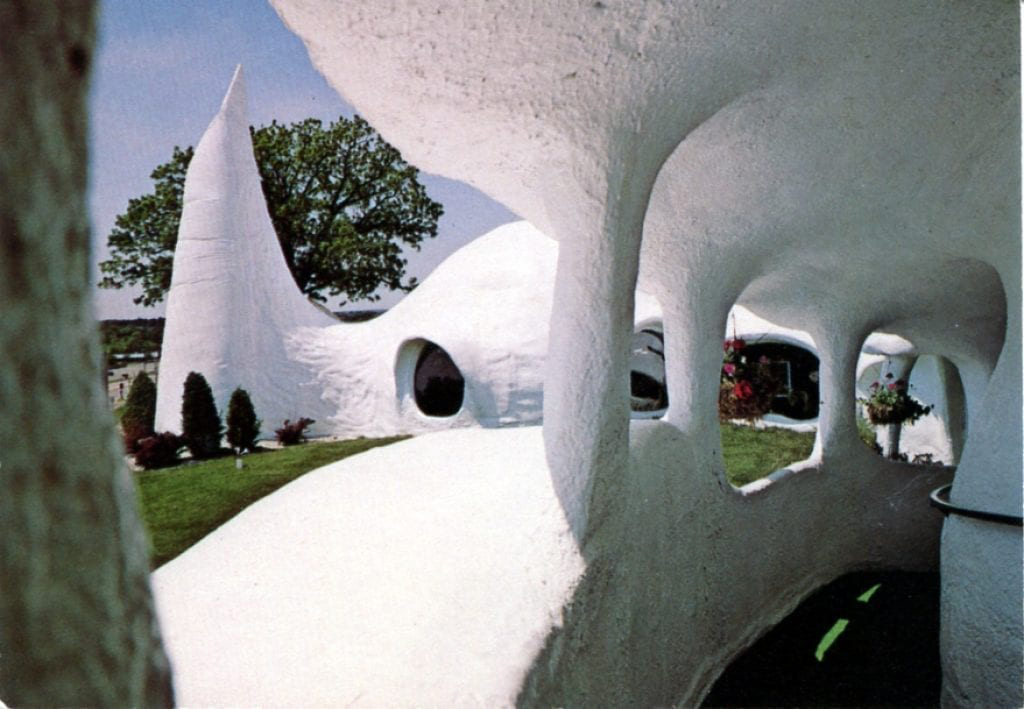
By the late 1970s, Wisconsin Dells, Wisconsin, had become the heartland’s premiere vacation hotspot, and when Masters visited, he saw the perfect plot of land on which to plant his new promotional home: a hill overlooking the town’s main intersection. Teaming with designer Stewart Gordon, Masters took his Aspen design to the next level, expanding into a 4,000-square-foot “livable” space, along with a silo-like structure out front. Balloons were once again used for the construction, and polyurethane foam was employed to offer better weather resistance.
When naming the attraction, Masters considered the Chinese city of Shangdu, known popularly as Xanadu, the summer capital of the Yuan dynasty. Opening in July 1979, Xanadu would see over 100,000 visitors in its first three months alone.
Public Domain
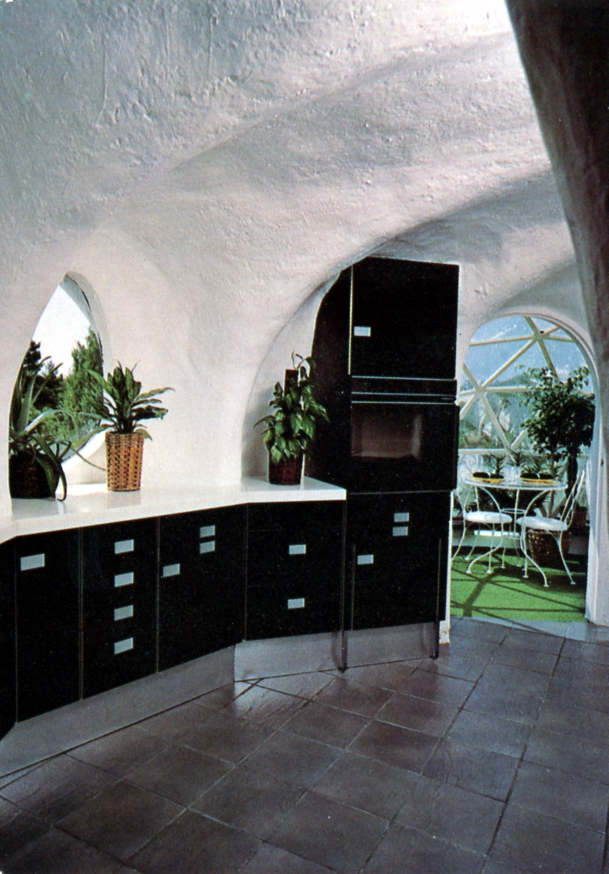
Teaming up with architect Roy Mason, Masters next set his sights on Kissimmee, Florida, near Disney’s new Epcot Center. Mason brought with him high concepts of how technology could be integrated into daily life, and Xanadu went from a home of foam to an electronic wonder with additions that included a central technological hub that offered temperature, lighting, and audio and video adjustment via voice instruction. He envisioned computers connecting people around the world, a fully computerized kitchen, a greenhouse that cared for itself, and robot assistants. While the tech on display was actually a disappointing, nonfunctioning facade, nearly everything Mason dreamed up for Xanadu would become part of everyday life by 2023.
Xanadu Kissimmee opened in August of 1983 and proved more of a curiosity than a hit, as did a third location in Gatlinburg, Tennessee. The houses would change hands as the partnership of Masters and Mason dissolved over vision and money conflicts. By the early 1990s, the Xanadu houses in Wisconsin and Tennessee fell prey to the wrecking ball, while the Florida location lived on until 1996. That same year, Mason was murdered in his home, marking a tragic end to one half of the visionary team behind a truly unforgettable idea.
 Remind
PUZZLER: Retro Sci-Fi
Vol. 3, Issue 9
Enjoy puzzles and trivia on shows like 'Star Trek,' 'The Twilight Zone,' 'Land of the Lost,' 'Lost in Space,' 'Voyage to the Bottom of the Sea,' 'My Favorite Martian' and more.
Buy This Issue