

The Grateful Dead’s Famous Skeleton & Roses Poster Came From This 1900 Drawing






What To Know
- The Grateful Dead’s iconic skeleton and roses artwork originated from a 1900 illustration.
- Artists Alton Kelley and Stanley Mouse adapted Sullivan’s drawing for a 1966 concert poster.
For Grateful Dead fans, the famous skeleton surrounded by red roses artwork is just as synonymous with the band as its music. The design appeared on a 1966 concert poster and was later used for the cover of the band’s 1971 live album commonly known as Skull and Roses. However, the skeleton was not created for the Grateful Dead. The image can be traced back to a black-and-white drawing completed more than 60 years before it appeared on the band’s poster.
In honor of the anniversary of Grateful Dead cofounder Jerry Garcia’s death on August 9, 1995, at the age of 53, let’s learn about the history of the artwork and where it originally came from.
The Drawing Was Created Around 1900
The original artwork, titled A Skeleton Amid Roses, was created by illustrator Edmund Joseph Sullivan. The ink drawing, which also has pencil underneath it, is copyrighted 1900. Sullivan created the illustration for a verse in The Rubáiyát of Omar Khayyám. The artwork appeared in a 1913 illustrated edition of the collection, which featured Edward FitzGerald’s English translation of the Persian poet’s work.
The verse that accompanied the skeleton focuses on how quickly life passes and how a flower dies after it blooms. Sullivan surrounded his skeleton with an elaborate wreath of roses, creating a striking combination of life and death.

Heritage Auctions, HA.com; Print Collector/Getty Images
How It Became a Grateful Dead Poster
Artists Alton Kelley and Stanley Mouse discovered Sullivan’s illustration in a library book during the 1960s. According to an account reported by Rolling Stone and cited by the Georgetown University Library, Kelley cut the printed illustration from the book with a penknife. The pair copied the image using an early machine that worked somewhat like a photocopier. Mouse then added bright colors and psychedelic lettering, transforming Sullivan’s black-and-white drawing into something new.
Their finished poster advertised the Grateful Dead and Oxford Circle’s Sept. 16 and 17, 1966, shows at San Francisco’s Avalon Ballroom. The poster became known as Family Dog No. 26, after the production company that organized the concerts. Five years later, Kelley and Mouse returned to the skeleton and roses design for the cover of the Grateful Dead’s 1971 double live album. Although the record was officially self-titled, it became known as Skull and Roses because of its cover. The image soon became one of the symbols most closely associated with the band. First-run prints of the poster can sell for big bucks; a near-mint-condition one sold at Heritage Auctions for a whopping $137k in 2022.

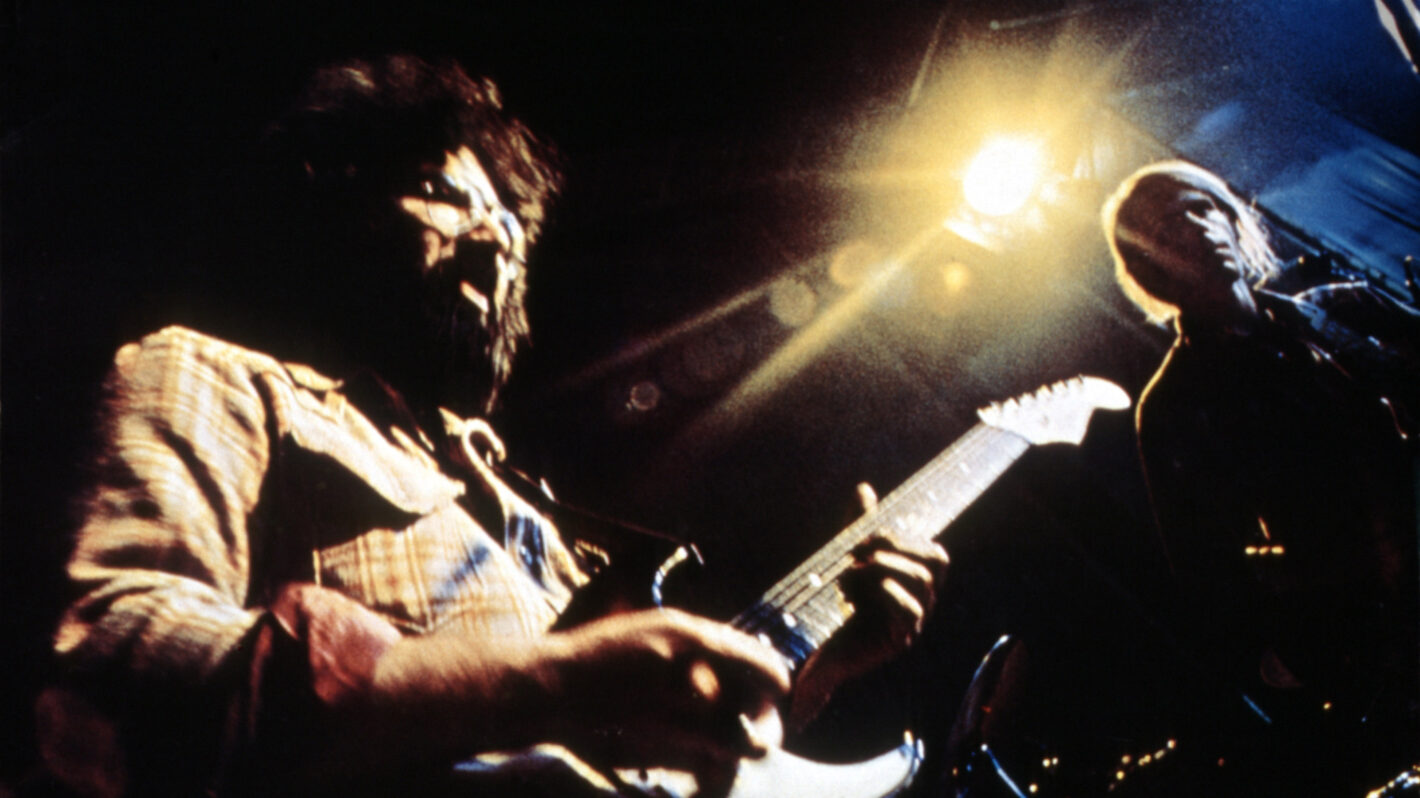
FILLMORE, Jerry Garcia of The Grateful Dead, in a documentary of their concert at the Fillmore West, SF, 1972.
Where Is the Original Drawing Now?
The original A Skeleton Amid Roses belongs to a private collection, but Grateful Dead fans currently have a rare opportunity to see it in person. The drawing is part of Forever Grateful at the Haight Street Art Center in San Francisco. The free exhibition features more than 400 pieces of artwork, instruments, photographs, records and other items that chronicle the Grateful Dead’s history from 1965 to 1995.
The original drawing is displayed alongside copies of the 1966 poster and the color acetates used to create its vivid layers. The exhibition also includes a working quarter-scale replica of the Grateful Dead’s Wall of Sound. Forever Grateful remains open through September 20, 2026, at 215 Haight Street. Gallery hours are noon to 6 pm Thursday through Sunday. The art center notes that some of the more fragile pieces rotate during the exhibition, so visitors may want to check for updates before making a special trip.
 TV Insider
Birth of Rock 'n' Roll
February 2024
"Long live rock," we like to say, but how did it come to life? Revisit the memorable moments, music and movies that made teens go beat crazy back in the 1950s.
Buy This Issue