

5 Reasons ‘Upstairs, Downstairs’ Is Still One of Britain’s Greatest TV Dramas






Before Downton Abbey, there was Upstairs, Downstairs, a British drama that followed the Bellamy family and their servants at 165 Eaton Place in Belgravia, London, beginning in 1903 and ending in 1930, starring David Langton, Rachel Gurney, Simon Williams, Nicola Pagett, Gordon Jackson, Angela Baddeley, Jean Marsh, and Pauline Collins.
The original series aired from 1971 to 1975 and ran for five seasons. It became one of the most acclaimed period dramas of its era, and with co-creator and star Jean Marsh remembered after her death in 2025, it is a good time to revisit the show that helped make this kind of storytelling so memorable.
The servants got real stories

Everett Collection
The show follows both sides of the household. Upstairs, Richard Bellamy (David Langton), Lady Marjorie Bellamy (Rachel Gurney), James Bellamy (Simon Williams) and Elizabeth Bellamy (Nicola Pagett) live with money, politics, marriage pressure and family expectations. Downstairs, Mr. Hudson (Gordon Jackson), Mrs. Bridges (Angela Baddeley), Rose Buck (Jean Marsh), Sarah Moffat (Pauline Collins), Edward Barnes (Christopher Beeny), Daisy Peel Barnes (Jacqueline Tong) and Ruby Finch (Jenny Tomasin) have their own dramas. The servants fall in love, make mistakes, lose people, leave service, return to service, and sometimes know more about the family than anyone upstairs realizes. Rose Buck is especially important to the series. She begins as the head house parlourmaid and becomes one of the show’s main stars.
It started with Jean Marsh and Eileen Atkins

Everett Collection
Upstairs, Downstairs began with Jean Marsh and Eileen Atkins, who first imagined a series about two housemaids. The early idea was called Behind the Green Baize Door and was originally closer to a comedy. The concept changed as the upstairs family was added and the setting moved to an Edwardian London townhouse. Before it became Upstairs, Downstairs, the show went through several possible titles, including Two Little Maids in Town, The Servants’ Hall, That House in Eaton Square and 165 Eaton Place. Atkins was originally expected to play Sarah Moffat, but she was unavailable because she was appearing in Vivat! Vivat Regina! at the time. Pauline Collins took the role instead, while Marsh played Rose Buck, the character most closely tied to the show from beginning to end.
The house has its own history

Everett Collection
The Bellamy home is supposed to be 165 Eaton Place, but the exterior shots were filmed at 65 Eaton Place, with a “1” added to create the fictional address. It is a small production detail, but it became part of the show’s identity. The opening credits also help place viewers in the Edwardian world before the episode begins. Each episode used a cartoon from Punch, the British satirical magazine, and the lettering was drawn by graphic designer Terry Griffiths. The theme music, “The Edwardians,” was composed by Alexander Faris. A version of the music later became “What Are We Going to Do with Uncle Arthur?,” the song Sarah Moffat performs in the episode “For Love of Love.”
The show covers a lot of history

Everett Collection
Across its five seasons, Upstairs, Downstairs moves through the Edwardian era, women’s suffrage, the sinking of the Titanic, World War I, the Spanish flu pandemic, the Roaring Twenties and the Wall Street crash. Those events affect both the Bellamys and the staff. Lady Marjorie Bellamy’s story is tied to the Titanic. James Bellamy serves in World War I and carries its effects afterward. Hazel Bellamy (Meg Wynn Owen) dies during the influenza pandemic. Georgina Worsley (Lesley-Anne Down) becomes part of the postwar “bright young things” world of the 1920s. The final season takes the story into 1930, as the old household begins to break apart. By the end, 165 Eaton Place is for sale, and Rose walks through the empty rooms one last time.
It was a major awards success

Everett Collection
Upstairs, Downstairs was not just a hit with viewers. It won major awards in both Britain and the United States, including BAFTAs, Emmys and a Golden Globe. Marsh won an Emmy in 1975 for playing Rose Buck, while Jackson also won an Emmy for his performance as Mr. Hudson. The series later appeared on the Writers Guild of America’s list of the 101 best-written TV series. Its influence lasted long after the final episode aired in 1975. The show inspired spin-off ideas, led to the 1979 series Thomas & Sarah, and helped create a television language that later period dramas would continue using for decades.

 Remind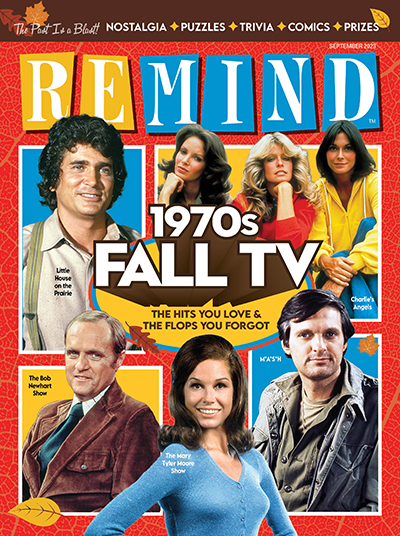
1970s Fall TV
September 2023
Take a trip back to the ’70s by looking at the TV Guide Magazine Fall Preview primetime lineups.
Buy This Issue