

It Took 6 Months to Film This One Scene in ‘The Ten Commandments’





What To Know
- The iconic parting of the Red Sea scene in The Ten Commandments took six months.
- Director Cecil B. DeMille and his team used a combination of techniques to create the massive visual sequence.
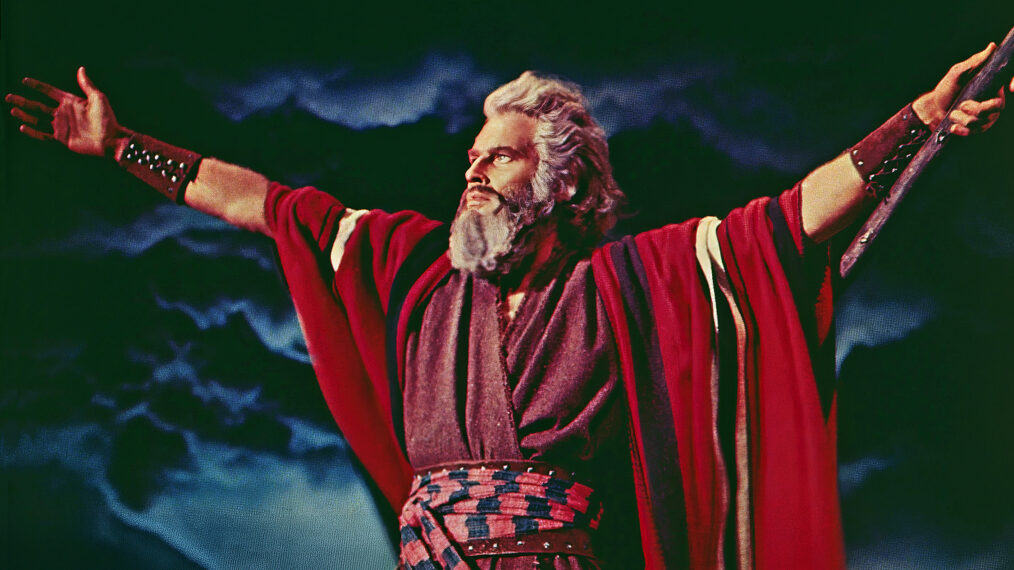
Almost every epic movie has an incredibly big moment, and The Ten Commandments is no exception. Despite being made in the 1950s, there is still one scene that impresses fans: the parting of the Red Sea. What most viewers don’t realize is how much time and engineering went into that one sequence, because it couldn’t be created in a single pass.
By the time director Cecil B. DeMille reached the Red Sea scene, he knew it would be the film’s defining visual. It had to feel massive and convincing, and there were no computer effects at the time, which meant relying entirely on practical techniques and optical photography. The result was not one shot, but a carefully constructed composite built from multiple elements layered together.
The performances, including Charlton Heston as Moses, were filmed separately using blue screen so they could be combined with background elements later. Plates of the desert landscape were shot independently, then extended using matte paintings to create a larger environment. Additional exposures were used for the sky and atmosphere, which had to align precisely during compositing. The water itself was created using large-scale miniatures built on the Paramount Pictures lot.
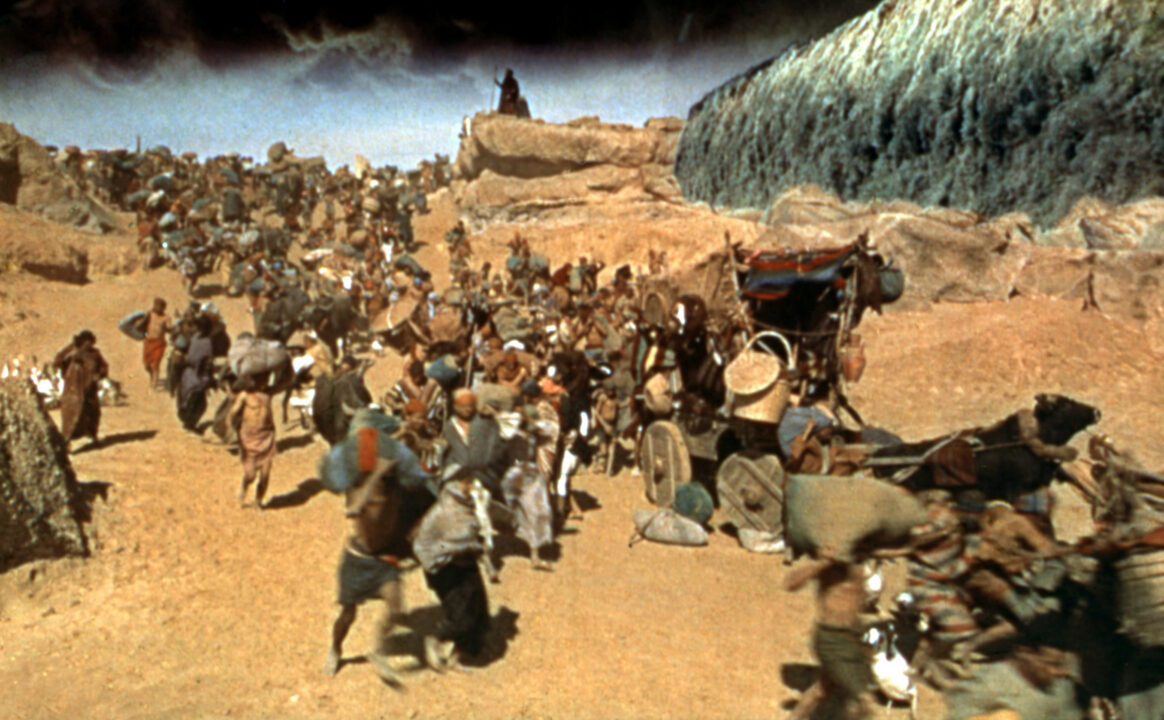
Everett Collection
The effects team constructed a tilted ramp and released large volumes of water from an elevated tank, shaping the flow through a controlled valve system. To prevent the water from appearing too smooth, physical obstacles were placed along the ramp to break it into more natural, turbulent movement. The footage was then reversed so the water appeared to rise upward, forming the walls of the sea.
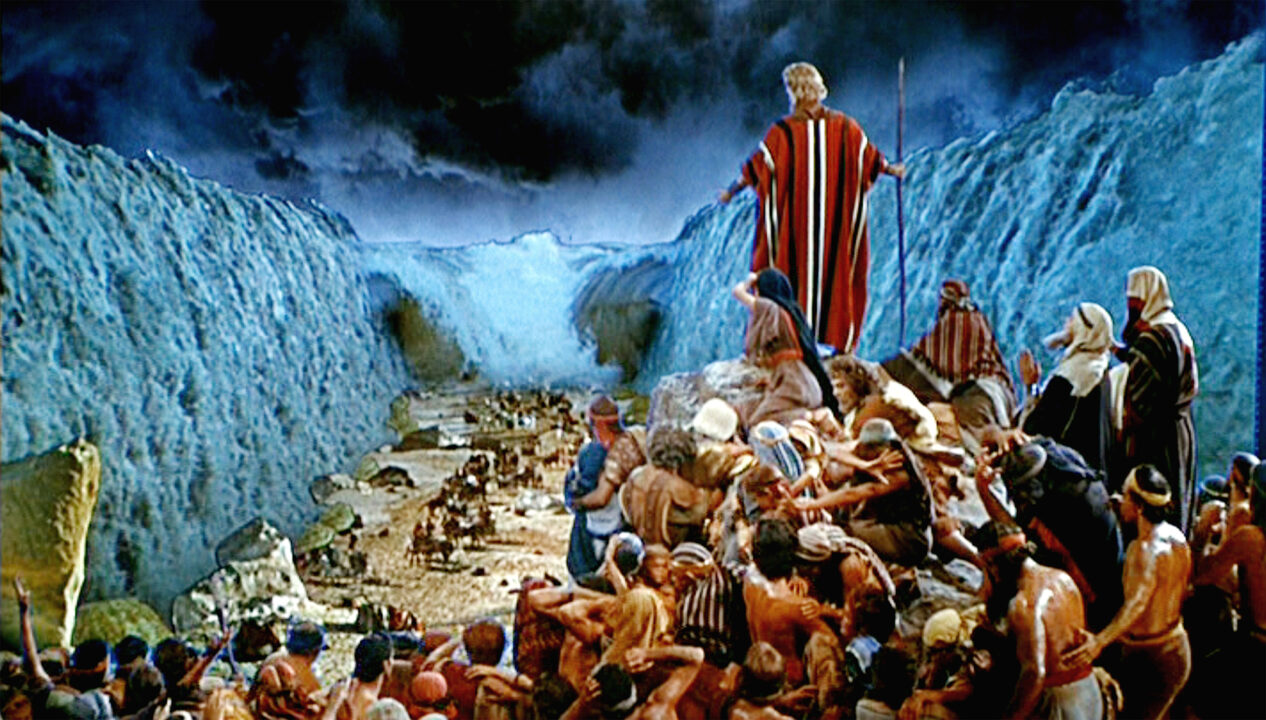
Screen capture © 1956 CBS Photo Archive via Getty Images
Each of these elements was combined using optical printing, which required aligning multiple pieces of film with high precision. Matte paintings were also used to conceal the seams between different layers, particularly where miniature effects met live-action footage. Any misalignment would have been visible, so the process involved repeated adjustments and careful timing.
The sequence took roughly six months to complete. Portions were filmed on location near the Red Sea, while others were produced entirely on controlled sets and backlots. The final result is a sequence built from practical effects, compositing, and physical materials, assembled in a way that still seems convincing decades later.
Do you think the scene and its effects still hold up? Debate in the comments!
 Remind
Hollywood Heaven
April 2021
Take the high road to Hollywood Heaven with feel-good TV shows, movies, music and more!
Buy This Issue