

Why ‘Heated Rivalry’s Throwback Hit ‘All the Things She Said’ Has a Problematic Backstory





What To Know
- HBO’s Heated Rivalry features a pivotal scene set to a cover of t.A.T.u.’s 2002 hit “All the Things She Said.”
- The Russian duo courted LGBTQ+ audiences, though neither member identified as queer, and both later expressed discomfort with the fabricated image.
- The group’s legacy is further complicated by later actions, including homophobic remarks.
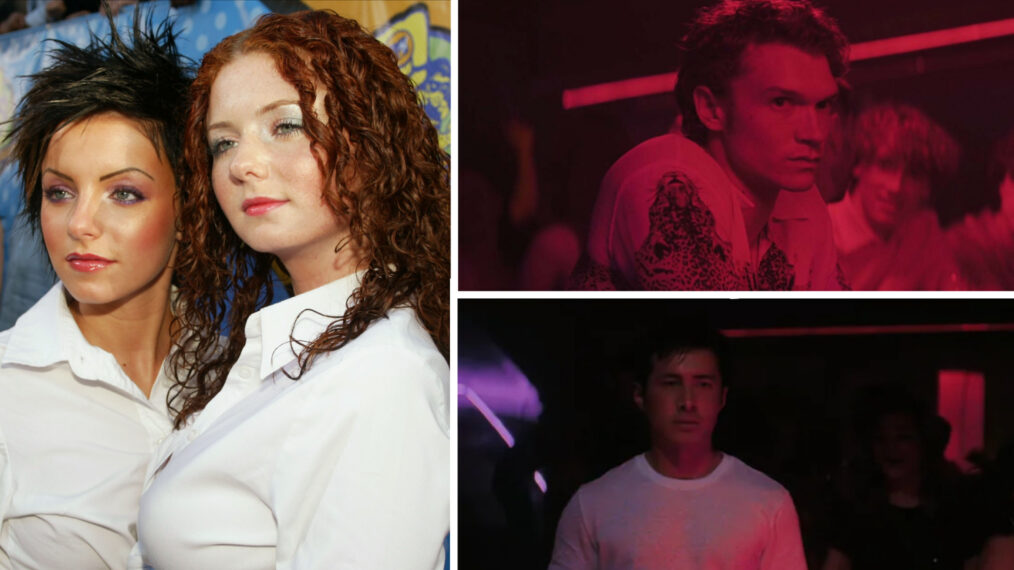
In Episode 4 of HBO’s Heated Rivalry, titled “Rose,” a charged club sequence captures the simmering tension between hockey adversaries Ilya Rozanov and Shane Hollander (Connor Storrie and Hudson Williams). While dancing with other partners, the two men keep stealing glances at one another, unable to mask the feelings they are struggling to hide. The moment is underscored by a perfectly chosen needledrop, a cover of t.A.T.u.’s 2002 hit “All the Things She Said” by British producer Harrison.
The scene has since given the song a modest resurgence, with fans of the show using it in posts and Reels about Heated Rivalry, though both the track and its creators carry a complicated legacy.
The song was written by producer Ivan Shapovalov, who assembled the Russian pop duo made up of Lena Katina and Julia Volkova. According to Shapovalov, the concept was inspired by a dream his wife had while under sedation, in which she imagined kissing another woman.
Thanks to a catchy hook and a controversial video featuring two teen girls in school uniforms stealing kisses from each other, the song was a massive hit, topping charts in the UK, Australia, New Zealand, Germany, Ireland, Italy, Spain, and other countries
In the music video, the duo was portrayed as queer, with even their name derived from the phrase ta lyubite tu, meaning “this girl loves that girl,” despite neither performer identifying as queer in real life. LGBTQ+ imagery was used to court a queer audience and generate controversy, without offering an authentic representation of the community. The pair often leaned into that manufactured persona during performances of the song, including staged onstage kisses while wearing Catholic schoolgirl uniforms.
The duo would later confirm they were not a couple, but just “loved each other,” and at times, were uncomfortable with the manufactured image. This caused a sense of betrayal among fans who had seen them as icons.
The duo was also notably out of step with much of their audience’s politics, such as when they contributed to the song “Happy Birthday” by Flipsyde or released the song “White Robe” which were described as pro-life anthems by the band that contradicted their earlier anti-establishment brand.
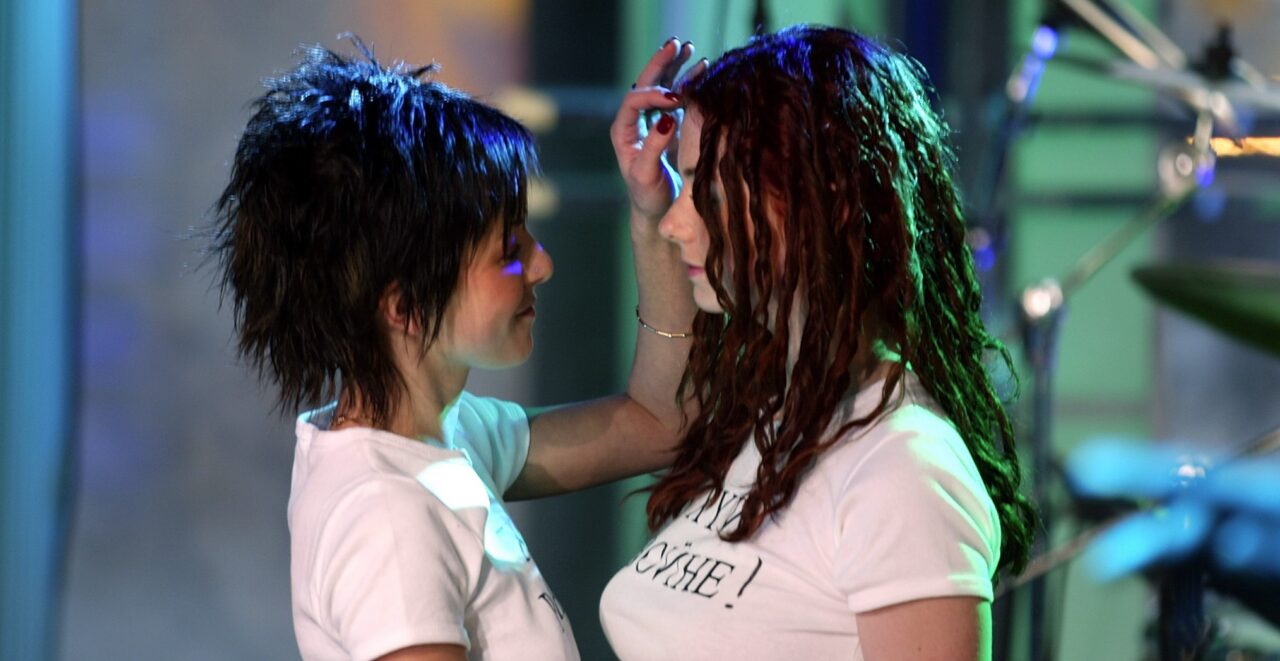
Scott Gries/Getty Images
The “problematic” label was solidified when in 2014, Volkova made openly homophobic remarks, stating she would “not accept” a gay son, while claiming lesbians are “aesthetically” better than gay men. Soon after, Katina shared her pro-LGBTQ+ stance in a social media post and Volkova would eventually issue an apology
t.A.T.u. officially disbanded in 2011 after years of internal conflicts and both Katina and Volkova chose to pursue solo careers. The duo briefly reunited in 2014 to perform at the Sochi Winter Olympics, a controversial appearance given Russia’s harsh anti-LGBTQ policies, and they have come together on a few scattered occasions since.
According to showrunner Jacob Tierney, the song was still a perfect choice as it correlated with how young millennials adored the song when it was first released. “Those songs that we hear when we were that age, they mean so much to us,” he told People. “They become so impactful and they’re so loaded with our own memories and our own nostalgia.”
“There’s loads of songs like that, but this one just felt right.”
 TV Insider