

Remembering Paul Benedict, ‘The Jeffersons’ Harry Bentley





What To Know
- Paul Benedict was best known for his role as the eccentric neighbor Harry Bentley on The Jeffersons, but his career spanned Broadway, children’s television, and numerous film roles.
- Born in 1938 and diagnosed with acromegaly, Benedict built a reputation as a versatile character actor, appearing in films like Jeremiah Johnson, This Is Spinal Tap, and on Sesame Street as The Number Painter.
- In addition to his screen work, Benedict was deeply involved in theater as both an actor and director, performing on Broadway and directing acclaimed productions until shortly before his death in 2008.
When Paul Benedict stepped onto television screens in 1975 as the eccentric Harry Bentley on The Jeffersons, he became a fan favorite side character. But while many fans remember him best as George Jefferson’s endlessly patient neighbor, Benedict’s career stretched far beyond, encompassing Broadway stages, children’s television, and a long list of memorable film roles.
How did Paul Benedict begin his career?
Born Paul Bernard Benedict on September 17, 1938, in Silver City, New Mexico, Benedict grew up primarily in Massachusetts, the son of a journalist mother and a physician father. He attended Boston College High School before graduating from Suffolk University, where he further developed his interest in performance. He also served a tour of duty in the United States Marine Corps.
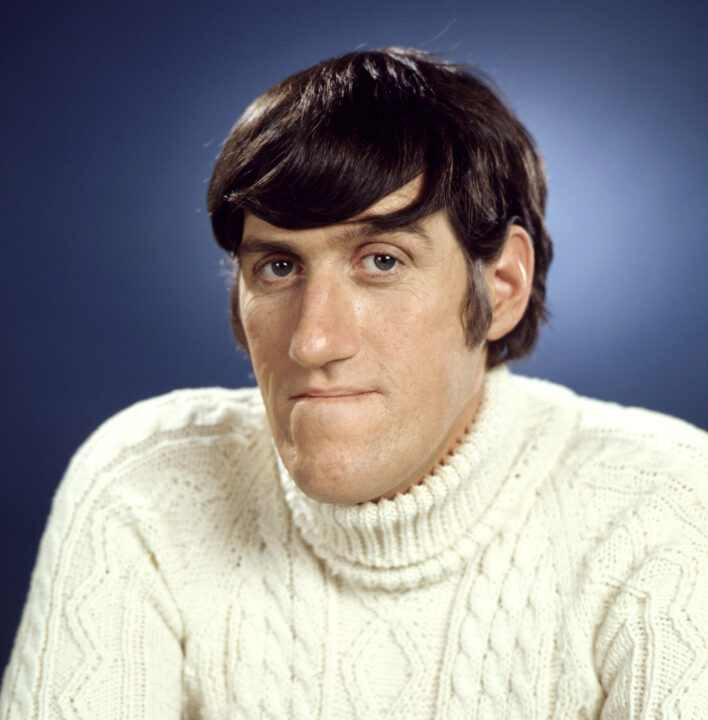
Benedict’s distinctive facial features were later attributed, in part, to acromegaly, a hormonal condition first identified by an endocrinologist who happened to see him performing in a theatrical production. After college, he joined the Theatre Company of Boston, where he worked alongside emerging performers including Robert De Niro, Dustin Hoffman and Al Pacino.
Benedict began appearing in film and television in the mid-1960s, steadily building a reputation as a dependable and versatile character actor. One of his early notable film roles came in Sydney Pollack‘s Jeremiah Johnson (1972), in which he played Reverend Lindquist opposite Robert Redford.
CBS/Everett Collection
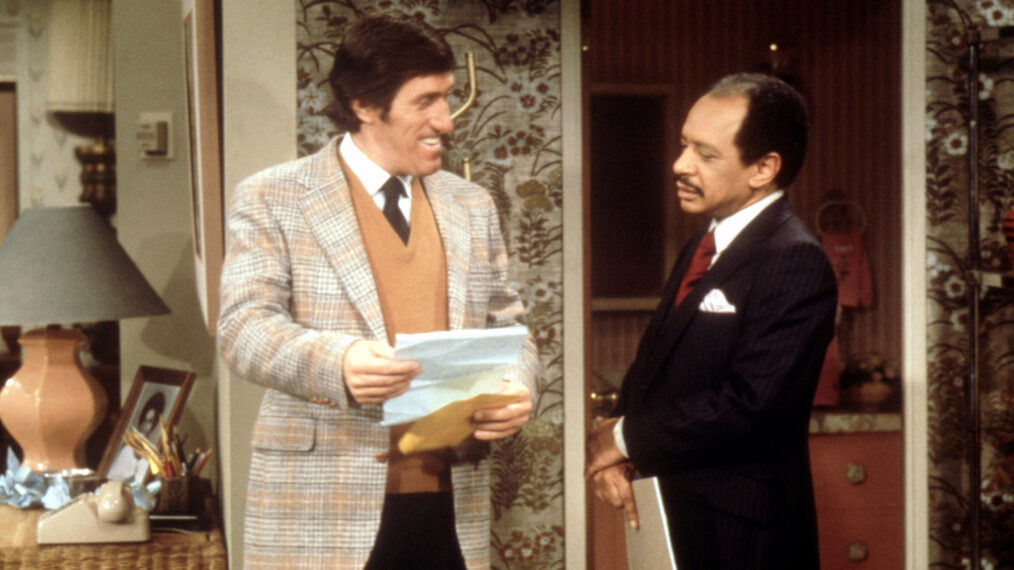
Around the same period, he appeared in Miloš Forman‘s first American film, Taking Off, as well as the eccentric mystery They Might Be Giants. His most recognizable role arrived in 1975 when he was cast as Harry Bentley on The Jeffersons. Bentley was the well-mannered English bachelor who lived next door to George and Louise Jefferson and worked as a translator for the United Nations. Benedict played the role from the series’ debut through 1981, returned in 1983, and remained until the show concluded in 1985.
At the same time, Benedict reached a very different audience as The Number Painter on Sesame Street, helping young viewers learn numbers through colorful segments. Throughout the 1970s, 1980s, and 1990s, Benedict appeared in an impressive range of films, including The Goodbye Girl, The Man with Two Brains and the cult favorite This Is Spinal Tap, where his brief appearance as the awkward hotel desk clerk Tucker “Smitty” Brown became a fan-favorite moment.
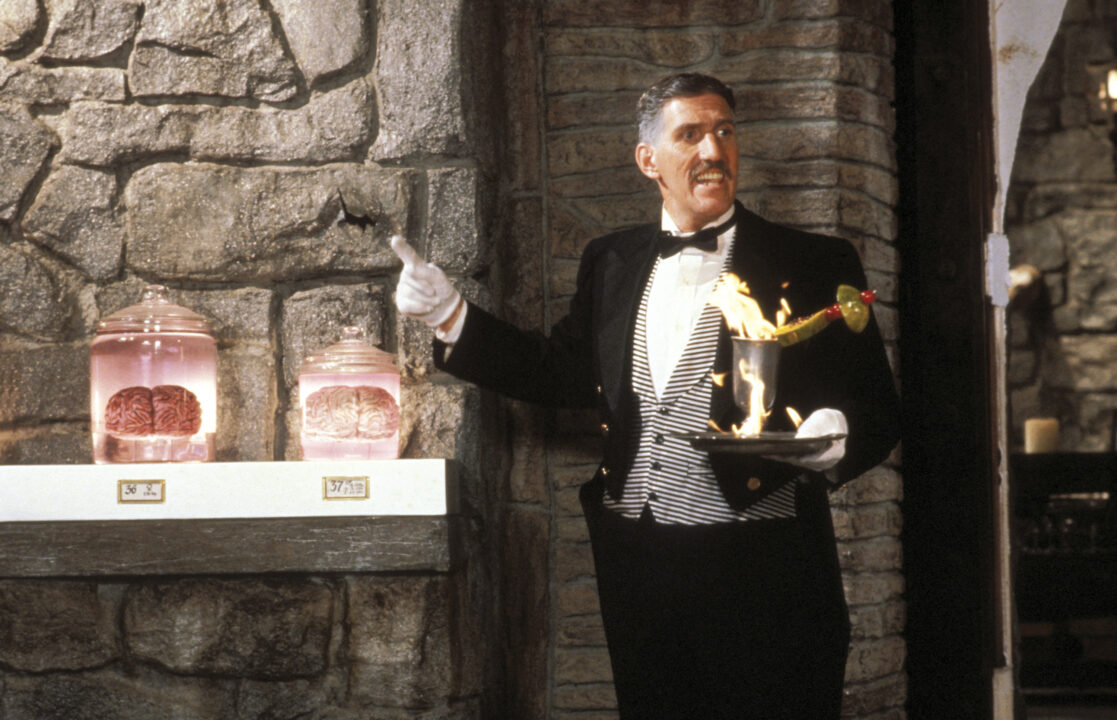
Later roles included Arthur 2: On the Rocks, Cocktail, The Freshman, The Addams Family, Waiting for Guffman and A Mighty Wind. On television, he made guest appearances on series including Seinfeld and A Different World. His final television appearance came on The Drew Carey Show in 2002, and his final film role was completed in 2008 in Side By Each.
Warner Brothers/Everett Collection
While audiences often associate Benedict with his screen work, theater remained central to his career. He appeared on Broadway in Eugene O’Neill’s two-character play, Hughie, in 1996, alongside Pacino, and later in The Music Man during its 2000 to 2001 run. Off-Broadway, he performed in Terrence McNally’s It’s Only a Play, a project he had previously directed in an earlier production.
Benedict also built a respected reputation as a director. He directed Frank D. Gilroy‘s Any Given Day on Broadway and helmed the original Off-Broadway production of McNally’s Frankie and Johnny in the Claire de Lune. He also directed The Kathy and Mo Show, which went on to win an Obie Award. In 2007, shortly before his death, Benedict returned to the stage as a performer in Harold Pinter‘s No Man’s Land at the American Repertory Theater in Cambridge, Massachusetts, reaffirming his lifelong connection to live theater.
On December 1, 2008, Benedict was found deceased at his home in Aquinnah on Martha’s Vineyard due to a brain hemorrhage. He was 70. In 2009, he was honored posthumously with an Elliot Norton Award by the Boston Theater Critics Association, recognizing his contributions to the theater community.

 Remind
1970s Fall TV
September 2023
Take a trip back to the ’70s by looking at the TV Guide Magazine Fall Preview primetime lineups.
Buy This Issue