

The Surprising Historical Event That Inspired ‘The Twilight Zone’





What To Know
- Rod Serling was inspired to create The Twilight Zone after his attempts to address racism and social injustice on television, particularly following the murder of Emmett Till, were repeatedly censored by networks and advertisers.
- Frustrated by the restrictions of 1950s television, Serling learned to use science fiction and fantasy as allegories to discuss controversial issues like prejudice and violence indirectly.
- This approach led to the creation of The Twilight Zone in 1959, a show that used unsettling stories and metaphors to challenge viewers’ perspectives on humanity and social issues.
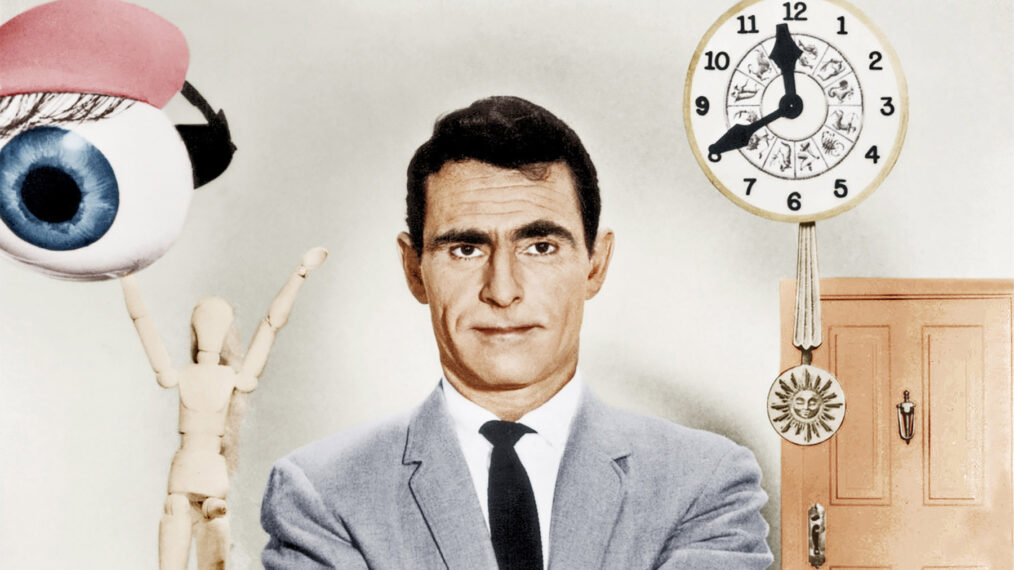
Millions of viewers are preparing for the annual Twilight Zone New Year’s Eve and New Year’s Day marathons on SyFy and H&I, when the classic horror and sci-fi series rules the airwaves for 48 hours. But even if you’re among the show’s most devoted fans, you might not know that the seeds for its creation were planted by one of the most painful chapters in American history: the murder of Emmett Till.
How a historical injustice inspired The Twilight Zone
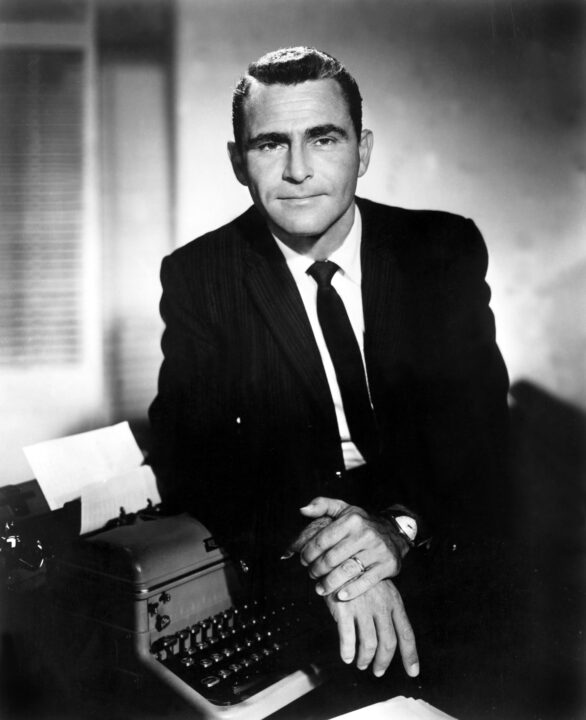
In 1955, the murder of Emmett Till and the acquittal of his killers shook the country. Rod Serling, then a young and already respected television writer, believed deeply in TV’s power to confront social injustice. He watched as the story unfolded in headlines and courtrooms, convinced it was exactly the kind of subject dramatic television should address. “The writer’s role is to be a menacer of the public’s conscience,” Serling later said, according to Smithsonian Magazine. “He must have a position, a point of view. He must see the arts as a vehicle of social criticism and he must focus the issues of his time.”
Serling tried to write a teleplay inspired by the Till case, hoping to confront racism head-on. What followed was a sobering realization about how restrictive 1950s television could be. Advertisers and networks, terrified of offending white audiences in the South, demanded revisions. By the time his teleplay “Noon on Doomsday” aired in 1956, nearly everything that gave it meaning had been stripped away, including its clear moral point.
Everett Collection
Serling later recalled that the script was “gone over with a fine-tooth comb by 30 different people,” leaving him attending multiple meetings a day just to track what had to be removed. The setting was moved away from the South, the victim’s identity was altered and even small visual cues that might suggest the region were eliminated. When Serling read the New York Times review, he knew the message had been lost. In a private letter, he wrote that the experience felt like being run over by a truck, and then backed over again.
He tried again and again, but still met resistance. For Playhouse 90, Serling wrote “A Town Has Turned to Dust,” another lynching story, this time pushed back a full century and drained of direct racial references. Yet something clicked. Its closing monologue, warning about prejudice and violence, felt eerily like the endings Serling would soon deliver himself, standing alone under a spotlight.
How Serling realized he could address political issues head-on on The Twilight Zone
CBS Photo Archive via Getty Images
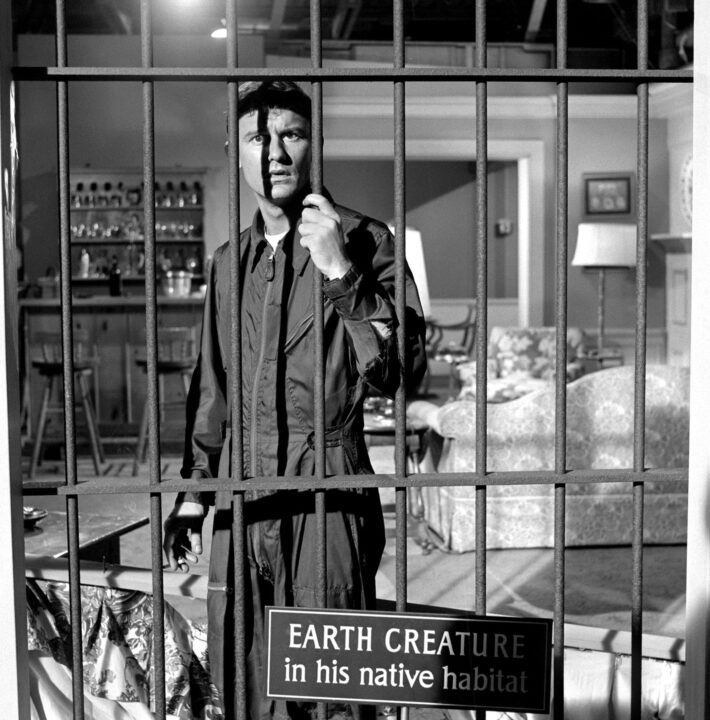
Those battles taught Serling a crucial lesson. If television would not allow him to speak directly, he would speak indirectly. He would cloak modern fears in fantasy, turn bigotry into alien encounters, and use time travel and dystopian futures to say what could not be said outright. As Serling later explained, during that time of TV production, if you wanted to write about racial prejudice, you set it somewhere else, sometime else, and let the audience find the meaning on their own.
That realization led directly to The Twilight Zone, which premiered in 1959. Even the title reflected this approach. “The twilight zone” was a military term Serling knew from his World War II service, describing a moment when a pilot loses the horizon and orientation. It was the perfect metaphor for a show designed to unsettle viewers, forcing them to look at humanity from an unfamiliar angle. Week after week, Serling used science fiction and fantasy as a filter, allowing him to tackle prejudice, war, nuclear anxiety, conformity and moral cowardice without naming them outright.
 Remind
Top 50 Horror Movies
October 2025
The films in this issue have scared the living daylights out of us all for decades, what made #?
Buy This Issue