

Here’s Why ‘Batman Returns’ is a Holiday Classic





What To Know
- Batman Returns stands out as a unique holiday classic due to its dark, quirky take on Gotham during Christmastime — the result of creative freedom given to director Tim Burton.
- The film explores complex, troubled characters like Max Shreck, the Penguin, and Catwoman, each embodying themes of hidden motives, societal rejection, and transformation.
- Burton and screenwriter Daniel Waters incorporate classic Batman lore, such as the Penguin’s mayoral run, while infusing the story with memorable performances and a sinister holiday atmosphere.
Batman Returns is one of those movies that people either love or hate — there seem to be very few folks out there who are ambivalent about Tim Burton‘s second foray into Gotham City and the lore of the Dark Knight following the 1989 mega-blockbuster Batman.
For the sequel, the studio executives at Warner Brothers Pictures decided to exercise an unusual amount of trust, and essentially gave Tim the keys to the car. “Go take her for a spin” is what I imagine they said. “We don’t care where you go this time around; just make us oodles of money and everything will be okay.” And, with that, Tim Burton gave us the most messed up, yet truly wonderful, holiday movie ever.
Talking about the movie in 2022, SlashFilm quoted Burton as saying this, “I feel really fondly about it because of the weird experiment that it felt like.”
In Burton’s Batman movies, no one is okay. No one. Everyone is troubled, and there is always something just a little bit sinister lurking underneath it all. As for Christmastime, according to good old Uncle Tim, we all have a little bit of Ebenezer Scrooge in us.
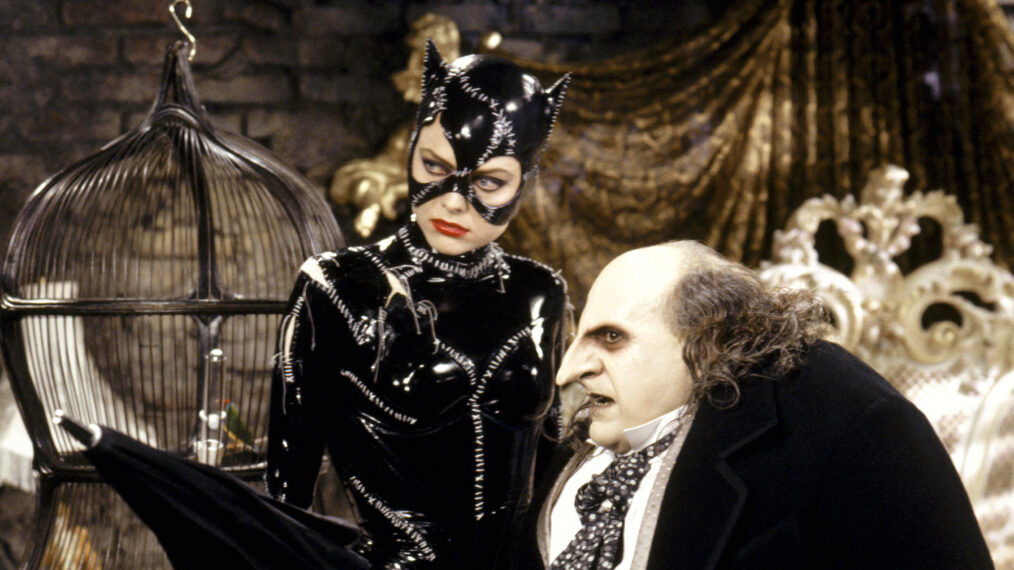
This is especially true of Max Shreck. Played by Christopher Walken, this is one of my favorite all-time characters. Walken seems to be having so much fun with the character — a favored son of Gotham whose plans for the city seem to mirror the world of today. You see, for Max, it’s all about the art of the deal. He doesn’t give one iota about relationships, unless that relationship is his ongoing love affair with the good old American dollar bill. He hides this reality behind the guise of a do-gooder, someone who only wants to spread holiday cheer. It isn’t long before Shreck aligns himself with a “poor, unfortunate soul,” a hideous monster of a man: Oswald Cobblepot, the Penguin. If you think about it, the Penguin is the only character in this movie who isn’t obsessed with hiding his true self.
The Penguin is an outcast, a loner, shunned by his parents and rejected by society. Now, at the behest of Shreck, he’s running for mayor. Shreck needs an inside guy to accomplish his nefarious deeds and the Penguin, as it turns out, fits the bill quite nicely. While Shreck’s motives are shrouded behind the deceptive guise of holiday benevolence, the Penguin is quite a bit more transparent. Despite Shreck’s coaching on how to act, his true colors are always close to the surface. At the end of the day, he just wants vengeance. Like a hurt animal, he’s determined to strike back and make everyone pay for their normalcy.

©Warner Bros./courtesy Everett Collection
I really love that Burton and screenwriter Daniel Waters incorporated this subplot because the Penguin running for mayor is a classic story. We saw it first on TV way back in 1966 when the Penguin, then played by Burgess Meredith, ran for office. He was a radically different version of the character, but it’s the same story. Never wanting to shy away from recycling a great idea, the series Gotham on Fox also revisited the “Penguin for Mayor” trope.
There have been many wonderful Catwomen over the years, Julie Newmar will always be my favorite, but Michelle Pfeiffer knocked it out of the park. In this film, the mousy, trodden-upon Selina Kyle is pushed out of Shreck Tower only to be resurrected by a horde of cats. As horrific as that sounds, the scene itself is oddly beautiful, with the snow framing Selina’s broken body and the moon making her pale countenance all the more striking.
Did I mention that this winter fairytale also has an Ice Princess? Long before Disney introduced us to Elsa, Gotham had its own. Of course, things aren’t likely to go well for her. Jumping out of an oversized Jack-in-the-box and lighting the city’s Christmas tree are pretty much the only good things that go this poor young lady’s way.

Everett Collection
So, what kind of holiday message does this film really offer? Is it ultimately one of hope, peace on earth, or goodwill toward men? No. This movie doubles down on the “Grinch Factor” by framing Batman for a crime he didn’t commit and tricking Catwoman into becoming an unwitting accomplice. By the time Bruce and Selina finally figure things out, including each other’s big secret, it’s too late to somehow scrape together a happy ending.
Instead, Bruce Wayne is left to pick up the shattered pieces of this most hostile of all holidays and return home to his stately Wayne Manor to nurse his wounded body and soul. It was not quite the same triumphant ending that Burton gave audiences during the summer of 1989.
I stood in line for hours to see this on opening night with my wife and my father. The old man had always been something of a closet Batman fan, and he wanted to tag along. After the movie ended, my wife whispered in my ear, “What the heck was that?” And my father? He hasn’t watched another Batman movie since. I, however, was in seventh heaven, grateful for Santa Tim stopping by with an early gift.
View this post on Instagram
As a side note: McDonald’s, who signed up to promote the film with special cups and Happy Meals, was absolutely livid about the final product. Rumor has it their outcry was enough to ensure Burton would never be given free reign in Gotham again.
Regarding the film’s infamous corporate tie-in, CinemaBlend, has this quote from Burton, “I think I upset McDonald’s. (They asked) ‘What’s that black stuff coming out of the Penguin’s mouth. We can’t sell Happy Meals with that!'”