

The Surprising Origins of ‘How the Grinch Stole Christmas’





What To Know
- The Grinch character first appeared in a 1955 Dr. Seuss poem called “The Hoobub and the Grinch,” which had no connection to Christmas and portrayed the Grinch as a sly con artist.
- In 1957, Dr. Seuss reimagined the Grinch as the protagonist of his book How the Grinch Stole Christmas!, which inspired by his own frustrations with holiday commercialization.
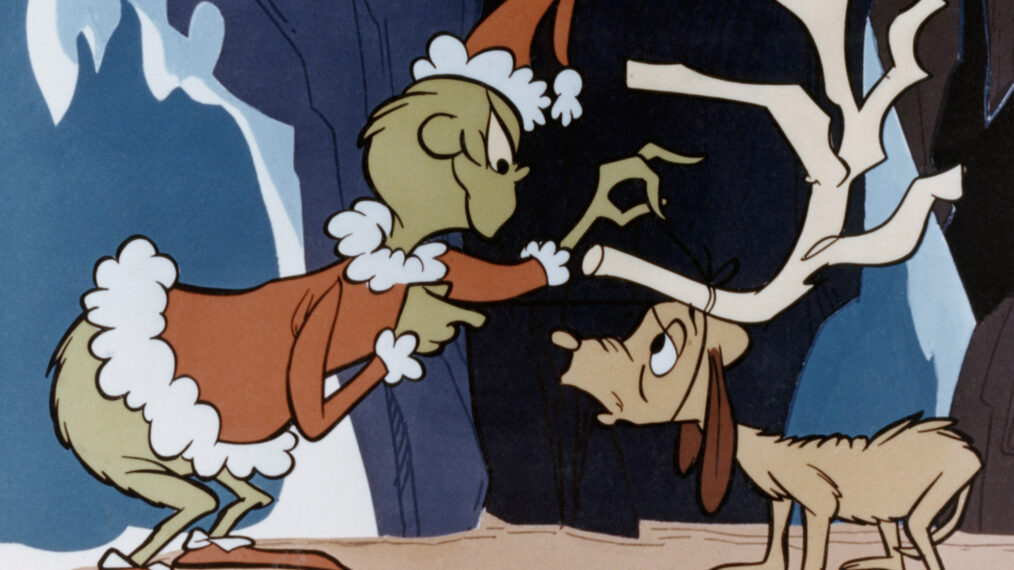
- The 1966 animated TV adaptation, featuring Chuck Jones’s iconic green design and Boris Karloff’s narration, cemented the Grinch’s status as a beloved holiday figure who playfully embodies seasonal cynicism.
The Grinch has become more than just a character from a popular book and TV special — today, the cranky, green creature who steals Christmas from Whoville is a major holiday icon, appearing in multiple beloved films and showing up in household Christmas displays, greeting cards, and other symbols of the season. But before all of that — before even the 1957 Dr. Seuss book How the Grinch Stole Christmas — the Grinch began his life as something else. In fact, the Grinch started out as a character in a poem — one that had nothing to do with Christmas at all.
What was the first appearance of the Grinch?
The Grinch first appeared not in a children’s book but in the women’s magazine Redbook in May 1955, in a short illustrated poem titled “The Hoobub and the Grinch.” Written by Dr. Seuss, whose real name was Theodor Geisel, the 33-line poem introduced readers to a sly con artist selling a piece of string to a sunbathing Hoobub. There was no Christmas, no Whoville and no moral lesson.
At that point in his career, Geisel was not yet a children’s book legend. Although he had published several children’s books dating back to 1937, he was not yet the defining figure of American children’s literature. Much of his income still came from advertising illustration and magazine work, and the Grinch was simply one odd creation among many. In that early poem, the character’s defining trait wasn’t holiday hatred, but opportunism.

Everett Collection
How the Grinch Stole Christmas debuts
Everything shifted in 1957, a year that fundamentally changed Geisel’s life. In March, The Cat in the Hat was published and quickly transformed early reading. Later that same year, Geisel returned to the Grinch and expanded him into the lead of a full-length Christmas story. How the Grinch Stole Christmas! appeared both as a Random House book and in Redbook, bringing the character back to the magazine where he started.
Geisel later admitted that the Grinch was deeply personal. He said that on December 26, 1956, he caught a distinctly “Grinchish” look on his own face while brushing his teeth, fueled by his frustration with the commercialization of Christmas. At age 53, the same number of years the Grinch complains about enduring Christmas noise, Geisel poured that irritation into a character, and the Grinch became the first villain to headline a Dr. Seuss book.
Everett Collection
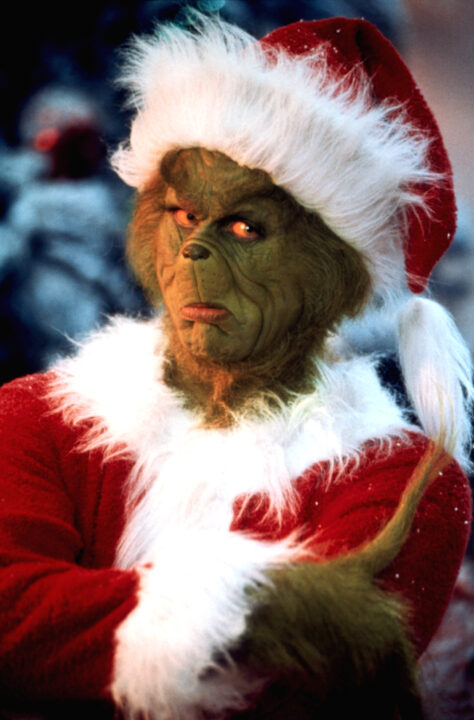
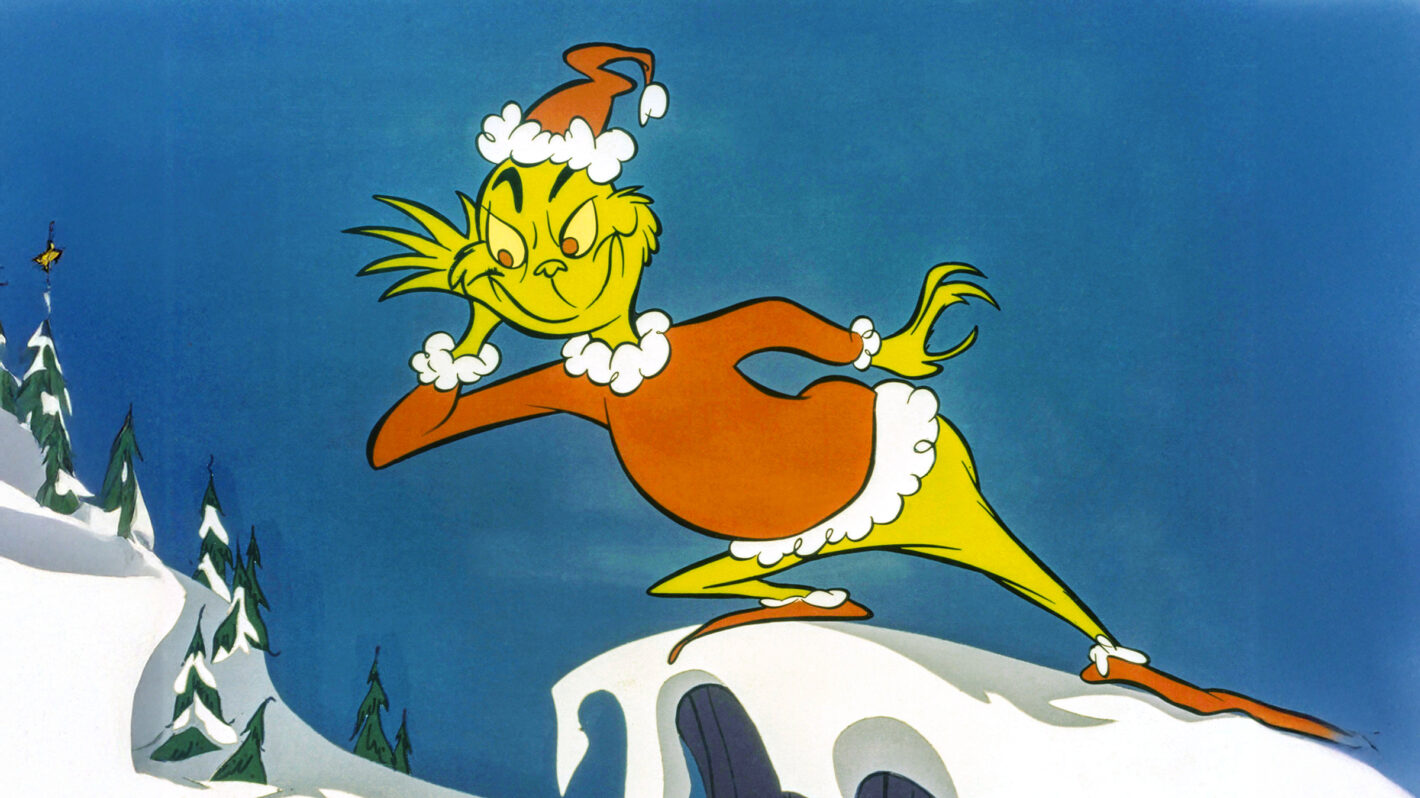
When the story was adapted for television in 1966, it took on the form most people recognize today. Animator Chuck Jones helped bring the Grinch to life, famously choosing his now-iconic green color based on the shade of his rental car. Boris Karloff narrated the special and voiced the Grinch, giving him a dry edge that softened as the story unfolded. The adaptation added songs, expanded the story and elevated Max the dog into a main character.
As Christmas historian Tom Christie explained in the Smithsonian Magazine, “People enjoy the character’s subversiveness at the time of year when we’re all repeatedly told about the need for peace on earth and goodwill to all humankind, The Grinch comes along with his scruffily improvised Santa Claus costume to ransack people’s homes and surgically remove all traces of the holiday season from his locality.” The Grinch allowed audiences to indulge in irritation and cynicism for just a while, knowing that eventually looking at the right things during the holidays would soften their hearts.
Here’s the original poem if you’re interested, courtesy of Forest Society:
“The Hoobub was sitting looking out at the trees
From the top of a mountain, chin on his knees.
There’s nothing,” he said, “quite as good as woods such as these!”
Then up walked a grinch with a long piece of wire
“How much will you pay for this that I assume you desire?”
“You surely should have it, you’ll find it’s all good
And worth so much more than a few scraggly woods.”
“Huh…?” asked the Hoobub. “Sounds silly to me.
Wire worth more than woods…? Why that surely can’t be!”
“But it is!” grinned the grinch. “Let me give you the reasons.
The woods are full of bugs and mud in some seasons.
For you’ll have to admit that in spring and then in July
The woods are unpleasant, thanks to black and deer flies.
But this wonderful wire that I have right here
Would be good and so handy every month of the year!”
“Even so…” said the Hoobub. “I still sort of doubt…”
“But you know,” yapped the Grinch, and he started to shout,
“That from most woodsy places you can’t even see out!
But this marvelous wire all shiny and clean, I declare
Can do wondrous things for our stockholders shares
And of the woods and the views, I mean, who cares?”
“Stockholders, you say,” said the Hoobub. “That sounds high-tech…”
“This long piece of wire,” yelled the grinch, “why it’s from Quebec!
In fact, this piece of wire, sir, it’s highly conductive.
But sitting in the woods—that’s counterproductive!
This wire is collossal! Immense!
And to you…well, I”ll sell it for ninety-eight cents.”
And the Hoobub…he’s thinking about buying
(And I’m sorry to say
That grinches sell Hoobubs such things every day.)”
 Remind
PUZZLER: Holiday Movies
December 2022
Enjoy hours of fun as you puzzle along to all these holiday classics. The issue is packed with trivia, crosswords, word finds, Sudoku, scrambles, criss crosses and more!
Buy This Issue