

What Were the Biggest Christmas Toys of the 1950s?





What To Know
- The 1950s saw a revolution in toy popularity due to the rise of television and mass production, allowing kids across America to desire and access the same toys advertised on TV.
- Iconic toys from this era included Gumby bendable figures, Mr. Potato Head with interchangeable parts, and Colorforms vinyl sticker sets, all of which became enduring favorites.
- These toys not only shaped childhood play in the 1950s but also became lasting cultural icons, remaining popular and influential for generations.
Kids have always been crazy about toys — but in the 1950s, the newfound popularity of TV (and TV commercials), combined with new mass production technology that could allow children across America to buy the same toy, completely changed the way kids thought about toys. Now, instead of making due with homemade dolls or carved wooden toys from the local shop, kids could ask their parents for the toys they saw in commercials during children’s TV programs — and they did.
The toys below were some of the decade’s biggest — and they’ve stayed popular ever since.
1 Gumby
Credit: eBay
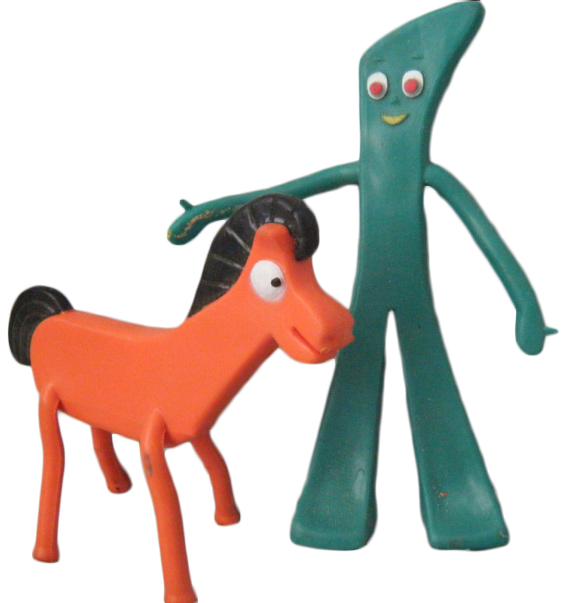
The skinny, wide-eyed, green Claymation known as Gumby was created by Art Clokey, a pioneer in stop-motion clay animation and the subject of a moving documentary titled Gumby Dharma. Made with rolling pins and cookie cutters, Gumby was first introduced in a student film short titled Gumbasia. Clokey’s film impressed a producer at 20th Century Fox, who encouraged him to improve children’s television with greater creativity. Clokey’s Gumby appeared in an opening skit for The Howdy Doody Show in 1956, which led to a 1956-68 TV series, The Gumby Show, and its spinoff Gumby Adventures. The series also featured Gumby’s best friend, Pokey the pony, and both would inspire a successful line of bendable toys. In the 1980s, comedian Eddie Murphy became Gumby for a series of skits on Saturday Night Live, coining the phrase, “I’m Gumby, dammit!” Today, Gumby is a cultural icon, and is a regular part of the Macy’s Thanksgiving Day Parade.
2 Mr. Potato Head
R. Dias/ClassicStock/Getty Images
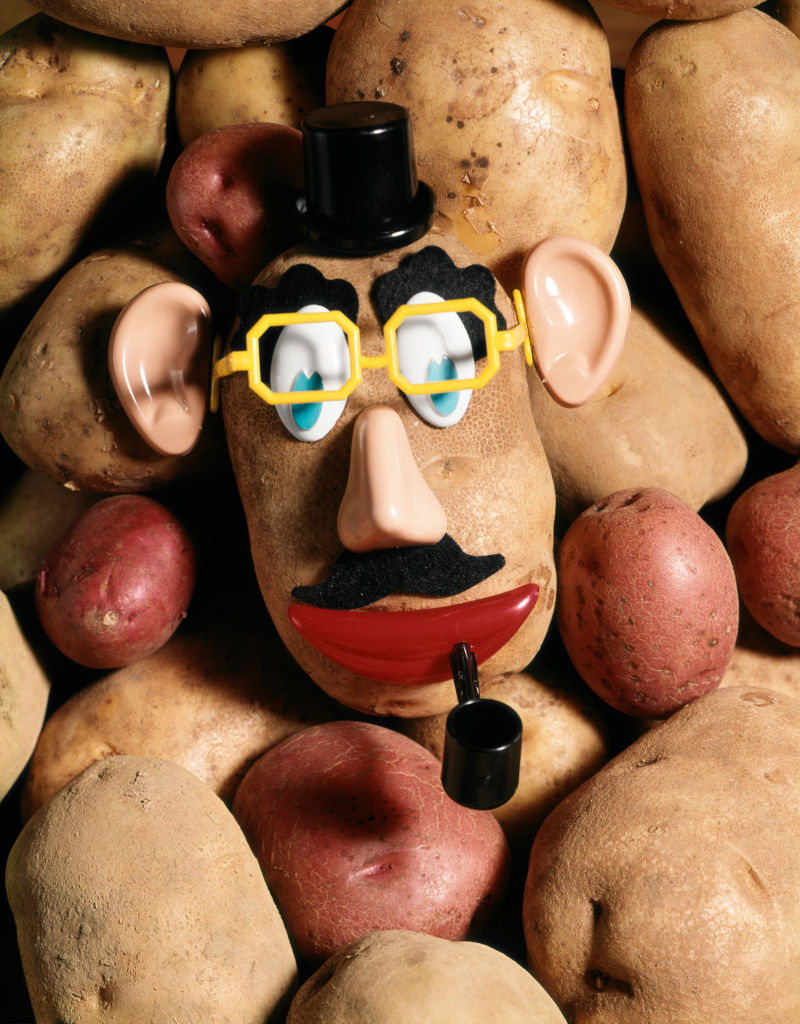
Who’d have thought a basic potato could be turned into a toy? George Lerner did, and in 1949, he came up with an idea to put into cereal boxes plastic eyes, noses and mouths, which kids could then insert into a potato. In 1952, Hasbro liked the idea so much the company bought the rights to Mr. Potato Head, and in 1953 introduced Mrs. Potato Head. In 1964, the plastic body came along, eliminating the problem of moldy vegetables, and in the 1990s, Mr. Potato Head became a movie icon as part of the Toy Story franchise, voiced by comedian Don Rickles. Mr. Potato Head even included one of Rickles’ signature insults by saying, “What are you looking at, you hockey puck?” to a hockey puck. In 2000, Mr. Potato Head was inducted into the National Toy Hall of Fame.
3 Colorforms
Credit: eBay
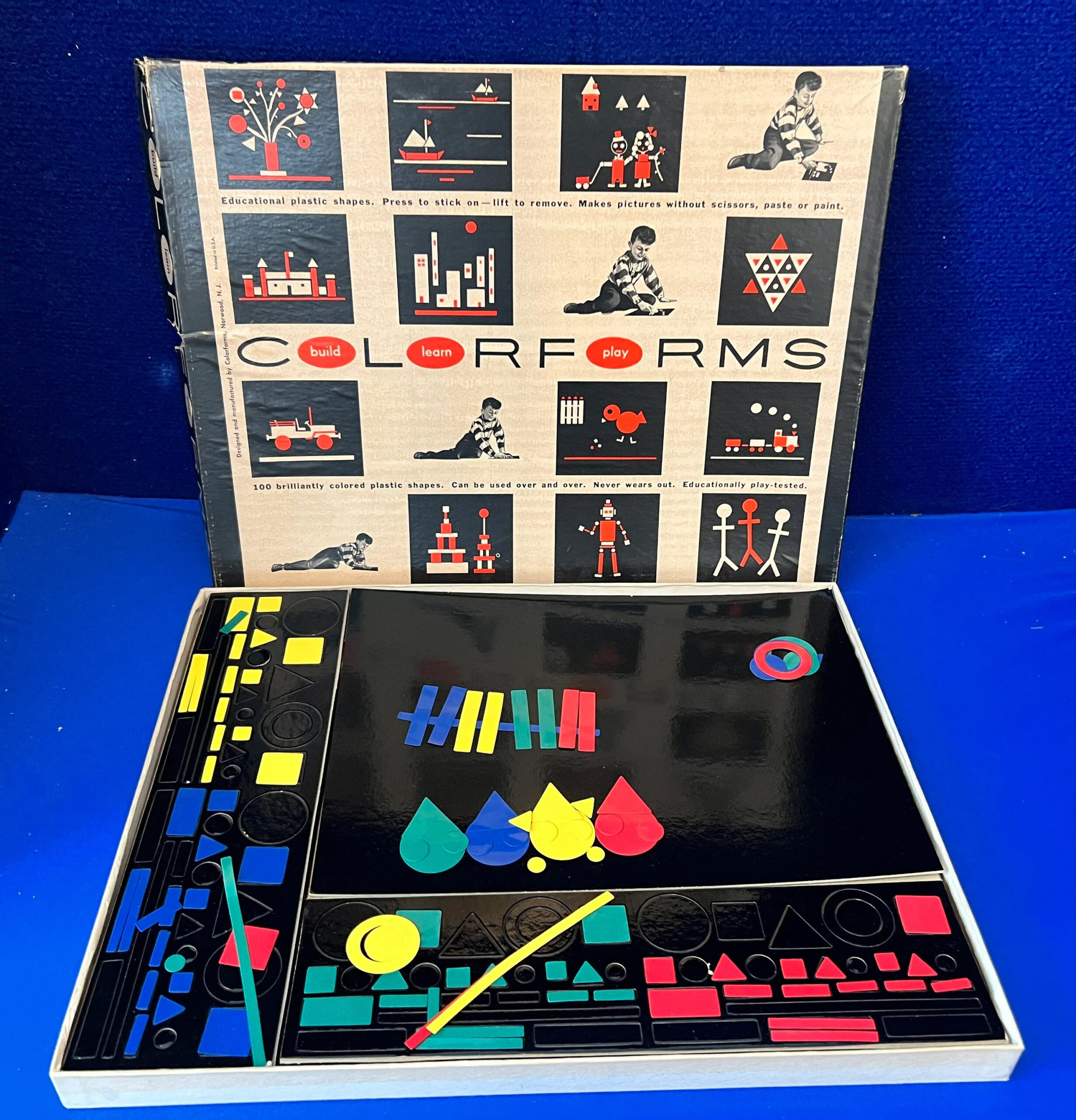
How did a household experiment with flexible vinyl pieces become a new toy? The story of Colorforms began in the home of New Yorkers Harry and Patricia Kislevitz, when the couple was experimenting with the vinyl pieces, discovered they stuck to walls with glossy paint and saw the potential for a new toy. The couple designed simple, geometric-shaped pieces and a background. They marketed the first sets at FAO Schwarz, but the innovative concept quickly caught on with children. Patricia Kislevitz, an artist, was the primary designer of the first Colorforms set. Her original work is now part of the permanent collection at the Museum of Modern Art. The success of the initial sets paved the way for licensed characters. In 1957, Popeye became the first licensed character to be featured in a Colorforms set, which proved to be a highly successful strategy. Even now, with licensed sets featuring Toy Story, Mickey Mouse and Harry Potter, Colorforms remain popular.
4 Corn Popper
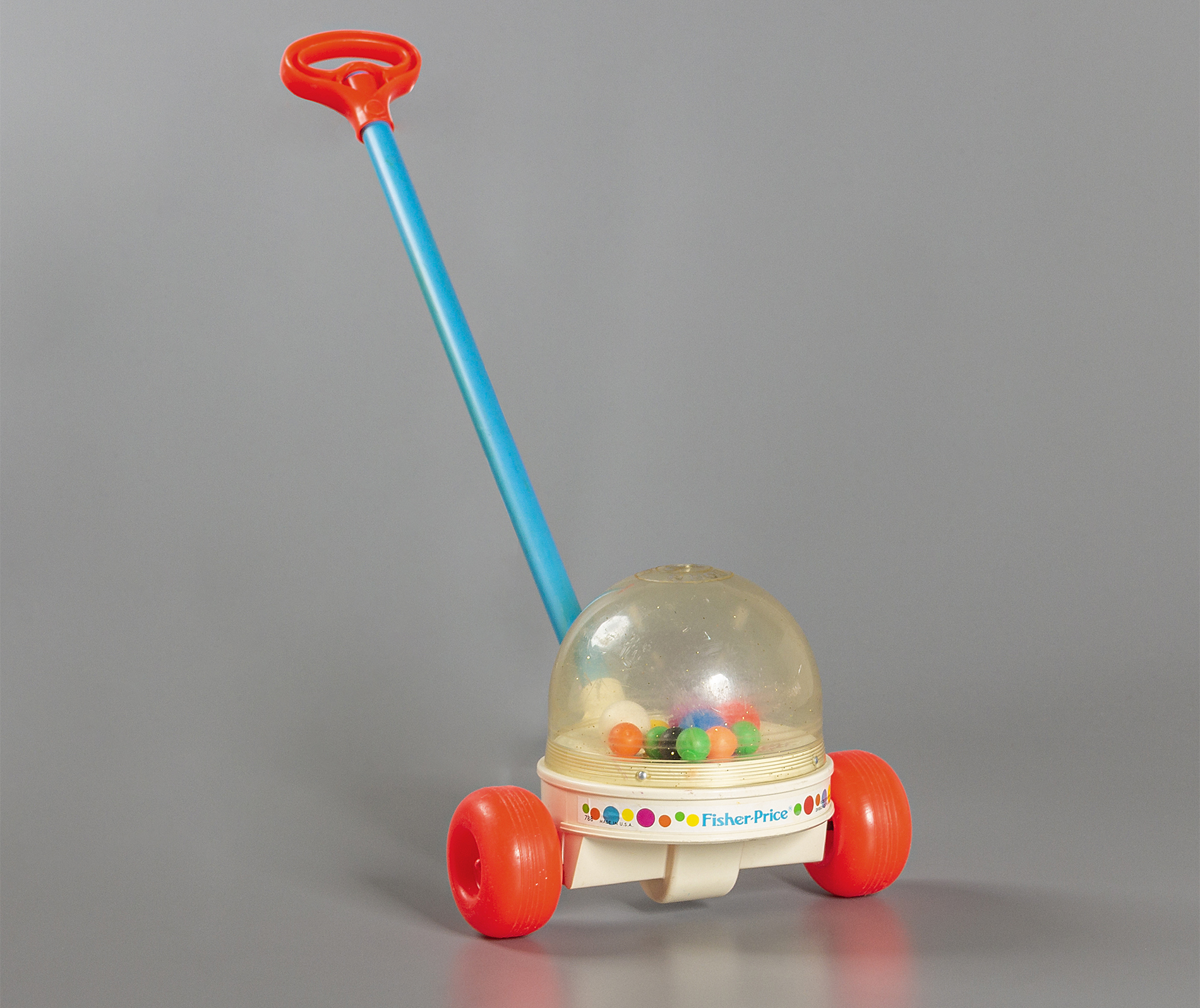
Courtesy The Strong National Museum of Play.
Invented in the 1950s by scientist and inventor Arthur Holt and later popularized by Fisher-Price, the Corn Popper was designed to help toddlers learn to walk — but let’s be honest, it mostly helped them drive parents just a little crazy. With every enthusiastic push, the clear dome that was filled with colorful balls would erupt in a chaotic pop-pop-pop! that echoed through hallways like a tiny marching band gone rogue.
5 Fisher-Price Little People & Playsets
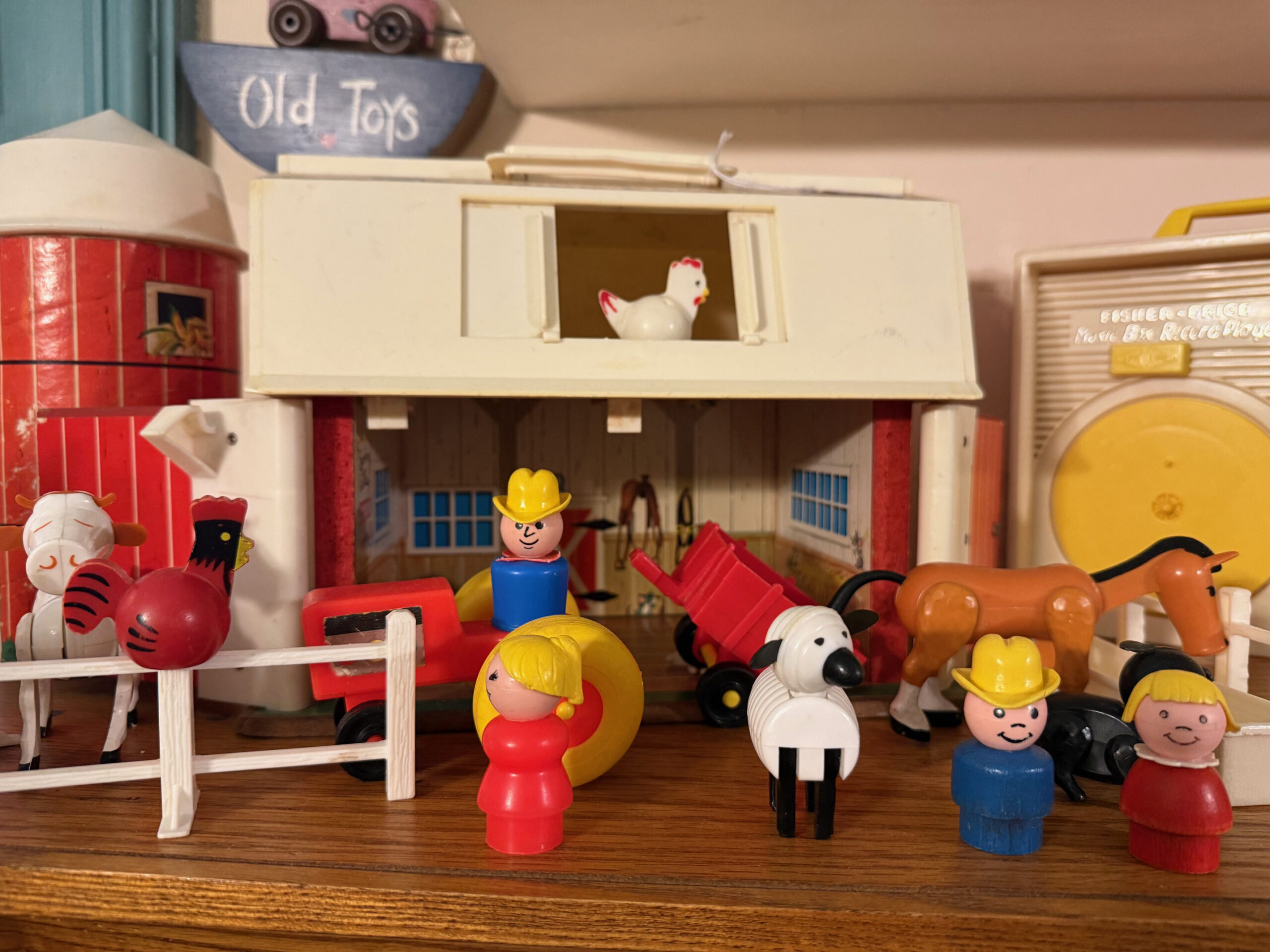
Credit: Anna Greinert
There’s an amazing world of Little People enthusiasts that celebrate everything to do with these adorable pint-sized figures, be it the originals (1959-90), the chunky (1991-96, redesigned after a lawsuit) or the currents. While collectors prefer the wood over the all-plastic figures introduced in 1968, Fisher-Price has sold over 2 billion Little People to date.
The Fisher-Price Play Family Farm, where you heard a “moo” when the barn door opened, was first introduced in 1968 and included farm animals, a tractor and the cool silo where you could store all your people. It’s considered one of the first playsets for Little People.
Plenty of playsets would follow, including the firehouse, airport and service station, as well as the Family Fun Jet (later updated in 1986 with the Little People jetliner). Other classics include the School Bus, School, Houseboat, and that memorable blue and yellow house with the yellow staircase! You can look at photos and descriptions of the thousands of Little People and playsets at thisoldtoy.com.
6 Hula Hoop

Adobe Stock
The hula hoop, a deceptively simple toy, has a history far richer than many might imagine. Its origins can be traced back to ancient times, with evidence of hoop play found in various cultures across the globe. But no one really cared about that. The oh-so-cool kids could circle their hips for hours.
The hula hoop as we know it today, however, didn’t truly take off until 1958. Wham-O, a California-based toy company, got the idea from Australia native Joan Anderson, who noticed the craze while visiting family in the 1950s, and quickly began producing their own version out of Marlex plastic. The toy was an overnight sensation, selling an incredible 25 million units in its first four months of production. Its popularity was not without its challenges, though, as some countries considered its use indecent and banned the toy. The hula hoop even worked its way into American pop culture, from Billy Joel‘s “We Didn’t Start the Fire” to the episode of M*A*S*H where Klinger tries to convince Charles to invest in the invention of the hula hoop.
7 Play-Doh
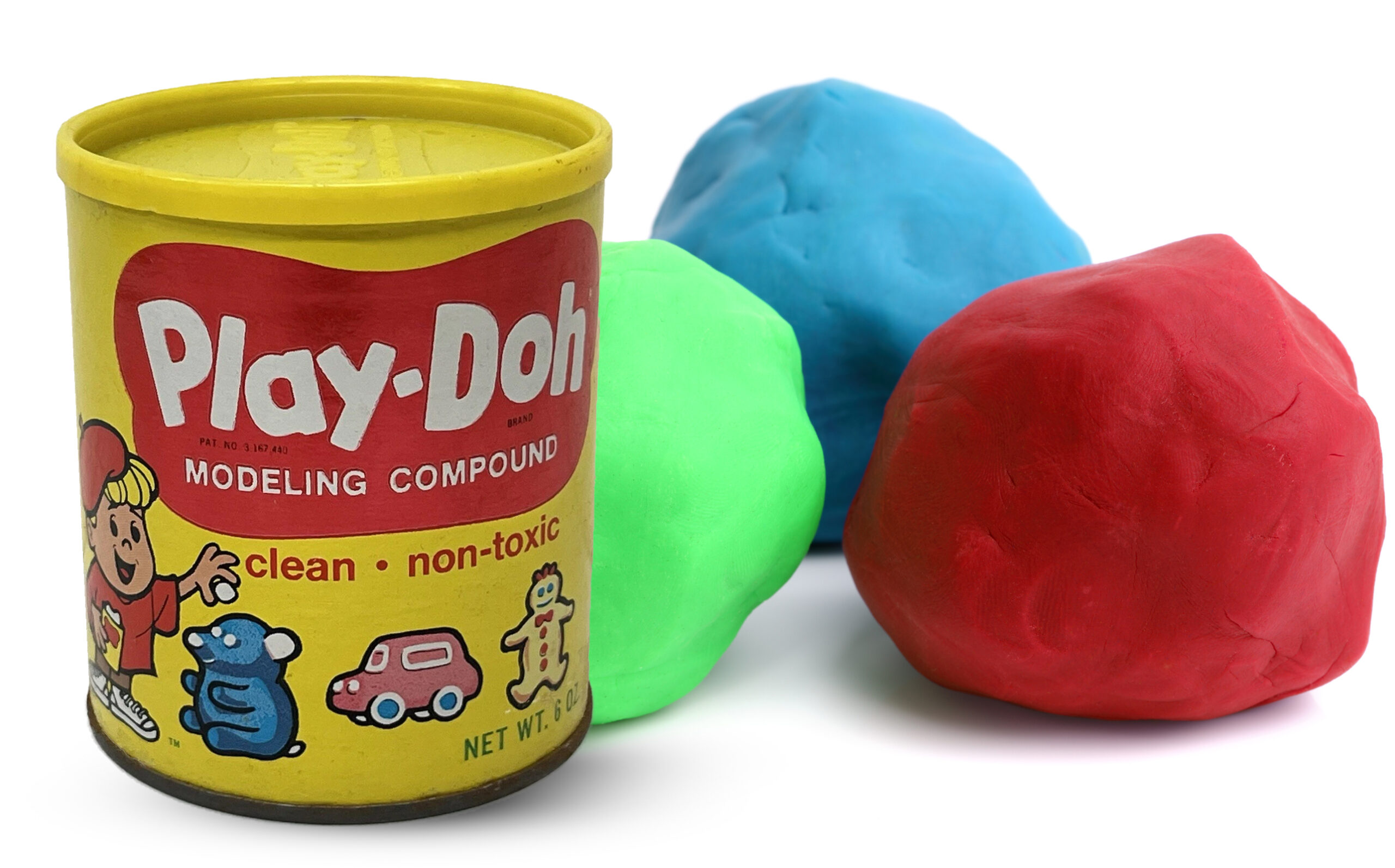
Credit: eBay; Adobe Stock
Oh, that wonderful smell of Play-Doh — a salty dough scent with a mix of sweetness made it oh-so-tempting to try (and we did!). Play-Doh was actually in American homes long before it became a toy. It was manufactured and marketed in the 1930s as a wallpaper cleaner by Kutol Products when homes were heated by coal. But with the switch in home heating from coal to natural gas, demand for wallpaper cleaner decreased. Kutol Products executive Joseph McVicker was looking for a new market. Around 1955, his sister-in-law Kay Zufall, a preschool teacher, was using the non-toxic compound for a children’s art project. She found that her students enjoyed it more than traditional modeling clay, and she suggested it be promoted as a toy. It was rebranded as Play-Doh and pitched to schools. With a small marketing budget, McVicker approached Bob Keeshan, star of the popular children’s show Captain Kangaroo, with his product. Keeshan loved it and agreed to feature it on his show, causing sales to skyrocket. Originally sold only in white, Play-Doh introduced red, yellow and blue colors in 1957. In 1960, the brand expanded with its first toy accessory, the “Fun Factory,” which allowed kids to form the dough into different shapes.
8 Silly Putty
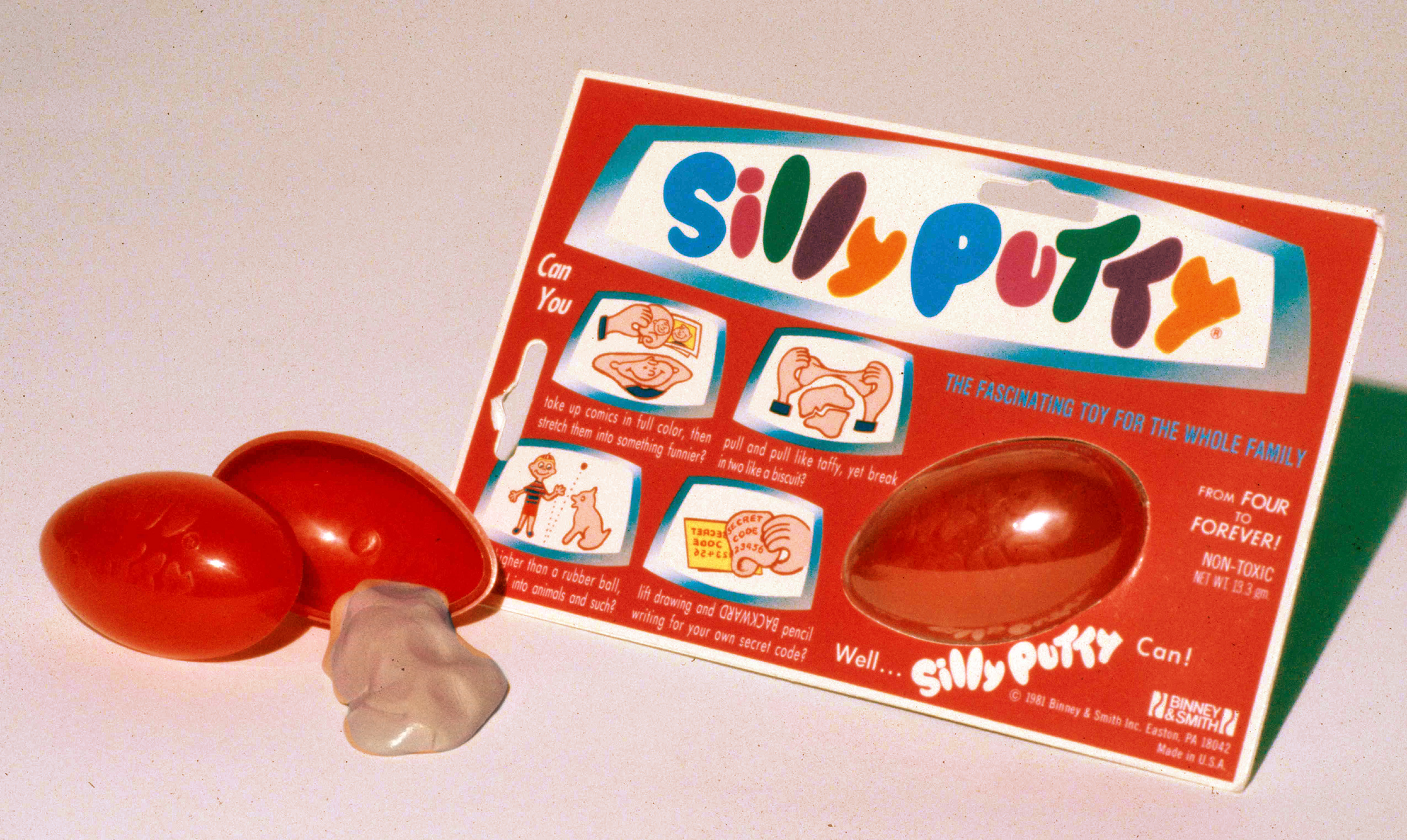
Universal History Archive/Universal Images Group via Getty Images
How did an accidental discovery become one of America’s most popular toys of the 1950s? Well, Silly Putty was just such an accident. While trying to create a synthetic substitute for rubber during World War II, James Wright, a scientist for General Electric, created a product that — while a poor substitute for rubber — had some intriguing properties. The bounciness, stretchiness and ability to copy ink gave marketer Peter Hodgson an idea. Hodgson recognized its potential as a toy, renamed it Silly Putty and marketed it in plastic Easter eggs in 1950, leading to its instant success. The quirky qualities captivated children almost immediately, becoming a nationwide sensation. In 1977, Crayola purchased the brand, and that ball of goo has remained popular ever since.
9 Tonka Trucks

Screenshot
The founders of Mound Metalcraft didn’t start out to become a toy giant. In fact, they intended to make garden tools. They started experimenting with designs for toy steam shovels and cranes using pressed metal, and the idea took off. Eventually, the company shifted its focus to toy production and changed its name to Tonka Toys, after the Dakota Sioux word for “great” (others claim it’s named after Lake Minnetonka). Key products included pickup trucks (1955), a Jeep (1962) and the iconic bright yellow Mighty Dump Truck (1965), the company’s bestselling toy. Known for their realistic designs and enduring toughness, Tonka trucks remain a cherished part of many childhoods, and are now popular with adult collectors as well.
Rob Edelstein, Ryan A. Berenz, Jeff Pfeiffer, Lori Acken, Zhanna Slor and Barb Oates were all contributing writers on this article.
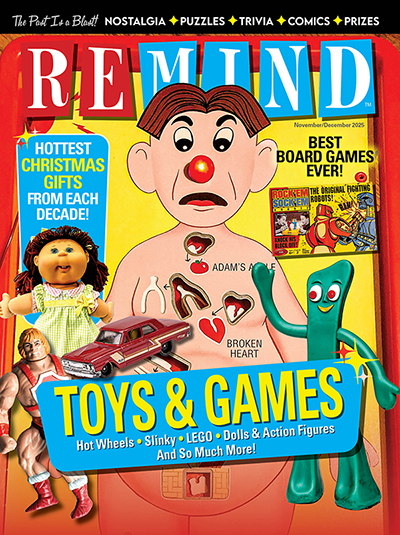
Toys & Games
November/December 2025
Fire up the Easy-Bake Oven, dust off that pogo stick, tickle that Elmo and get ready to blast back to a time when batteries were not included
Buy This Issue