

Whatever Happened to Mall Staple Kay-Bee Toy & Hobby?





What To Know
- Kay-Bee Toy & Hobby, originally founded as a candy wholesaler in 1922, became a beloved mall-based toy retailer that rapidly expanded across the U.S. from the 1970s through the 1990s.
- Despite reaching its peak in the late 1990s with over 1,300 stores, aggressive expansion, debt, and competition from big-box and online retailers led to its bankruptcy and closure in 2009.
For kids in the 1980s, no trip to the shopping mall was complete without a visit to Kay-Bee Toys. With its shelves packed with action figures, dolls, games and playtime accessories, the chain became synonymous with childhood joy and, eventually, with the collapse of America’s mall-based retail era.
Founded in 1922 in Pittsfield, Massachusetts, the company began as a candy wholesaler run by Harry and Joseph Kaufman — which was called, appropriately, Kaufman Brothers. The Kaufmans’ transition into toys came in 1946, when they acquired a wholesale toy business from a client unable to pay debts, which proved fortuitous. By 1948, candy was out and toys were in, and the Kaufmans seized the moment. The result became, for a time, one of the biggest brands in retail, and one that took permanent residence in the hearts of generations of American children.
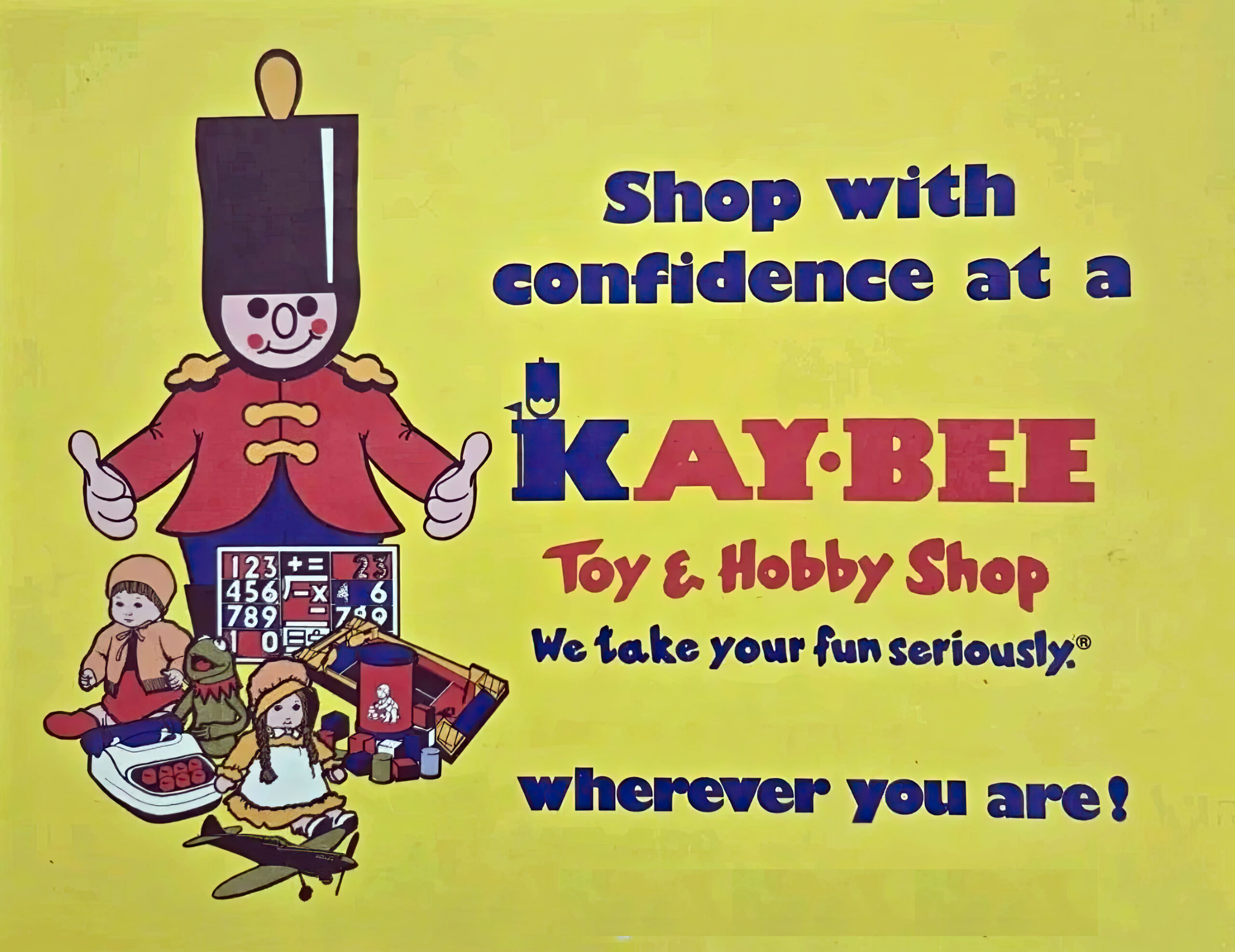
The retail pivot came in 1973, when the company ended its wholesaling operations and launched mall-based toy shops under the name Kay-Bee Toy & Hobby. At the time, the chain had just 26 stores, but its rapid expansion soon made it one of the fastest-growing toy retailers in the nation. By 1979, Kay-Bee operated 170 locations across the Midwest and East Coast.
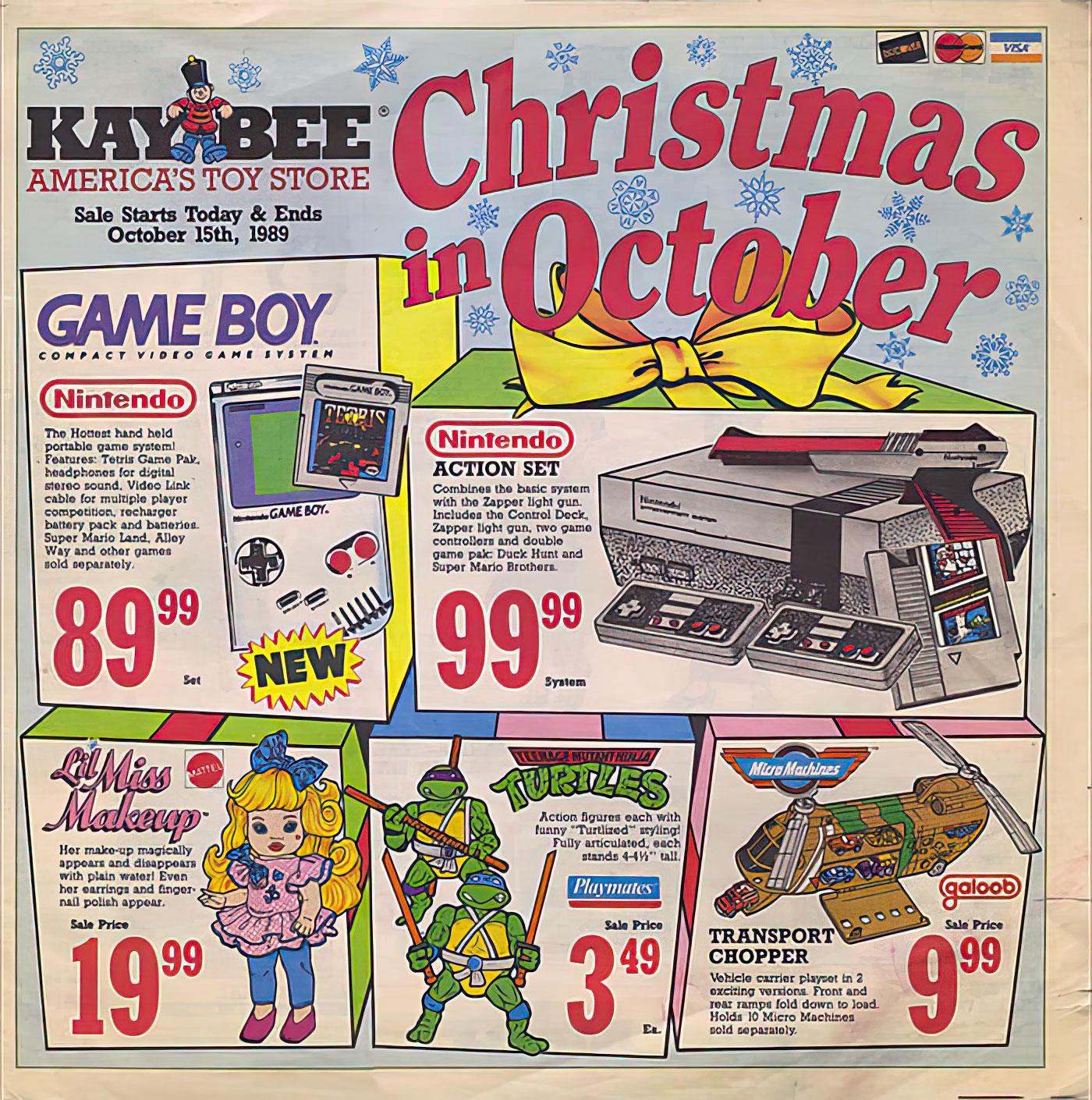
In 1981, the Kaufman family sold the company to Melville Corp., after which it expanded aggressively, absorbing rivals like Toy World, Circus World and K&K Toys. By 1990, the company’s tagline “The Toy Store in the Mall” was more than accurate: The store was a fixture in shopping complexes from coast to coast, and its colorful newspaper inserts were treasured by dreamy-eyed kids all over the country.
The 1990s marked KB Toys’ peak, which included launching new formats like KB Toy Works in strip malls, KB Toy Outlet in outlet centers and KB Toy Express as seasonal mall pop-ups. It also marked the store’s transition from Kay-Bee to KB. By 1996, sales had reached $1.1 billion, and in 1999, the chain operated a staggering 1,324 stores nationwide, second only to Toys R Us.
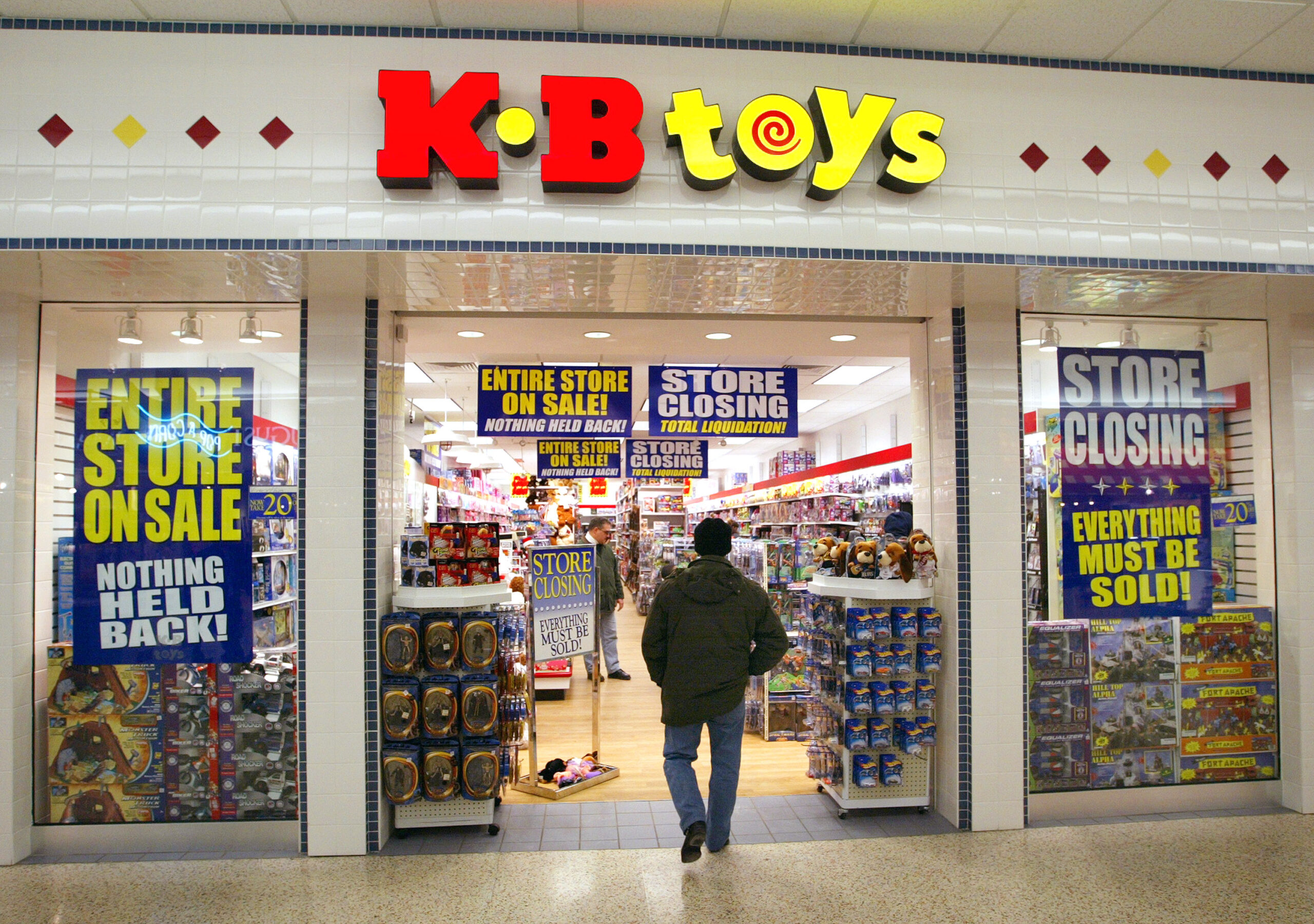
But success came at a cost. Consolidated Stores Corp., which purchased KB in 1996, struggled to profit from the brand’s sprawling operations. In 2000, Bain Capital acquired KB Toys for $305 million, but within two years, executives took an $85 million dividend payout that weakened the company beyond repair. By 2004, burdened by debt and declining mall traffic, KB filed for bankruptcy, closing more than 600 stores. The chain never fully recovered as competition from Walmart, Target and online retailers eroded its once-dominant position, and in 2009, after 87 years in business, KB Toys closed its last 461 stores, leaving behind only memories and shuttered storefronts.
Tim Boyle/Getty Images
KB Toys’ story mirrors the rise and fall of America’s shopping malls: explosive growth fueled by suburban expansion, followed by a steady decline under the pressures of e-commerce and big-box competitors. For generations of children, the chain was more than a store — it was a tradition, and one of the few retail destinations aimed squarely at kids. Today, KB survives in memory and online, with potential pop-up shops in the future.
Justin Beahm writes a regular column for ReMIND magazine titled “Roadside Memories,” where he shares fascinating and bizarre stories of the past that cover circus attractions, amusement parks, enchanted forests, houses of horror, strange motels and so much more. This story appeared in the September 2024 issue of ReMIND. He recently expanded on these stories in the new book Roadside Memories: Beloved and Bizarre Attractions from North America’s Past, Volume 1. To get a signed copy, go to Justin’s website now or order through Amazon.
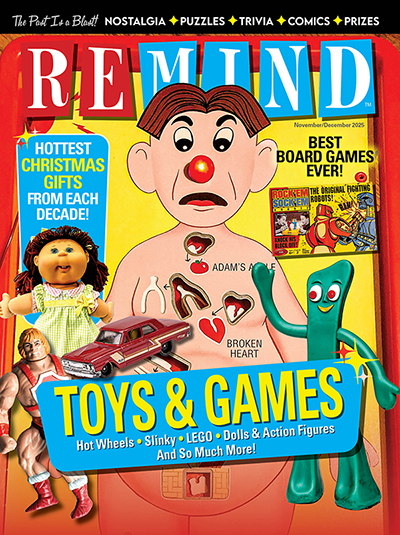
Toys & Games
November/December 2025
Fire up the Easy-Bake Oven, dust off that pogo stick, tickle that Elmo and get ready to blast back to a time when batteries were not included
Buy This Issue