

The Most Asked-For 1980s Christmas Toys, Year by Year





What To Know
- The 1980s saw a series of iconic Christmas toys, with each year dominated by a different craze.
- Unlike today’s tech-driven toys, these classics were simple, tangible, and often sparked massive demand, leading to cultural phenomena.
- Many of these toys inspired cartoons, movies, and enduring franchises, cementing their place in pop culture.
In the modern era, kids want games for their consoles, fuzzy characters who can interact with them, dollhouses that respond to playtime, and cars they can ride in alongside their favorite masked superheroes. High-tech gadgetry and smart features now dominate the toy aisles, transforming once-simple playthings into interactive experiences designed to keep up with a new generation of digital-native kids.
But back in the day, kids didn’t have the high-end sorcery or the tech-driven wizardry of today’s toys. What they had instead were simple, tangible treasures — the kinds of classics that didn’t need batteries, Bluetooth, or built-in AI to make them unforgettable.
Here is a look at the most popular toys, year by year, according to the Strong Museum of Play (via Wired Magazine) that made every kid’s wish list in the ’80s. Did these ever make it to your list?
1980: The Rubik’s Cube
The multi-colored puzzle game became a sensation that dominated the nation because it was unlike anything else on the market at the time: a bright, tactile, brain-twisting puzzle that challenged players in a completely new way. And it drove folks nuts. Now many of the original Cubes from the ’80s sit in the back of parents’ and grandparents’ junk drawers waiting to frustrate a new generation of players.
View this post on Instagram
1981: Masters of the Universe
In 1981, many wish lists included pleas for a muscular man in a harness and loincloth sporting a page-boy haircut who needed a mountain of accessories and his own dream house.
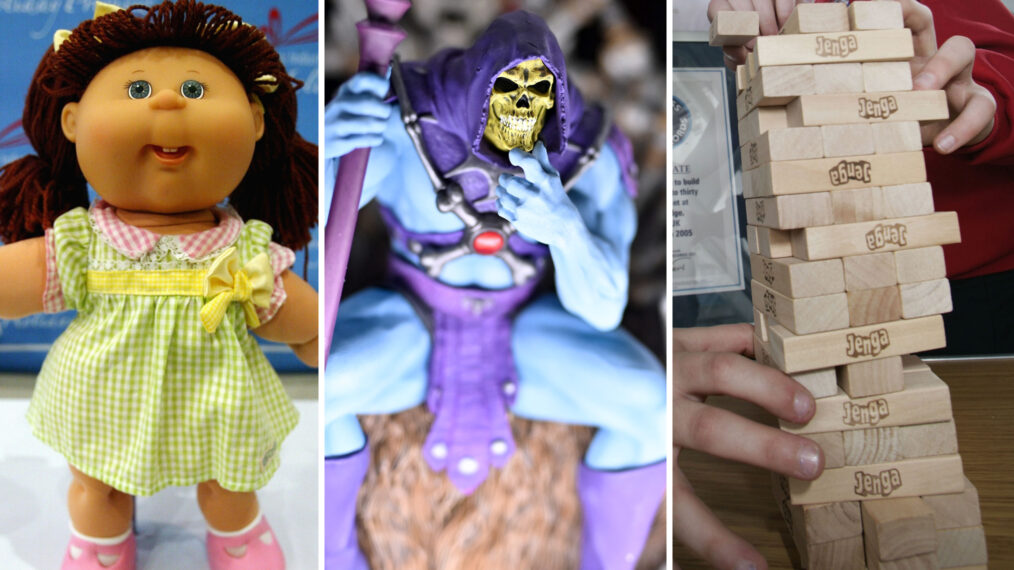
Created by Mattel, the epic clash between He-Man (the alter ego of Prince Adam) and Skeletor on the planet Eternia became a full-blown cultural phenomenon. The multi-million-dollar toy line spawned a hit cartoon, a bizarre live-action film, and several Netflix reboots, cementing Masters of the Universe as one of the most iconic franchises of the decade.
View this post on Instagram
1982: Care Bears / My Little Pony (tied)
The residents of Care-a-Lot and Equestria were equally in demand back in 1982 as children clamored for pastel-colored bears and ponies, each branded with unique symbols and endowed with their own special quirks, including the power to be grumpy. Both franchises inspired their own animated series and came with elaborate backstories that kids eagerly re-enacted on schoolyards across the nation.
View this post on Instagram
1983: Cabbage Patch Kids
The dumpy brainchildren of Xavier Roberts caused mass hysteria when they first debuted as the must-have dolls of the season, sparking a frenzy so intense that parents rioted in the aisles of local Walmart and Toys “R” Us stores. Demand surged far beyond supply, turning holiday shopping into a contact sport and cementing the dolls as one of the most chaotic toy crazes of the decade. They came with adoption papers, a unique three-part name, and a comb to brush their yarn (for the ones that were not bald).
View this post on Instagram
1984: Trivial Pursuit
The popular trivia game caught the attention of wine-drinking adults everywhere as a means to gather and flex knowledge they haven’t used since Intro to Literature. As kids roughhoused in the next room, mom and dad fought with Uncle Bill over whether “That guy from that show!” was an acceptable answer.
View this post on Instagram
1985: Teddy Ruxpin
The first foray into toys and technology was the ’80s attempt at AI with Mr. Teddy Ruxpin, who required a cassette tape to make the magic happen. As kids got older, they would eventually try to replace the tape of children’s stories with ones by Slayer. Spoiler: It didn’t work. No matter what Cousin Frank said, it didn’t work.
View this post on Instagram
1986: Lazer Tag
As the ’80s marched on, technology got a little better, a little more fun, and a little more futuristic. Enter Lazer Tag, the high-tech game that let kids live out their sci-fi action fantasies in their own backyards. With its glowing targets, sleek plastic gear, and the thrill of zapping friends before they zapped you, Lazer Tag turned neighborhood playtime into a full-on battle…for about an hour. Then the batteries ran out.
View this post on Instagram
1987: Jenga
1987 took shoppers back to basics with a wood strategy game that was as addictive as it was frustrating. Take a block from the bottom and add to the top, don’t stop until it tumbles. Invented by Leslie Scott, the name came from the Swahili word “kujenga,” which means “to build.”
View this post on Instagram
1988: Nintendo Entertainment System
Welcome to the modern age, when the holiday season began to be dominated by 8-bit fun. The first Christmas or Hanukkah of 1988 delivered a treasure trove for gamers: Super Mario Bros. 2, Contra, Mega Man 4, The Legend of Zelda and its sequel, Zelda II: The Adventure of Link, plus the wildly popular Super Mario Bros./Duck Hunt bundle. For many kids, this was the year the Nintendo Entertainment System officially became the only thing on their wish list.
View this post on Instagram
1989: Nintendo Game Boy
For parents who began to worry about their pale, pasty kids, the Game Boy got them out of the house, sort of. Glued to the itty-bitty screens, kids loved the build blocks of Tetris, microscopic Donkey Kong, and little Super Mario Land. Offered in dazzling grayish-green and black, the Game Boy was available for $89.99 (around $228-$230 in 2025 dollars).
View this post on Instagram
 Remind