

What Was the First ‘A Christmas Carol’ Adaptation Ever?





What To Know
- The first film adaptation of A Christmas Carol, titled Scrooge, or Marley’s Ghost, was a six-minute British silent film released in 1901 and is recognized as the oldest screen version of Dickens’s novella.
- Directed by Walter R. Booth and produced by Robert W. Paul, the film used innovative trick photography and superimposed images to condense the story and featured what is believed to be the first use of intertitles in cinema.
- This adaptation uniquely combined all the ghostly guides into the character of Jacob Marley, following a popular stage play approach, and only about three and a half minutes of the film survive today, preserved by the British Film Institute.
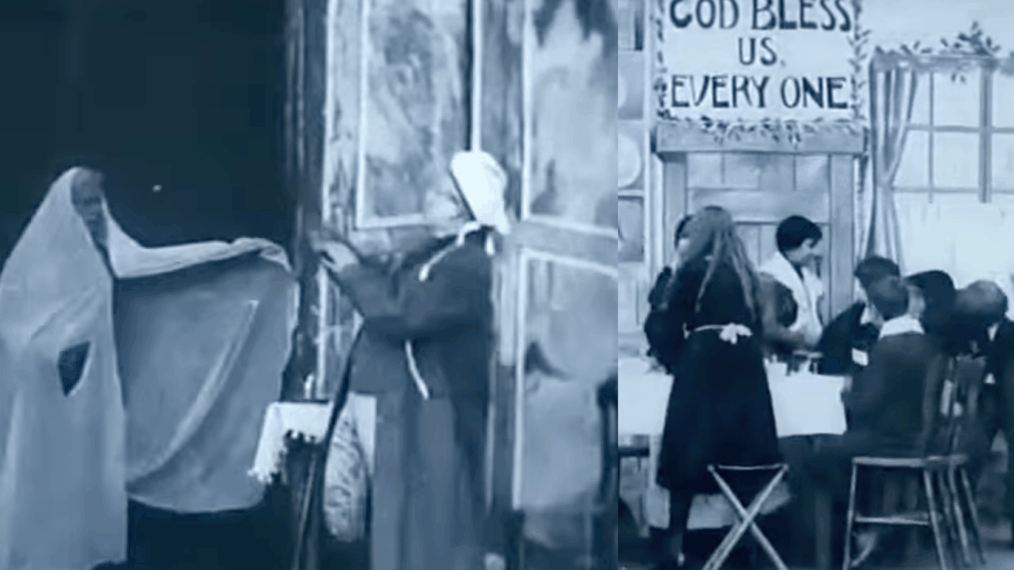
For many of us, the holiday season is about fitting in as many different versions of A Christmas Carol as possible — but if you think you’ve seen every version, there’s probably a pretty big one missing from your list. The very first film adaptation arrived all the way back in 1901. Called Scrooge, or Marley’s Ghost, the six-minute British silent film asked audiences to follow Ebenezer Scrooge through visions of Christmas past, present, and future, long before Hollywood began turning Dickens classics into holiday staples. Directed by Walter R. Booth and produced by early film pioneer Robert W. Paul, it is recognized today as the oldest screen version of Dickens’s 1843 novella.
What happens in the first Christmas Carol adaptation?
This short film was created at Paul’s Animatograph Works and released in November 1901, when filmmakers were still figuring out what moving pictures could do. Booth and Paul relied heavily on trick photography, a specialty for both men, and the film used superimposed images to show Marley’s face on the doorknocker and to project scenes from Scrooge’s youth against a curtain. According to the British Film Institute, these effects were considered ambitious for the era, especially since the team tried to condense an 88-page story into just a few minutes.
What also makes this version unique is the way it handles the familiar ghosts. Instead of bringing in the Ghosts of Christmas Past, Present, and Yet to Come, the filmmakers followed an approach used in J. C. Buckstone’s popular stage play at the time. Jacob Marley, draped in a white sheet, serves as the sole supernatural guide who shows Scrooge visions of his life. This allowed the filmmakers to keep the plot moving without multiple costume changes or elaborate scenes, something important for early cinema, which relied on audience familiarity rather than intertitles (text inserted into film, used in silent movies). In fact, this film features what is believed to be the first use of intertitles on-screen, a milestone in film history.
Only about three and a half minutes of the film survive today. The British Film Institute has preserved the remaining footage, which begins with Bob Cratchit closing up the office on Christmas Eve and ends with Scrooge being shown his own grave. The surviving scenes include tinted shots, dissolves, and a clear view of how filmmakers of the era used theatrical staging to bring well-known stories to life.
For Dickens fans, Scrooge, or Marley’s Ghost, marks the moment when one of the most enduring holiday stories first made the leap to film, decades before Alastair Sim, George C. Scott, or even the Muppets put their own mark on the tale. Although a different Dickens-inspired film from the same year, The Death of Poor Joe, was later discovered and is now considered the earliest surviving Dickens film, this 1901 adaptation remains the first attempt to bring A Christmas Carol to the screen.
 Remind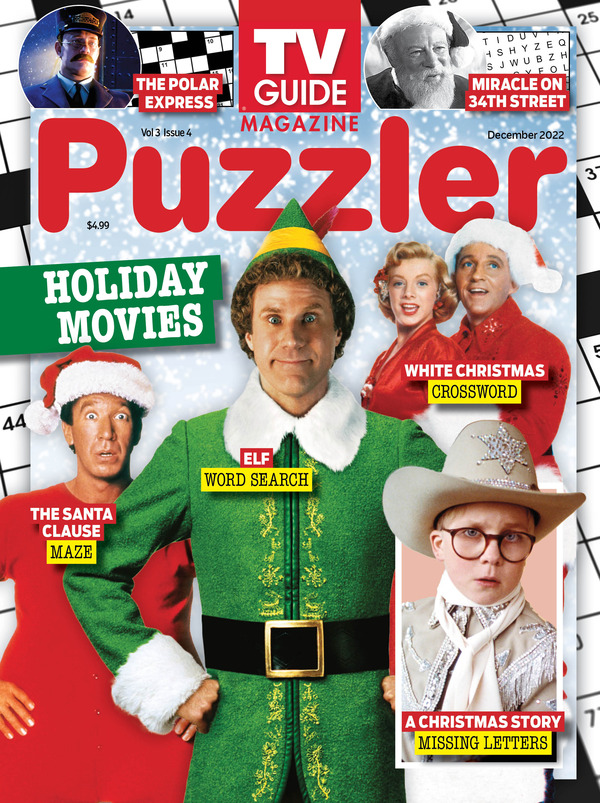
PUZZLER: Holiday Movies
December 2022
Enjoy hours of fun as you puzzle along to all these holiday classics. The issue is packed with trivia, crosswords, word finds, Sudoku, scrambles, criss crosses and more!
Buy This Issue