

‘Gilmore Girls’ Creator Explains Why Show ‘Wouldn’t Make It to Air’ Today





What To Know
- Gilmore Girls co-creator Amy Sherman-Palladino reflected that the show likely wouldn’t be greenlit today due to its unique tone, pop culture references, and lack of network interference during its original run.
- She described the production process as extremely high-stress, with tight filming schedules, no opportunity for reshoots, and constant pressure on the cast and crew.
- Despite these challenges, Gilmore Girls became a beloved series with enduring popularity, leading to a Netflix revival in 2016.
Gilmore Girls co-creator Amy Sherman-Palladino recently opened up about how the beloved series got its start — and in the process, she explained why the series “wouldn’t make it to air” today.
In honor of the 25th anniversary of Gilmore Girls, Sherman-Palladino sat down with The Hollywood Reporter in October to reflect on the process of getting the show to television screens.
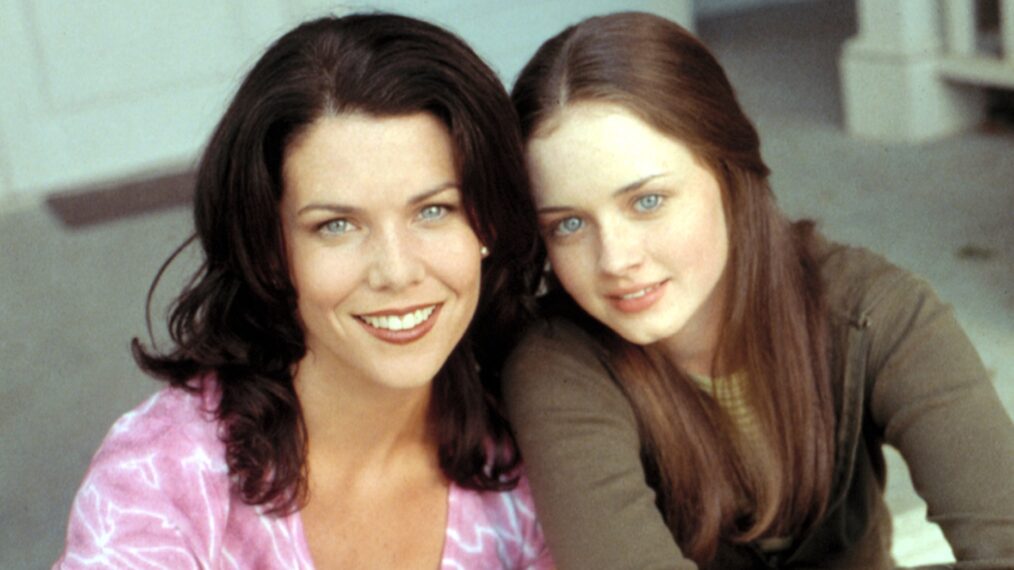
The fast-talking show starring Lauren Graham as Lorelai Gilmore and Alexis Bledel as her daughter, Rory Gilmore, premiered on The WB in 2000. Co-created by Sherman-Palladino’s husband, Daniel Palladino, the series ran for seven seasons, with the final episode airing in 2007 on The CW.
While pitching several shows to the WB, Sherman-Palladino said she mentioned her idea for Gilmore Girls as a “last-ditch thing.”
“I said, ‘I’ve got this sort of thing that’s like a mother and daughter, and they’re more like friends than mother-daughter,’ and they’re like, ‘Oh, we’ll buy that one,’” she told THR.

According to Sherman-Palladino, the success of Gilmore Girls boiled down to “alchemy,” admitting that she didn’t think the series would be greenlit today.
She explained, “Because we were really left alone to build our worlds and our characters. [Warner Bros.] gave up on even trying to give us notes on the scripts. They didn’t understand the scripts. It wasn’t soapy enough for them.”
Sherman-Palladino continued, “There were too many pop culture references they didn’t understand. At every turn, we were not necessarily what they wanted or what they thought they needed, but it was a different time. Today, a Gilmore Girls would not get on the air. No way, no how.”
Later during her interview with THR, the showrunner opened up about the high-stress nature of filming for Gilmore Girls.
“We were all in a panic constantly, so there was no cozy vibe at all. It was very frantic,” she confessed. “We were shooting 80 pages in eight days, so 10 pages a day with no hiatuses and no breaks, and we were doing 22 episodes. I don’t know how we did it.”
Sherman-Palladino added, “We were not a show that could go back and reshoot anything. If we didn’t get it, we didn’t get it. There was no fixing it later. If the sun was going down on one location day and we didn’t have work in the camera, we weren’t getting the work in the camera. It was just the kind of show it was, very high stress all the time.”
Despite the hurdles Gilmore Girls faced, it remains a beloved early ’00s TV show that fans continue to re-watch today — so much so, that in 2016, a four-episode revival series, Gilmore Girls: A Year in the Life, dropped on Netflix. And viewers still want more!