

‘The Simpsons’ Star Dan Castellaneta Explains the Origins of Homer’s Famous ‘D’oh!’






What To Know
- Dan Castellaneta, the voice of Homer Simpson, created the iconic “D’oh!” catchphrase by adapting a frustrated grunt inspired by Scottish comedian Jim Finlayson from Laurel and Hardy films.
- The phrase originated when Castellaneta was instructed to improvise an “annoyed grunt” for Homer, which he then shortened at Matt Groening’s request to fit the show’s timing.
- “D’oh!” quickly became a defining element of Homer Simpson’s character and achieved widespread cultural recognition, even being added to the Oxford English Dictionary.
Every great character needs a catchphrase. From “Yada, yada, yada” to “Did I do that?,” those few iconic words can transform a character into a pop culture legend. And when it comes to unforgettable lines, few rival the impact of Homer Simpson’s iconic “D’oh!” in The Simpsons, a catchphrase with a surprisingly quirky origin story.
In an interview with the Television Academy, the longtime voice of Homer, Dan Castellaneta, explained how the Simpsons’ patriarch got his signature catchphrase.
“‘D’oh’ happened because when we were doing the one-minute, it was ‘annoyed grunt.’ And I asked Matt Groening, ‘What was an ‘annoyed grunt’?’,” said Castellaneta. “And he goes, ‘Whatever you want.'”
Fox / Courtesy Everett Collection
“I had remembered from the Laurel and Hardy movies I watched on television as a kid that Jim Finlayson — who was the Scottish comedian who was a foil for Laurel and Hardy — he would always go ‘D’oooh!,” continued Castellaneta. “[I] believe the reason that he said that was that he was trying to say, ‘Damn,’ but you couldn’t say ‘damn’ in those [days], so…he would say, ‘D’oooh.'”
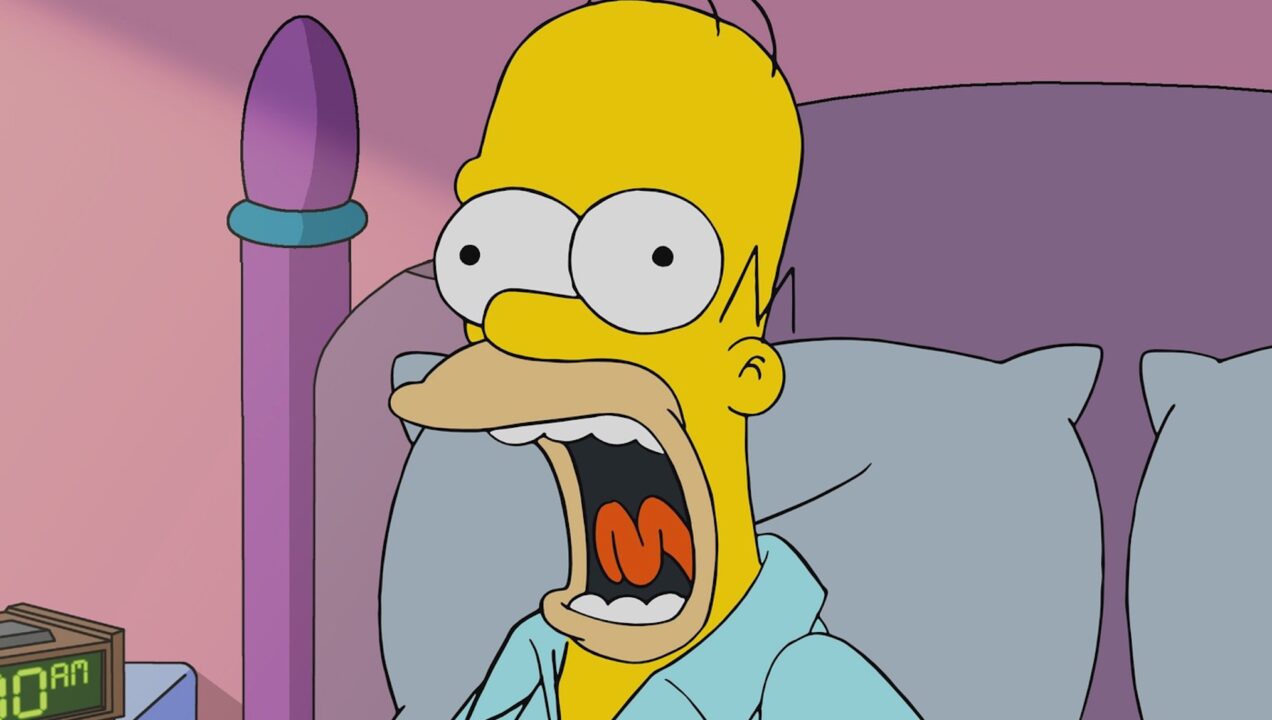
“So I did a sort of ‘d’oh’ like that, and Matt said, ‘You know, we only got a minute. So you have to kind of make that faster.’ So I went, ‘D’oh!’,” said Castellaneta, performing Homer’s signature quote. “And that’s how ‘d’oh’ came about.”
Fox / Courtesy Everett Collection
Not only did it help define Homer Simpson, but Castellaneta’s stroke of genius also cemented its place in pop culture history. What began as a frustrated grunt improvised during early recording sessions quickly became one of television’s most recognizable sounds, a universal shorthand for irritation and self-realization. The exclamation transcended the series, appearing on merchandise, in movies, and even in everyday speech, eventually earning an official place in the Oxford English Dictionary as proof of its cultural reach.
 Remind