

Remember the Time Brian Dennehy Scared & Scarred Audiences As John Wayne Gacy? We Do






What To Know
- Brian Dennehy’s chilling portrayal of serial killer John Wayne Gacy in the 1992 TV miniseries To Catch a Killer remains a standout performance, earning him an Emmy nomination and lasting acclaim.
- The film focuses on the investigation led by Lieutenant Joseph Kozenczak and highlights Gacy’s ability to deceive his community while committing horrific crimes.
- While praised for its procedural approach and Dennehy’s acting, the miniseries took some dramatic liberties with the true story.
On October 16, Peacock’s Devil in Disguise: John Wayne Gacy will delve into the heinous crimes committed by a man many believed to be a pillar of the community. A successful businessman who did community outreach and even dressed as a clown for neighborhood gatherings, John Wayne Gacy was evil incarnate behind closed doors, murdering and torturing young men and hiding their bodies in the crawl space under his house.
From 1972 until 1978, Gacy unleashed a reign of terror that took the lives of 33 young men (that we know of). Caught, put on trial, and eventually executed for his crimes in 1994, the story gripped the nation. And while Devil in Disguise: John Wayne Gacy looks to shed light on both the killer and his victims, it wasn’t the first miniseries made about Gacy.
In 1992, the two-part made-for-TV film To Catch a Killer cast Brian Dennehy as the monster behind the face paint. Known for his roles as the benevolent alien in Cocoon, the ruthless Cobb in Silverado, and the hard-edged Sheriff Teasle in First Blood, Dennehy’s natural charm amplified Gacy’s ability to weaponize charisma, luring victims and deceiving an entire community that saw only the smiling man beneath the clown makeup.
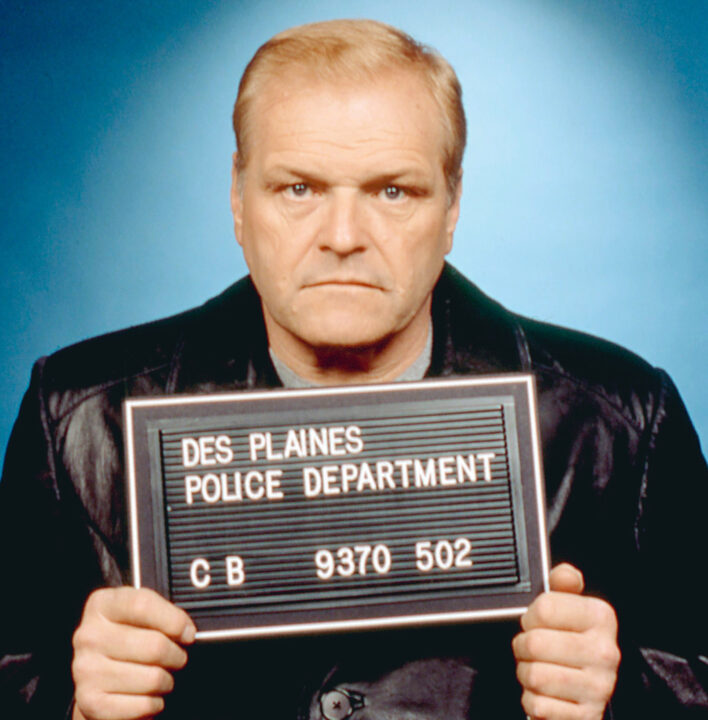
Creative Entertainment Group/courtesy Everett Collection
The narrative is told largely from the viewpoint of Lieutenant Joseph “Joe” Kozenczak (played by Michael Riley), who investigates the disappearance of a teenager (in the film referred to as “Christopher Gant,” a stand-in for real-life victim Robert Piest).
A standout scene is the interrogation scene, in which Gacy’s mask of normalcy begins to slip. In it, Kozenczak corners Gacy after days of surveillance and mounting evidence. Dennehy’s Gacy swings between charming and menacing behavior while mocking Kozenczak one moment and playing the victim the next. Revealing flashes of rage and despair, the monster begins to emerge, and it is a masterclass in acting.
In another scene, Gacy shows Billy (Christopher Marren) his “handcuff trick,” where he seems to enter a trance. Terrifying in his performance, Dennehy is focused on Billy’s helplessness, making him beg for his life as the petrified man slowly realizes that his life might be in danger. Brought back to reality by the ringing of a phone, it was a chilling moment for the audience at home.
There is also the visual of Dennehy at a birthday party scene, dressed as his infamous “Pogo the Clown” character, where Gacy smiles and socializes as police surveillance builds.
Overall, To Catch a Killer is remembered as a solid made-for-TV drama that stands out largely thanks to Dennehy’s chilling performance, its procedural focus, and the restraint it shows in its depiction, though not without some narrative compromises and dramatic liberties. Unlike its successor, Devil in Disguise, it portrays local law enforcement largely as saviors rather than acknowledging the missteps that allowed Gacy’s campaign of terror to continue for as long as it did.

Creative Entertainment Group/ Courtesy: Everett Collection
Brian Dennehy’s portrayal of John Wayne Gacy earned widespread praise, including an Emmy nomination for Outstanding Lead Actor in a Miniseries or Special. And though the made-for-TV movie is largely forgotten today, his turn as the “Killer Clown” endures as one of the finest and most unsettling performances of his career. This element keeps the TV movie alive in the cultural memory long after its credits roll.

 TV Insider